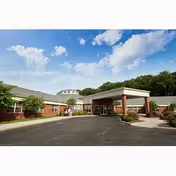
Overall impression Reviews for Heatherdowns Nursing and Rehab are markedly mixed, with distinct clusters of positive and negative experiences. Many reviewers praise the facility for strong rehabilitation outcomes, personalized activities, and a caring front-line staff; however, a number of reviews identify operational and clinical gaps that warrant close attention by prospective residents and families.
Care quality and clinical management Clinical concerns raised include delays in wound care, lapses in timely medication administration (including pain management), and challenges coordinating medical orders and documentation. Several accounts describe situations in which clinical responses were slower than expected; reviewers framed these as delayed assessment or treatment rather than isolated clinical errors. There are also recurring references to incontinence-care concerns and sanitation issues in some rooms and units. Safety oversight problems are implied by reports of falls and transfer-related injuries, suggesting opportunities to strengthen fall-prevention protocols and monitoring practices.
Staff and interpersonal conduct Staffing impressions are polarized. Many families and residents describe caregivers and aides as compassionate, attentive, and effective—attributes credited with positive rehabilitation and day-to-day comfort. At the same time, other reviewers report variable professionalism among nursing and supervisory staff, including curt communication and inconsistent responsiveness to family inquiries. This variability points to uneven staff training, supervision, or turnover rather than uniformly poor or uniformly excellent performance.
Dining, therapy, and activities Therapy and activities are consistently described as strengths: rehabilitation teams are credited with measurable functional gains, and activity programming is described as individualized, resident-centered, and offered seven days a week with resident feedback incorporated. Dining reports are mixed. Some reviewers note engaged dietary personnel and good outcomes (weight gain in some residents), while others describe inconsistent meal preparation, difficulties with texture/portion suitability, and instances where meals were not appropriate for specific dietary needs. Families should confirm menu accommodations and monitoring of intake during transitions.
Facilities and equipment Facility condition varies by area. Several reviewers praise pleasant grounds, clean common areas, and an inviting atmosphere. Conversely, others describe outdated room furnishings, sticky floors in some units, and older medical equipment that may require replacement or repair. These contrasts suggest uneven maintenance and standards across different parts of the building or differing expectations among reviewers.
Management, communication, and administration Administrative responsiveness and communication are recurring themes. Long hold times on phone lines, difficulty reaching administrators, and delays or disorganization in discharge paperwork are commonly noted. Some families also raised concerns about personal-item management and paperwork accuracy. These items indicate opportunities for improved administrative workflows, clearer family communication protocols, and tighter controls around property and documentation handling.
Notable patterns and guidance for families The pattern across reviews is one of variability: strong clinical rehabilitation and supportive aides in many cases, paired with operational inconsistencies in clinical follow-up, cleanliness, medication timing, and administrative communication. Prospective residents and families should plan an in-person visit and ask targeted questions about wound-care protocols, medication administration auditing, staffing patterns and ratios, fall-prevention practices, dining accommodations, and discharge paperwork procedures. Inspect the specific room that would be assigned, review recent quality or inspection reports if available, and request references from recent family contacts. Those with complex clinical needs (wounds, frequent pain management, or mobility risks) should verify on-site expertise and documented protocols before making placement decisions.