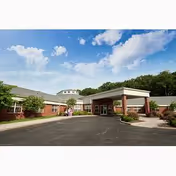
The reviews present a divided picture of Toledo Healthcare Skilled Nursing & Rehabilitation, with distinct patterns emerging across clinical care, staffing, facility operations, and management. On the positive side, physical rehabilitation and wound-care services receive repeated praise; several families described effective therapy programs and nursing interventions that supported successful discharges or functional improvements. Nursing staff and certain therapy teams are frequently characterized as skilled and caring, and many reviewers highlight engaging activities, generally good food, and a palpable sense of community among residents. The facility's older building is noted for character rather than modern finishes, and some families appreciate a convalescence-focused atmosphere and hands-on caregiving.
Conversely, a number of operational and clinical concerns recur in the feedback. Medication-management processes and related clinical oversight are an area of anxiety for families, with some linking medication issues to adverse outcomes and hospital transfer. Responsiveness to resident requests is uneven: reviewers report delays answering call lights and variability in aide engagement. Cleanliness and pest-control are called out in a subset of accounts, and the aging infrastructure contributes to maintenance problems such as elevator unreliability and limited parking. Infection-control practices, including PPE use during restricted periods, are described inconsistently across reports.
Staffing and leadership present a mixed picture. While skilled nurses and some compassionate caregivers attract strong praise, reviewers also describe staffing instability, uneven performance among aides, and instances of blunt or insensitive communication from supervisory staff. Leadership turnover, questions about governance, and concerns about billing or equipment management are present in the record; there are also explicit allegations of improper billing and questionable managerial conduct in a few accounts. These governance issues compound families' apprehension when clinical concerns arise.
For prospective residents and families, the pattern suggests that clinical rehabilitation and nursing strengths exist alongside operational risks tied to staffing consistency, medication oversight, cleanliness, and administrative stability. When evaluating the facility, it would be prudent to review current staffing levels and turnover, ask about medication-safety protocols and oversight, verify infection-control procedures and visitation policies, and inspect common-area cleanliness and equipment reliability. The facility appears to deliver high-quality therapy care for some residents, but families should seek up-to-date information on management practices and operational controls to ensure those clinical strengths are supported by consistent day-to-day operations.