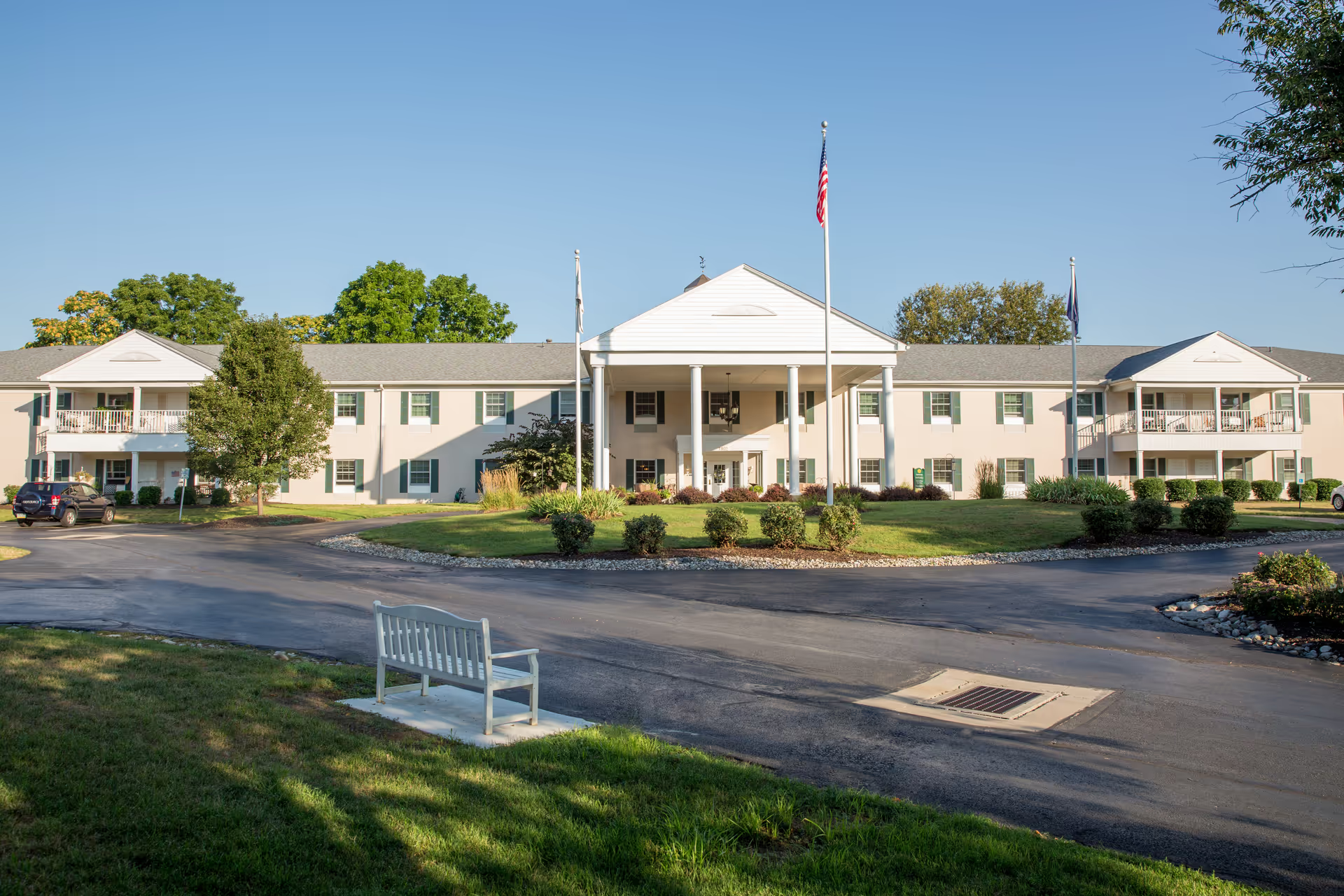
Complete Care at Berkshire elicits a mixed set of impressions. Many families praise individual caregivers, nurses, and therapists for compassion, attentiveness, and effective rehabilitation; reception and social-work staff are frequently described as helpful and reassuring, and some long-term residents and their families report stable, positive experiences. The facility offers an activities program and outdoor dining/deck that families find appealing, and parts of the building are described as clean and well-maintained.
At the same time, a consistent pattern emerges around variability in operational performance. Staffing appears uneven: reviewers describe high turnover, understaffing at times, and inconsistent responsiveness to call lights and care requests. These operational gaps are associated with concerns about hygiene and incontinence-care consistency, delays in assistance for transfers and mobility, and lapses in clinical oversight—several accounts reference delayed recognition of infection or other clinical deterioration that required escalation to higher-level care.
Dining and ancillary services are another area of mixed performance. While some residents experienced appropriate therapeutic and appetizing meals, others reported inconsistent meal temperature, presentation, and adherence to dietary preferences. Laundry and personal-belongings management also show recurring problems: missing clothing, lost personal items, and delays or errors in laundering were described by multiple families. Cleanliness and odor control receive praise in some areas and criticism in others, suggesting uneven housekeeping or maintenance coverage.
Communications and management processes present further concerns. Families report gaps in timely updates from nursing leadership, variable responsiveness from supervisors and administration, and occasional billing or discharge coordination problems. COVID-era visitation policies and quarantine procedures were noted as limiting family contact in some stays; reviewers recommended confirming current visitation and infection-control practices during a visit.
For prospective residents and families: the facility demonstrates clear strengths in individual caregiver dedication and therapy services, but operational variability can affect day-to-day experience. During a tour or pre-admission conversation, ask for current staffing ratios by shift, observe call-response times, review infection-control and laundry/belongings policies, ask to meet therapy staff, and request examples of recent clinical-incident communication and discharge coordination. Those steps can help clarify whether the facility’s strengths align with the candidate’s care priorities and risk tolerance.