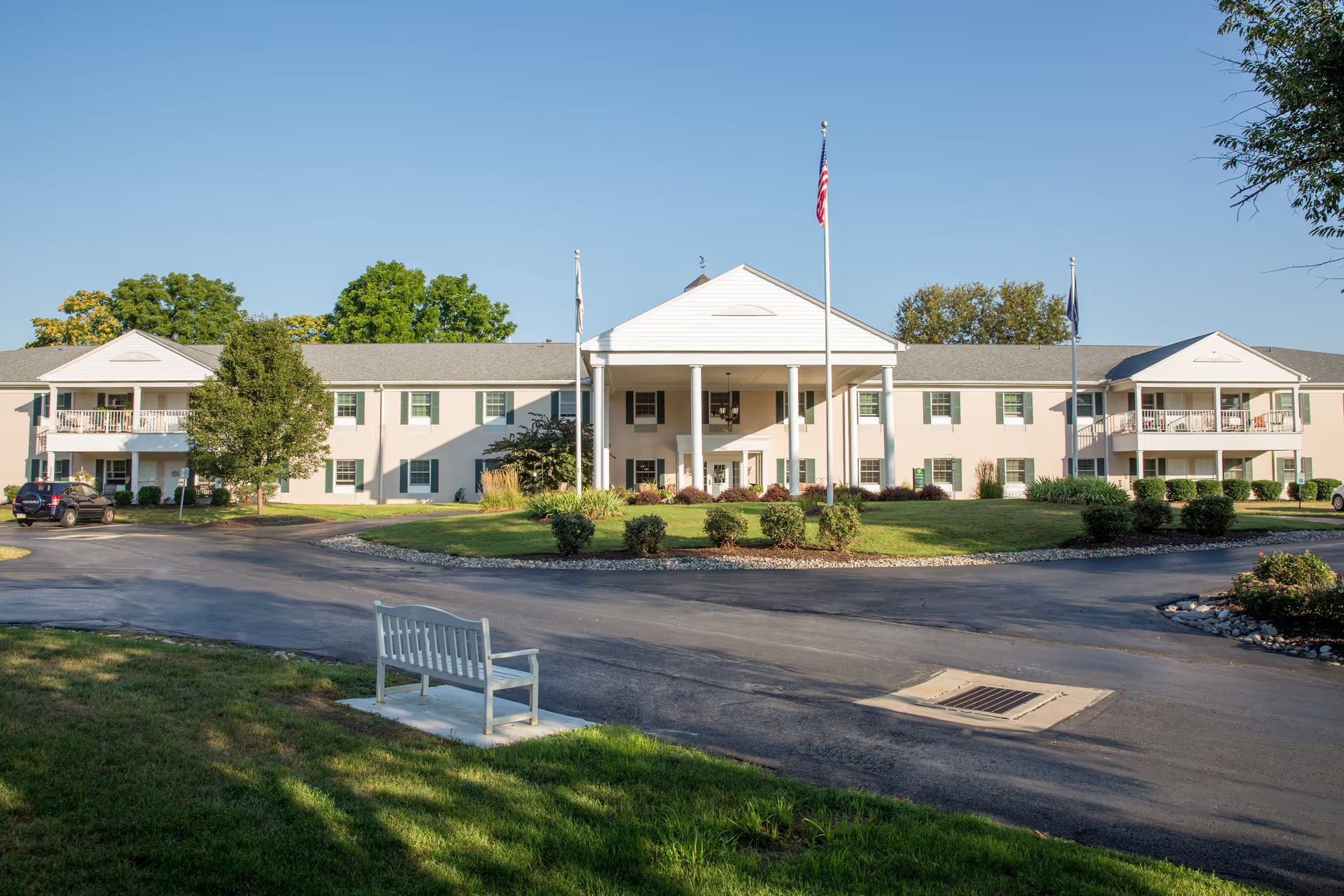
Overall sentiment across the reviews is mixed: reviewers consistently praise the facility's character, cleanliness, dining space, proximity to a library, and the staff's friendliness and knowledge, while raising significant concerns about the building's age, accessibility, room sizes, and occasional operational lapses. The Hawthorne Home comes across as a charming, mansion-like property with a lot of positive surface attributes, but the old structure and some management inconsistencies create practical drawbacks that prospective residents and families should weigh carefully.
Care quality and staff: Multiple reviewers explicitly describe staff as knowledgeable, friendly, forthcoming, and informative. That suggests the day-to-day caregiving and front-line interactions are generally positive and that staff can provide clear information when engaged. However, there are also specific incidents cited — a locked office, unprepared staff during a visit, and a tour with confusion — which point to inconsistent execution of service and occasional lapses in readiness or communication. These operational hiccups do not necessarily reflect clinical care quality but do indicate variability in responsiveness and administrative coordination.
Facilities, architecture, and condition: The Hawthorne Home is repeatedly described as an old mansion with attractive architecture and a beautiful on-site library, giving it a distinct, home-like character that many find appealing. Reviewers say the property is clean and 'in good shape,' yet they also note visible worn spots consistent with an older building. This indicates solid maintenance of core cleanliness standards while still reflecting the limitations of aging infrastructure. The dining area receives positive mention as being large and nicely laid out, which is a strength for communal living.
Rooms and accessibility: Room-related feedback is a major theme and a clear concern. Reviews cite very small single rooms (described as 'tiny'), some rooms lacking private bathrooms, and a mix of large shared rooms and 'decent' private rooms. That variability suggests the facility offers a range of accommodations but that the single-room option may be cramped and that private-bathroom availability is limited. Critically, the building lacks an elevator and relies on stairs, which reviewers emphasize as unsuitable for many residents. The absence of elevator access combined with small or bathroom-deficient rooms makes upper-floor living potentially impractical for anyone with mobility issues.
Dining, activities, and amenities: The dining area is highlighted as a positive feature—spacious and well-laid-out—indicating a comfortable communal dining experience. The proximity to a library and the presence of a 'beautiful library' in the building are noted as attractive amenities and potential outlets for enrichment and quiet activities. Beyond that, reviews provide little detail about organized activities, programming, or other amenity offerings, so there's insufficient information to assess the breadth or quality of activity programming.
Management, appointments, and operational patterns: Several reviews point out operational shortcomings: appointment mishaps, a locked office during planned visits, and staff seeming unprepared or causing confusion during tours. These concrete incidents suggest management and front-desk coordination issues at times, which can affect family impressions and the ease of transitions or admissions. While many interactions appear positive, the presence of these failures indicates inconsistency in administrative processes and visitor experience.
Safety and emergency preparedness: A notable strength mentioned is the facility's preparedness for emergencies, with reviews referencing evacuation planning and COVID response plans. This is an important positive, indicating attention to resident safety and regulatory or contingency planning.
Overall conclusion and patterns: The reviews portray The Hawthorne Home as a well-maintained, characterful older facility with strong interpersonal staff qualities and commendable safety planning, together with attractive dining and library amenities. The most significant drawbacks are structural and operational: the building's age introduces worn areas and accessibility challenges (no elevator, stairs required), single rooms can be very small and some lack private bathrooms, and there are intermittent management/communication lapses (locked office, appointment and tour confusion). Prospective residents and families should prioritize a walk-through to verify room size, bathroom availability, and assess whether stair-only access is acceptable; they should also ask about consistency of front-desk procedures and any planned upgrades to accessibility. The overall picture is of a warm, historic home that will suit those who value charm, friendly staff, and communal spaces but may be a poor fit for individuals with significant mobility needs or those seeking consistently modern private-room accommodations.