The reviews for Royal Middletown Nursing present a mixed and polarized picture: many commenters praise individual staff members, therapists, and administrative leadership for compassion and professionalism, while others raise operational concerns that appear to affect consistency of care. Strengths repeatedly noted include dedicated nurses and CNAs, attentive hospice involvement, engaged social-work support, and the availability of physical and occupational therapy when scheduled. Several families described a home-like atmosphere in certain areas and positive experiences with identifiable staff leaders and managers.
Care quality shows notable variability. Positive accounts emphasize compassionate bedside care, effective hospice support, and attentive nursing in many cases. Conversely, several reviewers described delays in medication administration, missed or delayed treatments for wounds and seizures, and inconsistent therapy access. These accounts point to gaps in medication-management workflows, clinical oversight, and continuity of therapeutic services. One reviewer raised an allegation of an external admission restriction; families should seek current regulatory and clinical-status information directly from the facility.
Staffing and communication emerge as a central pattern. Many reviews single out individual caregivers and nurses as very good, and administration receives praise for leadership and responsiveness in some accounts. At the same time, reviewers describe variability in staff conduct and tone, particularly with temporary and weekend staff, slow or difficult weekend phone access, and limited responsiveness to family inquiries. These comments suggest inconsistent training, uneven supervision, and coverage challenges that are more pronounced outside regular weekday hours.
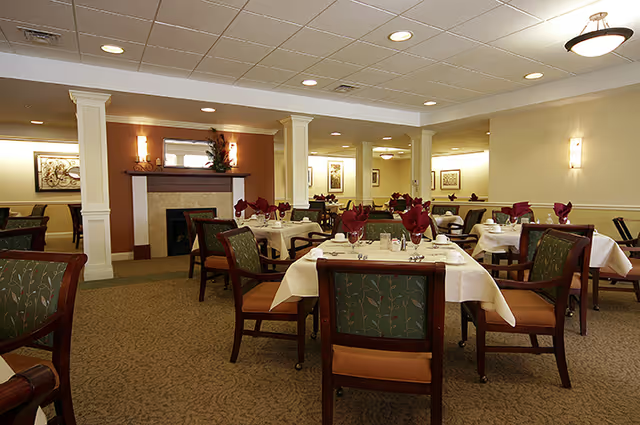
Dining and resident routines are another area of mixed feedback. Positive notes include pleasant communal areas and apartment-style rooms; negative feedback centers on inconsistent meal availability and food quality, with examples of menu substitutions and dissatisfaction with taste. Personal-care routines such as bathing schedules and linen changes were also described as inconsistent, indicating a need for stronger scheduling and oversight of basic care tasks.
Facility condition and safety concerns appear in multiple comments. Reviewers cite sanitation issues, pest-control concerns, and isolated cleanliness problems that improved after complaint-driven interventions in some cases. There are also references to building-age matters such as roof leakage and maintenance shortfalls, as well as underused resources (for example, an unused facility bus). Security and admission-process weaknesses were noted, including gaps in entry controls and screening procedures.
Management receives both commendation and critique. Several families praised administrators for being professional, approachable, and supportive of staff; these strengths are associated with better resident experiences in those accounts. At the same time, recurring operational issues—staffing shortfalls, weekend coverage problems, medication and wound-care process gaps, and sanitation concerns—indicate systemic areas requiring sustained management attention.
For prospective residents and families: the pattern in these reviews suggests that experiences at this facility may depend heavily on staffing levels, time of week, and which unit or caregivers are involved. When evaluating the facility, consider asking specific questions about staffing ratios (including weekend coverage), medication-administration protocols and oversight, infection-control and wound-care procedures, meal-service contingency plans, and maintenance priorities. Observing mealtime, cleanliness, and staff–resident interactions during a visit can help clarify how consistently the facility delivers the positive attributes that several reviewers experienced.