South Kingstown Nursing & Rehab elicits a strongly mixed but distinct pattern: many families and residents praise the facility’s people-centered elements — friendly administration, engaged CNAs, capable therapy staff, and an active calendar of events — while a subset of families describe operational gaps in clinical responsiveness, housekeeping, and management communication that warrant careful inquiry.
Care and staff: Reviewers commonly describe CNAs as personable and attentive and note that nursing and therapy staff provide meaningful clinical support, including daily physical therapy and solid rehab outcomes. These strengths contribute to a family-like culture and many positive transitions for short-term rehab and long-term residents. At the same time, there are repeated concerns about responsiveness to call lights, delays in assistance with toileting or continence needs, and uneven clinical oversight in some cases. Prospective families should ask directly about call-response times, staffing levels on different shifts, and how clinical concerns are escalated.
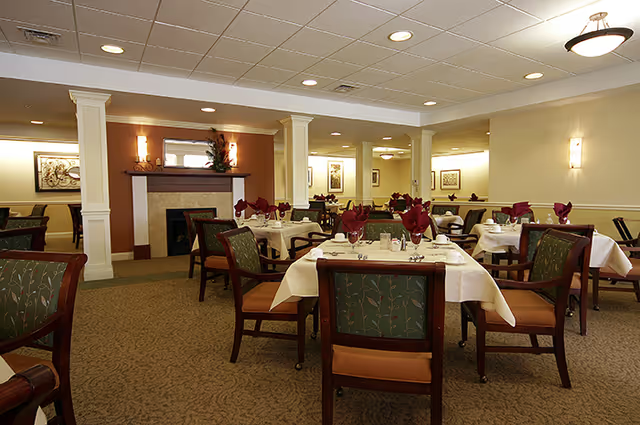
Dining and activities: Dining is frequently cited as a positive, with many comments about homemade, flavorful meals and an accommodating kitchen. The activities program is a clear strength: reviewers mention a wide variety of offerings (seasonal events, music, crafts, outdoor trips, fishing, campfires, weekly singers, and special events such as prom), an engaged activity director, and frequent opportunities for social engagement. These programs appear to contribute substantially to resident satisfaction and social well‑being.
Facilities and sanitation: Many reviewers describe a clean, modern facility with private rooms, secure dementia care, and the ability to personalize rooms. However, other accounts indicate inconsistent housekeeping practices, localized odor concerns, and occasional trash or supply-management lapses. These contrasting impressions suggest variability in day-to-day sanitation and environmental maintenance that families should observe during a tour.
Management, communication, and safety: Administrative accessibility and quarterly updates are noted positively by some families, while others report defensive or unprofessional management interactions and inadequate communication during critical events, including end-of-life transitions. Additional operational concerns include variable adherence to infection-control protocols and allegations of missing personal items or weaknesses in property accountability. These issues point to inconsistent management follow-through and differences in how the facility handles serious or sensitive incidents.
Notable patterns and guidance: The facility displays clear strengths in rehabilitation, engagement, and many staff–resident relationships, but there is also a pattern of inconsistent operational reliability in clinical responsiveness, housekeeping, infection control, and family communication. Prospective residents and families should schedule an in-person visit, observe meal service and activities, ask for staffing ratios and call‑response metrics, inquire about infection-control and hospice coordination policies, review how personal property is logged and secured, and request recent inspection or compliance records. These targeted questions can help reconcile the mixed impressions and determine whether the facility’s strengths align with an individual’s care priorities.