Royal Westerly is presented in the reviews as a small, bright, home-like skilled nursing community with many consistently cited strengths and a few recurring operational weaknesses. Strengths emphasize person-centered caregiving, a strong rehabilitation program, and an exceptionally active activities department that contributes to a cheerful, social environment. Multiple reviews point to long-tenured staff, coordinated clinical teams, and visible medical oversight, including nursing attention and physician involvement, which families link to timely medication administration and effective short-term rehab outcomes.
Care quality and staffing: Clinical strengths include skilled nursing, active physical therapy, and attentive caregivers who are frequently described as compassionate and engaged. Interdisciplinary coordination — nursing, therapy, activities, and social work — is often praised, including effective discharge planning when it occurs. At the same time, reviewers document variability in staffing levels and coverage: while many families describe attentive, calm, and proactive staff, others describe lapses in responsiveness or unprofessional conduct. This creates an overall pattern of strong clinical capability with occasional inconsistencies in day-to-day staffing and behavior.
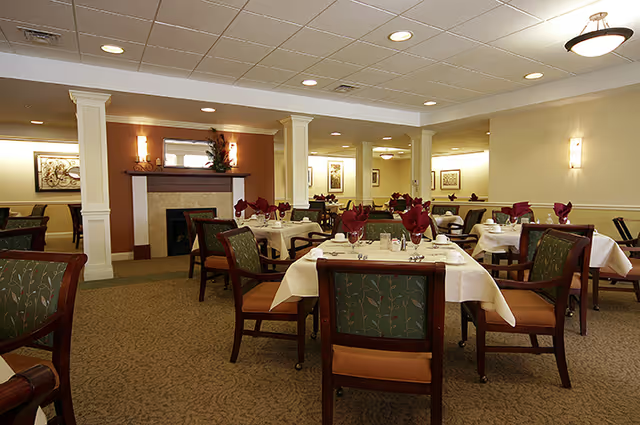
Dining and activities: Dining is generally described as nutritious and home-style, and the activities program is a clear standout — reviewers repeatedly praise creative, well-staffed programming, themed events, and an activities director who raises resident engagement and morale. Requests for a broader selection of sugar-free snack options and occasional notes about uneven meal quality indicate the kitchen's performance can vary. Families seeking an active social life for their loved one will likely find the activities offering a major positive here.
Facilities and management: The physical environment is repeatedly described as clean, bright, and well maintained; reviewers frequently use terms like spotless and pleasant for rooms and common areas. Administrative strengths include family communication and occasional proactive updates, and the facility's small scale is seen as contributing to a family-like atmosphere. However, admissions and communication practices appear inconsistent: several accounts note difficulties with admissions staff, voicemail responsiveness, and information sharing. A small number of serious accounts raise concerns about staff conduct and patient-relocation practices; these are outliers in the overall sentiment but represent issues prospective families should investigate further.
Notable patterns and guidance: The dominant pattern is one of high-quality, compassionate care and an outstanding activities program, combined with operational variability in staffing, cleanliness, meal consistency, and admissions communication. Dementia care impressions are mixed — the dementia unit is praised in some accounts and criticized in others — suggesting variable experiences across units or shifts. Prospective residents and families should verify current staffing ratios, ask about dementia-specific programming and safeguards, review recent inspection or survey results, and clarify discharge and post-discharge support processes. Asking for a tour of dining and activity sessions, and requesting recent references from families of residents with similar needs, can help determine whether the facility’s strengths are consistent with an individual resident’s requirements.