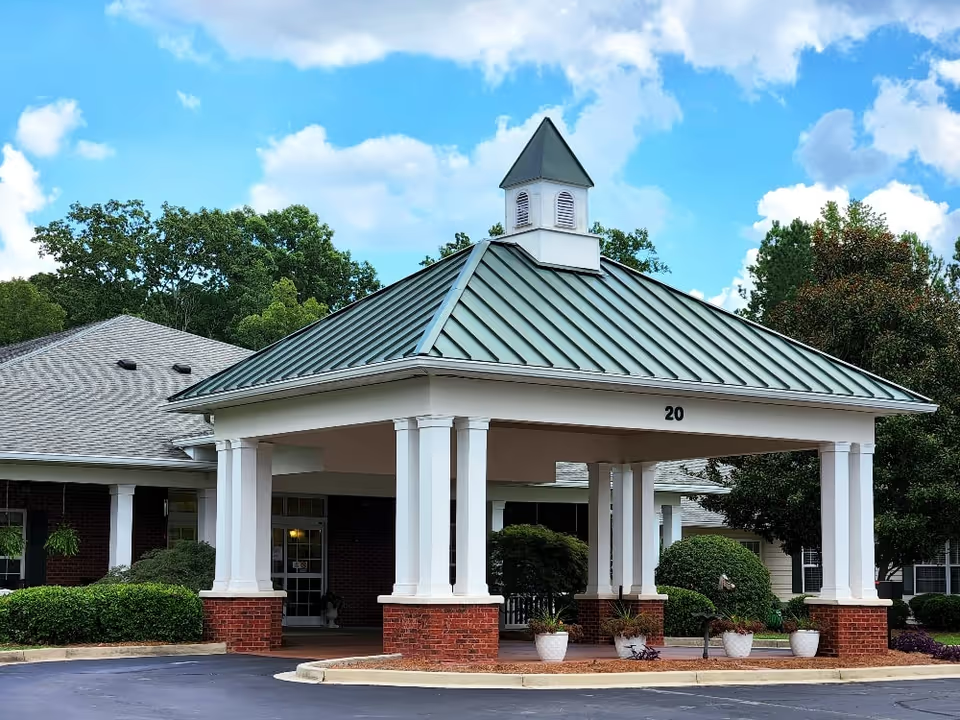
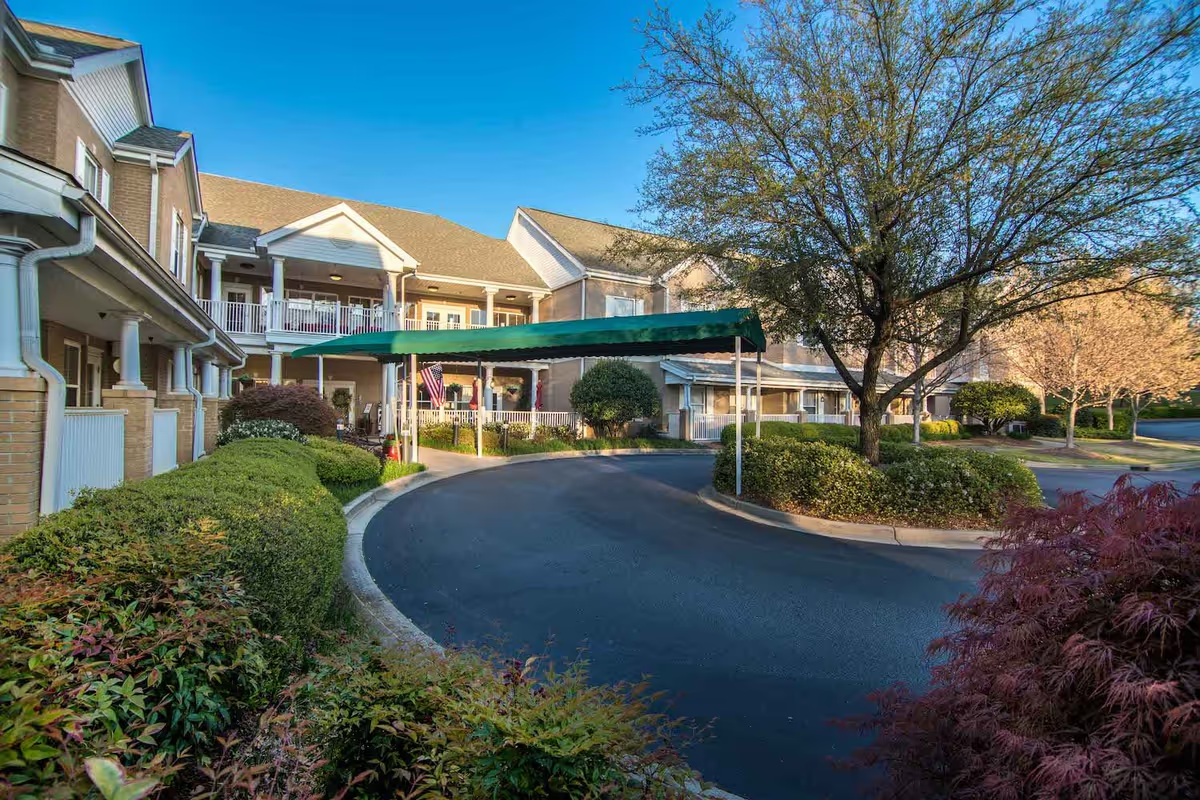
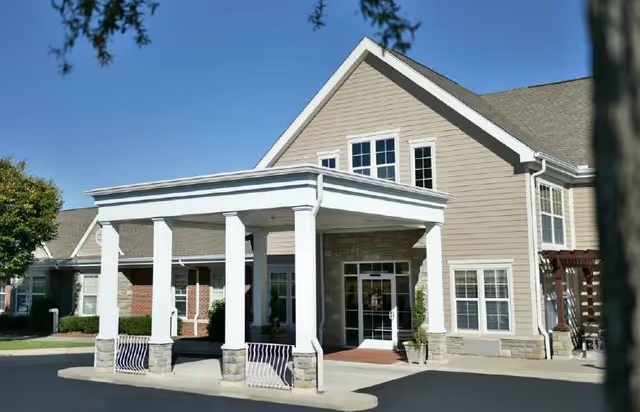
The reviews for Oaks at Chanticleer are strongly polarized. Many families describe high-quality, person-centered care: caregivers who are affectionate, engaged, and communicative; a strong memory-care program with an on-site dementia-focused clinician and frequent specialist visits; lively activities and a ‘‘main street’’-style environment (bistro, ice cream shop, salon); and bright, well-kept common areas that promote socialization. Several reviewers attributed meaningful clinical and psychosocial improvements to the setting (weight gain, improved mood, successful transitions to therapy or hospice). On the facilities side, the property’s themed common spaces, multiple outdoor courtyards, and on-site services (podiatry, hairdresser, rehab) are repeatedly cited as strengths.
At the same time, a substantial subset of reviews raises operational and safety concerns. The most consistent themes are inconsistent staffing — particularly on second shift and evenings — and uneven coverage across pods. Those staffing gaps are associated with delayed responses to alarms or calls, prolonged waits for personal-care assistance (including bathing and incontinence-related care), and supervision shortfalls that increase fall risk for some residents. Several families also flagged inconsistencies in housekeeping at the room level and sanitation or incontinence-care concerns that contrast with generally well-maintained common spaces.
Clinical governance and management issues emerge as another pattern. Reviewers describe variability in medication-administration practices, limited visible nursing presence at times, and questions about documentation and identification processes for medication delivery. There are also recurring concerns about communication around clinical incidents and hospital transfers — delays or poor family notification were described — as well as billing transparency and disputes over extra charges. A change in ownership/management was cited by some as coinciding with perceived declines in staffing and service consistency. A small number of serious individual allegations (including concerns following a resident hospitalization and an allegation related to surveillance equipment) were raised; these are discrete but notable and should prompt direct inquiry when evaluating the community.
Dining and activity programming are mixed in the feedback. Many residents and families praise the variety of activities, events, holiday programming, and the social dining environment. Food quality and portioning, however, are described inconsistently: some families find meals delicious and generous, others describe limited choices, reduced portions, or inconsistent preparation. Families appreciate the memory-care–focused activities and regular outings, but a few reviewers noted that high capacity or staffing limits sometimes reduce activity availability or participation.
For prospective residents and families: Oaks at Chanticleer shows clear strengths in memory-care programming, engaging communal spaces, and many devoted frontline caregivers. To make an informed decision, visitors should directly evaluate current staffing ratios by shift, ask for specifics on nursing coverage and medication-administration protocols, review incident-communication procedures, verify housekeeping and incontinence-care schedules, and confirm billing inclusions and extra-charge policies. Observing mealtime service and an activity period, and asking about recent ownership or leadership changes, will help assess whether the operational concerns raised in some reviews have been addressed. Overall, the community can provide high-quality, compassionate care for many residents, but due diligence around safety, staffing, and clinical oversight is recommended prior to placement.