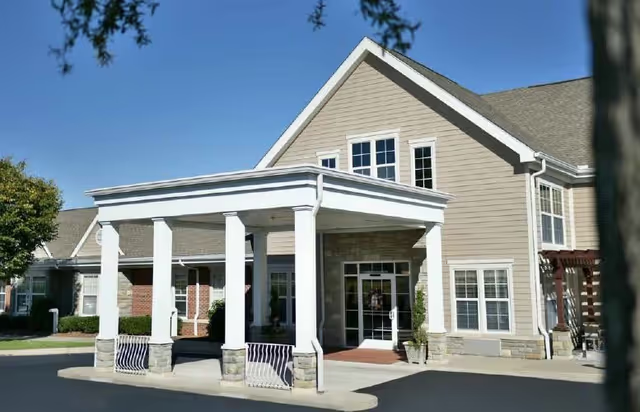
Patewood Post-Acute presents a mixed profile across care, staffing, dining, facilities and leadership. Its strongest, most consistent positive is the rehabilitation program: multiple accounts describe effective PT/OT interventions that produced measurable functional improvement. Wound care is another area of recognized strength, with several clinicians singled out for attentive, technically competent care. Admissions, discharge planning and transportation logistics are often described as organized and helpful when executed well.
At the same time, clinical care and day-to-day nursing operations show substantial variability. Many narratives indicate prolonged response times to call lights, delays in medication administration and inconsistent pain control. There are repeated descriptions of inconsistent toileting assistance and wound-dressing follow-up, which together point to problems with routine nursing coverage and handoff consistency—particularly during nights and weekends. Several comments describe falls, transfer-safety concerns and functional declines that families attribute to gaps in supervision or staffing.
Communication and staff conduct emerge as recurring themes. Families and residents report uneven professionalism and tone among nursing and aide staff, inconsistent updates on condition or care plans, and failures to orient new residents to their rooms or to facility systems (television, meal ordering). Coordination between therapy, nursing and dietary is sometimes effective, but other times fragmented; this contributes to frustration and creates the appearance of poor oversight. Grievance follow-up and managerial response are described as inconsistent, though a number of reviews highlight positive changes under specific administrators and praise staff who have been responsive and proactive.
Dining and housekeeping show divergent experiences as well. Several reviewers praised friendly dining staff and an adequate variety of meal options, while others cited issues with meal temperature, carbohydrate-heavy selections for patients on therapeutic diets, and gaps in staff training on diet-specific protocols. Cleanliness and room maintenance are similarly mixed: the facility and common areas are often described as attractive and well-kept, yet there are repeated accounts of rooms not being cleaned to expectation, odors in patient rooms, missing linens or room setup oversights, and inconsistent property-management practices surrounding lost personal items.
Notable patterns include a consistent bifurcation between strong therapy/wound-care teams and inconsistent nursing/housekeeping performance. Infection-control and isolation procedures were questioned in several accounts, and there is at least one mention of regulatory attention that families used to describe broader systemic problems. There are also several specific allegations involving lost personal items and property-handling that point to a need for clearer inventory and accountability processes.
For prospective residents and families: consider the facility’s strengths in rehabilitation and specialized wound care as potential advantages if recovery goals align with those services. At the same time, ask targeted questions about nurse-to-resident ratios at night and on weekends, medication-administration protocols, property-loss procedures, dietary training for therapeutic diets, housekeeping routines, fall-prevention and transfer policies, and how management tracks and resolves family grievances. Visiting the unit during different shifts and requesting direct contact with therapy and nursing leadership can help assess whether the operational weaknesses referenced in reviews have been addressed locally.