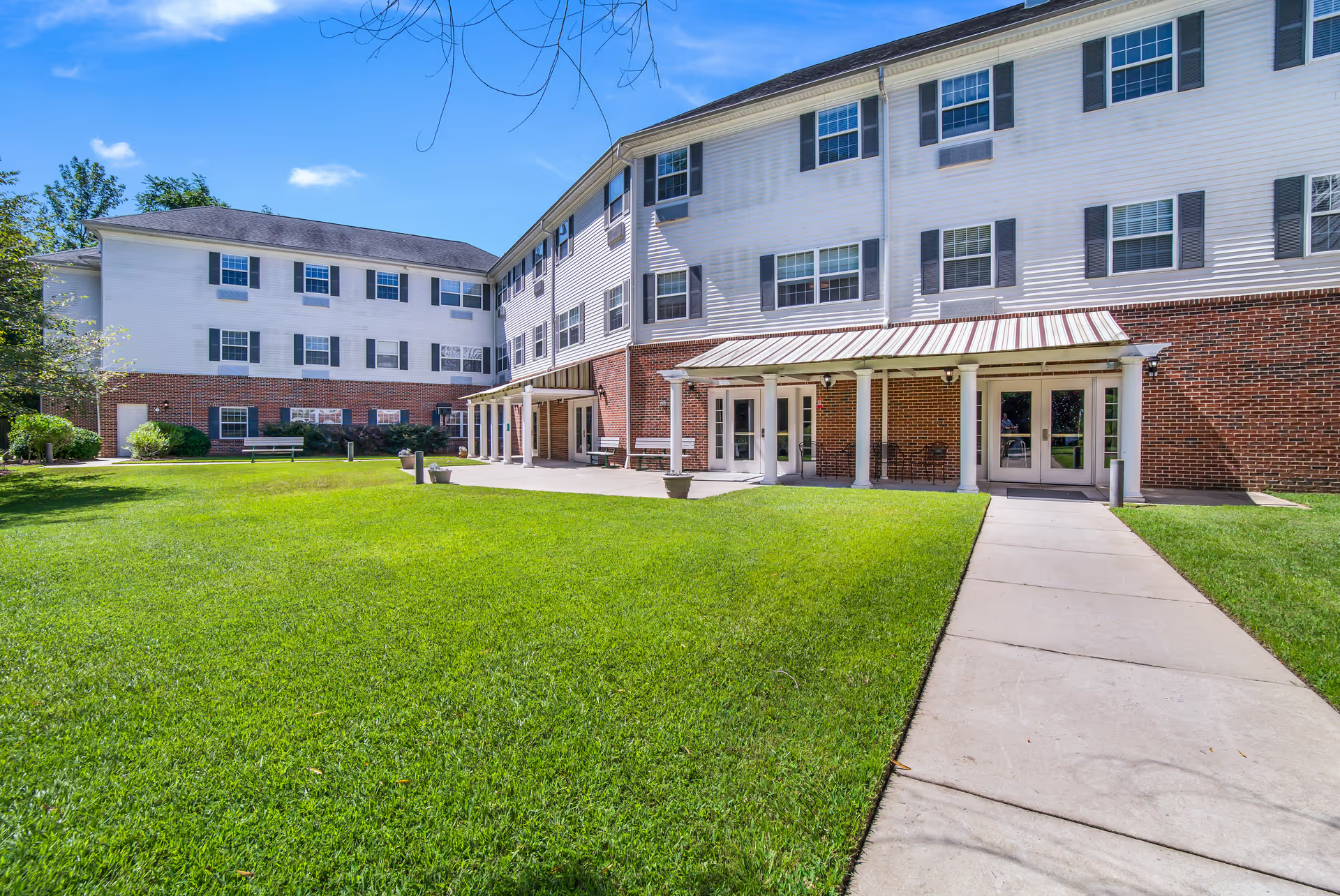
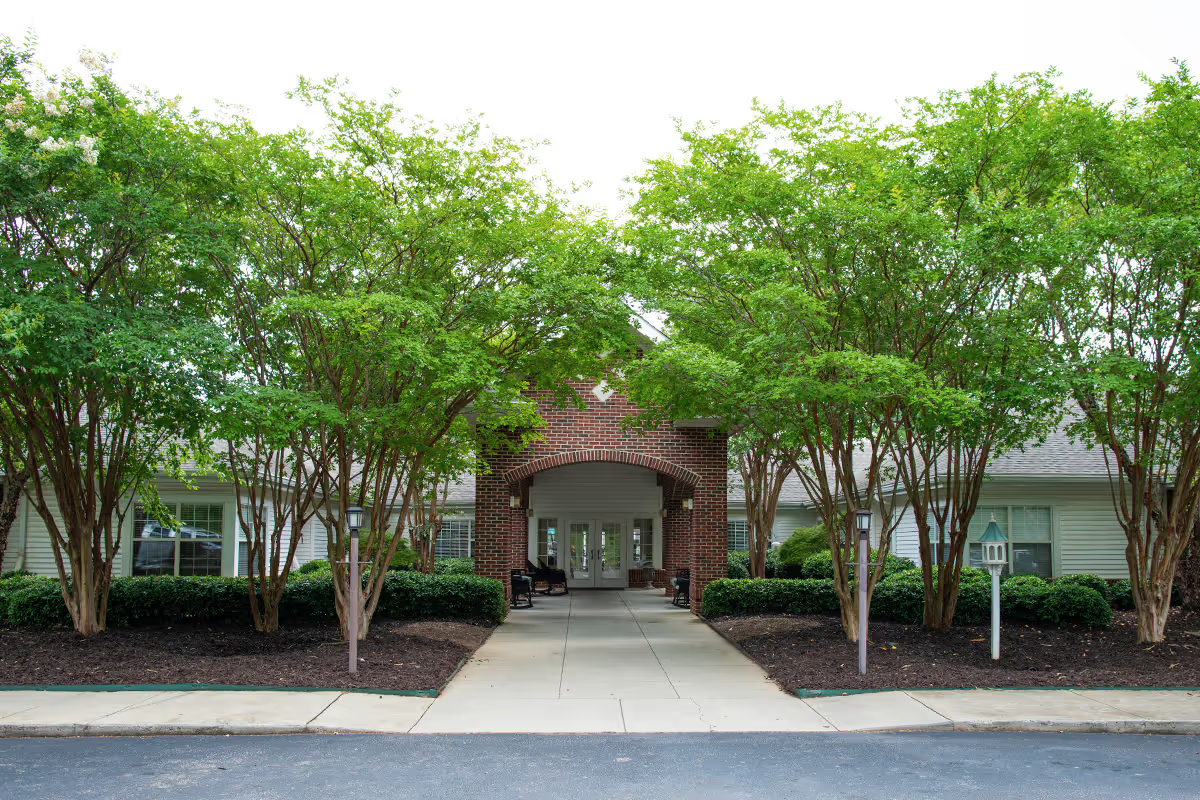
Spring Oak at Lexington elicits strongly mixed impressions across reviewers, with clear strengths in caregiving, therapy resources, environment, and community programming alongside recurring operational weaknesses. Many families and residents praise the staff's friendliness and attentiveness, the availability of on-site rehabilitation (PT/OT/ST) and a dedicated therapy room, well-kept grounds and interiors, and a robust activities program that includes outings and social events. Apartment offerings vary from small private rooms to more spacious units with patios and sliding doors, and the facility generally presents as clean and landscaped. Several families also highlighted coordinated hospice support and the peace of mind that comes from responsive end-of-life planning when it is available.
Care quality is described positively in numerous accounts: staff are frequently characterized as caring, knowledgeable, and professional, and residents benefit from on-site therapy and rehabilitation resources. However, there are repeated comments about inconsistent responsiveness—examples include delayed medication passes, missed or delayed assistance with activities of daily living, and situations where families felt follow-up from clinical staff was inadequate. These patterns point to variability in day-to-day care reliability rather than uniformly poor clinical capability.
Dining and activities show a similar split. The facility’s dining room and central meal service are appreciated by many; some reviewers praised the food, variety, and ease of social dining. Conversely, other families reported inconsistent meal quality, limited evening options, and lapses in meal delivery. The activities program is active and includes outings, new programming staff, and photo updates for families, though some reviewers experienced limited engagement during certain periods (for example, around midday or during staffing shortfalls).
Facility features are a relative strength in much of the feedback: the property is described as clean, updated in places, and attractively landscaped, with a layout that many found easy to navigate. That said, memory-care accommodations generated specific concerns: some memory-care units were described as small, confined, or dimly lit, with locked areas that left families uneasy. Room sizes and bathroom configurations vary significantly across units, so individual unit selection materially affects resident comfort.
Management and operations are the areas with the most consistent negative commentary. Reviewers cite frequent staff and leadership turnover, uneven communication from admissions and administration, and problems with move-in coordination and documentation. Financial transparency was a noted concern: some families reported high, nonrefundable admission/application fees and complexity around monthly charges and ancillary services. Maintenance reliability (occasional water shutoffs, HVAC issues) and coordination of transportation/pickups were also mentioned as operational weaknesses. A small number of reviewers raised serious allegations about staff conduct and safety; those accounts, while not the majority, contribute to a broader pattern of concern about staffing levels, supervision, and incident follow-up.
Overall, Spring Oak at Lexington offers many hallmarks of a positive senior-living community—friendly caregivers, on-site therapy, attractive grounds, and an active social program—but prospective residents and families should weigh those strengths against reported variability in staffing stability, communication, housekeeping, dining consistency, and the condition of some memory-care units. Visiting multiple unit types, asking for recent examples of staffing ratios (especially in memory care), clarifying all fees and billing practices in writing, and reviewing medication-management and incident-notification protocols would be prudent steps for families considering this facility.