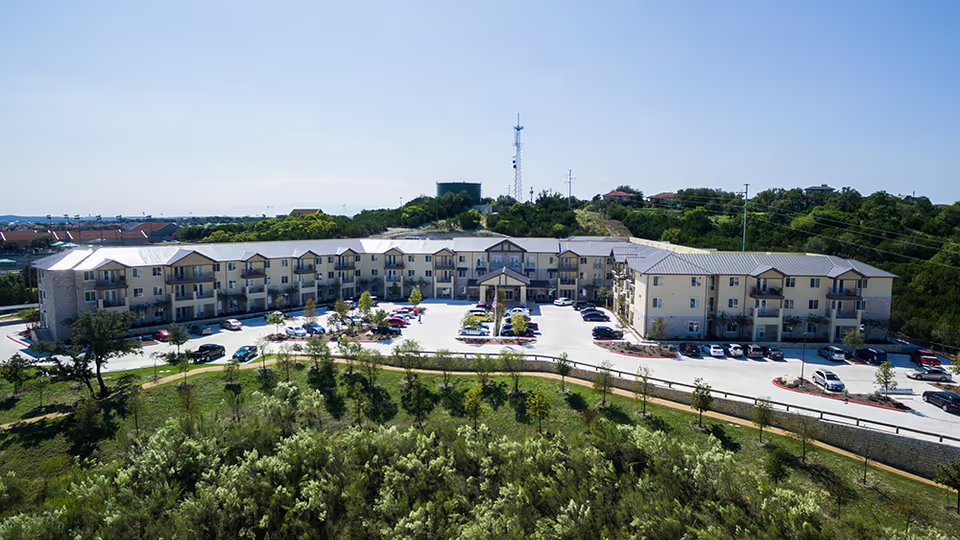
Stonebridge Health Rehab elicits a polarized but patternable set of impressions. Its strongest and most consistent praise centers on rehabilitation and front-line caregiving: the physical therapy team and activity staff receive frequent commendation for therapeutic progress, encouragement, and engaging programming. Many families and residents describe the facility as bright and homelike, with large windows, updated furnishings, a dedicated beauty room, and communal spaces that support social interaction and a sense of community.
Clinical care quality appears mixed. Several accounts highlight attentive, knowledgeable nurses and aides who provide dignified care and good communication. At the same time, there are repeated concerns about staffing adequacy and responsiveness: delayed responses to call buttons, inconsistent timing of medications, and variability in nursing attention — particularly on nights and weekends. Reviews also point to gaps in follow-up clinical services such as vision, dental, and hearing needs, and occasional problems with incident reporting and handoff communication between shifts.
Dining and daily living services are uneven. Some families find meals filling and satisfactory, while others describe unappetizing offerings and limited portions. Laundry and personal-belongings management is a recurring operational weakness: missing items, delayed laundry service, and unsecured belongings undermine family confidence. Cleanliness and sanitation are generally praised in public areas, but several reviews cite specific lapses in room or bathroom upkeep and incontinence-care responsiveness, indicating inconsistent application of housekeeping and personal-care protocols.
Management and administrative practices show both strengths and weaknesses. Business-office staff and certain administrators have been singled out for helpfulness, clear Medicaid guidance, and proactive problem-solving. Conversely, other accounts describe poor follow-through on complaints, limited availability of complaint forms, unresponsive front-desk or phone lines, and concerns that corporate or staffing decisions constrain on-floor care. Financial and documentation issues — such as therapy billed but not clearly documented as delivered, delayed Medicare paperwork, or corrected accounting errors — appeared in multiple narratives and warrant verification during a tour or contract review.
For prospective residents and families, the facility offers meaningful advantages in rehabilitation, social programming, and an uplifting physical environment. However, those same parties should explicitly evaluate operational reliability: ask about current staffing levels by shift, typical medication-administration protocols and audit processes, laundry and belongings controls, weekend service coverage, complaint resolution procedures, and how clinical follow-up (glasses, dental, hearing) is coordinated. A structured tour with direct questions to therapy, nursing leadership, and business-office staff will help determine whether the facility’s strengths align with an individual resident’s clinical and daily-living needs.