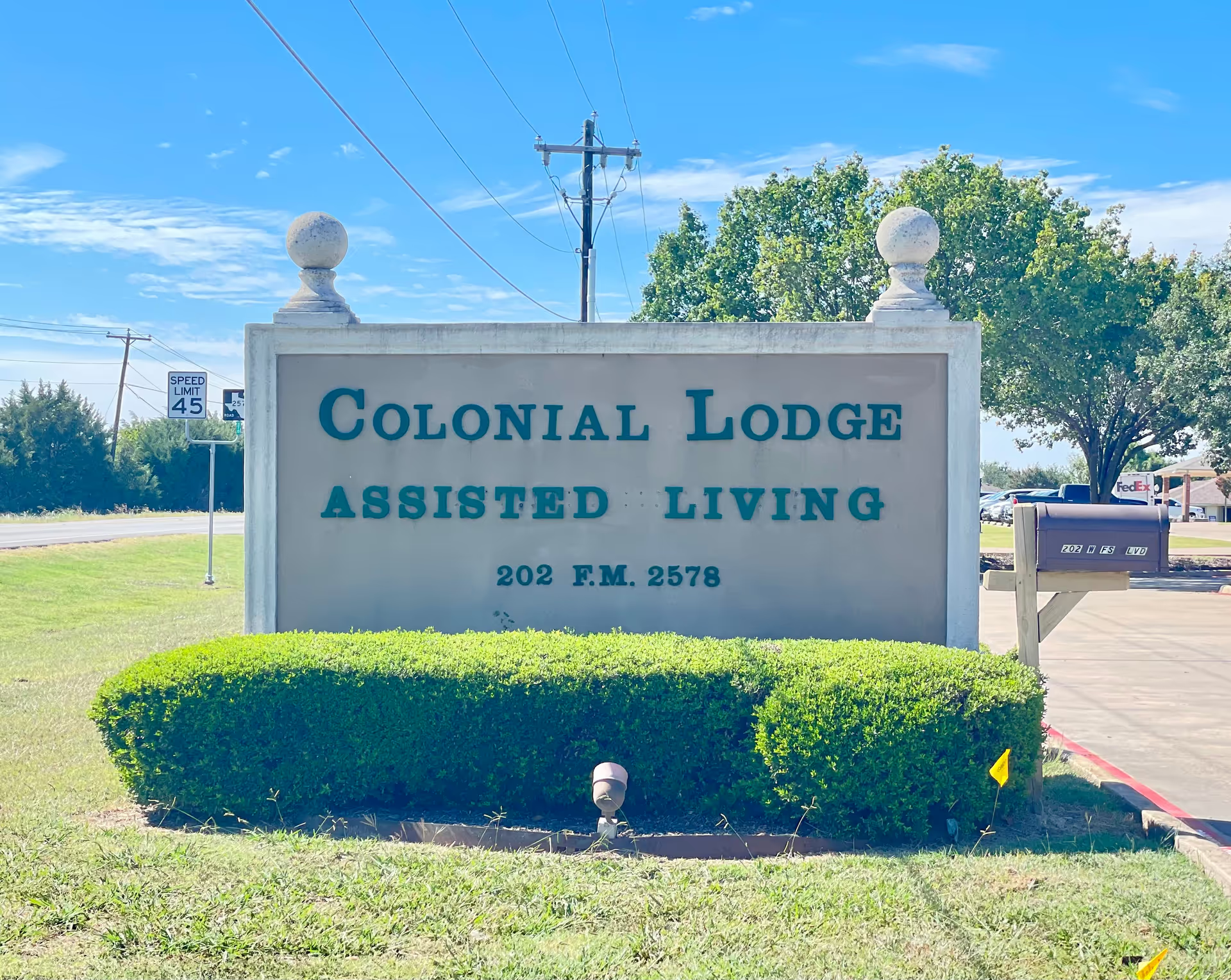
Care and overall resident experience: Reviews indicate inconsistent day-to-day care quality. Families and observers described examples of attentive direct-care employees and a manager who expresses concern for residents, but these positives exist alongside operational shortfalls that affect perceived reliability and value. Concerns about security of personal property and how incidents are handled are prominent and contribute to family unease.
Staffing and staff conduct: Staffing levels appear to be a recurring operational weakness; reviewers described situations consistent with chronic understaffing and uneven staff demeanor. While some front-line staff are characterized as helpful and attentive, others were described as unfriendly or inattentive. There are also recurring notes about unprofessional conduct during shifts (for example, staff engaged with personal devices while on duty) and communication tone that may affect family trust and resident comfort.
Dining and activities: Multiple comments point to dissatisfaction with the dining program and limited organized activities. Meal quality and meal-program reliability were described as below expectations, and there is a perceived lack of structured social and recreational programming, contributing to a darker, less-engaging environment for residents.
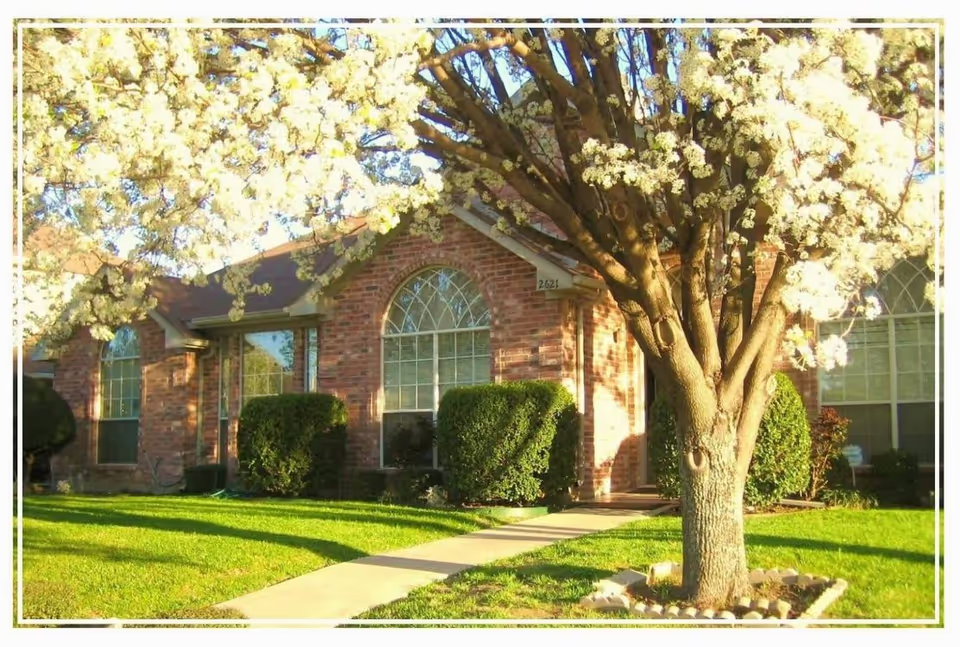
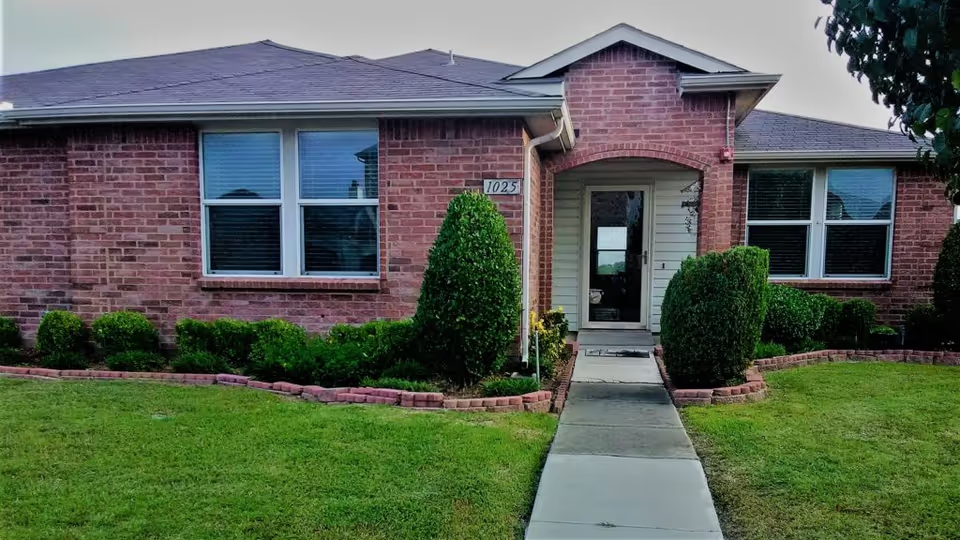
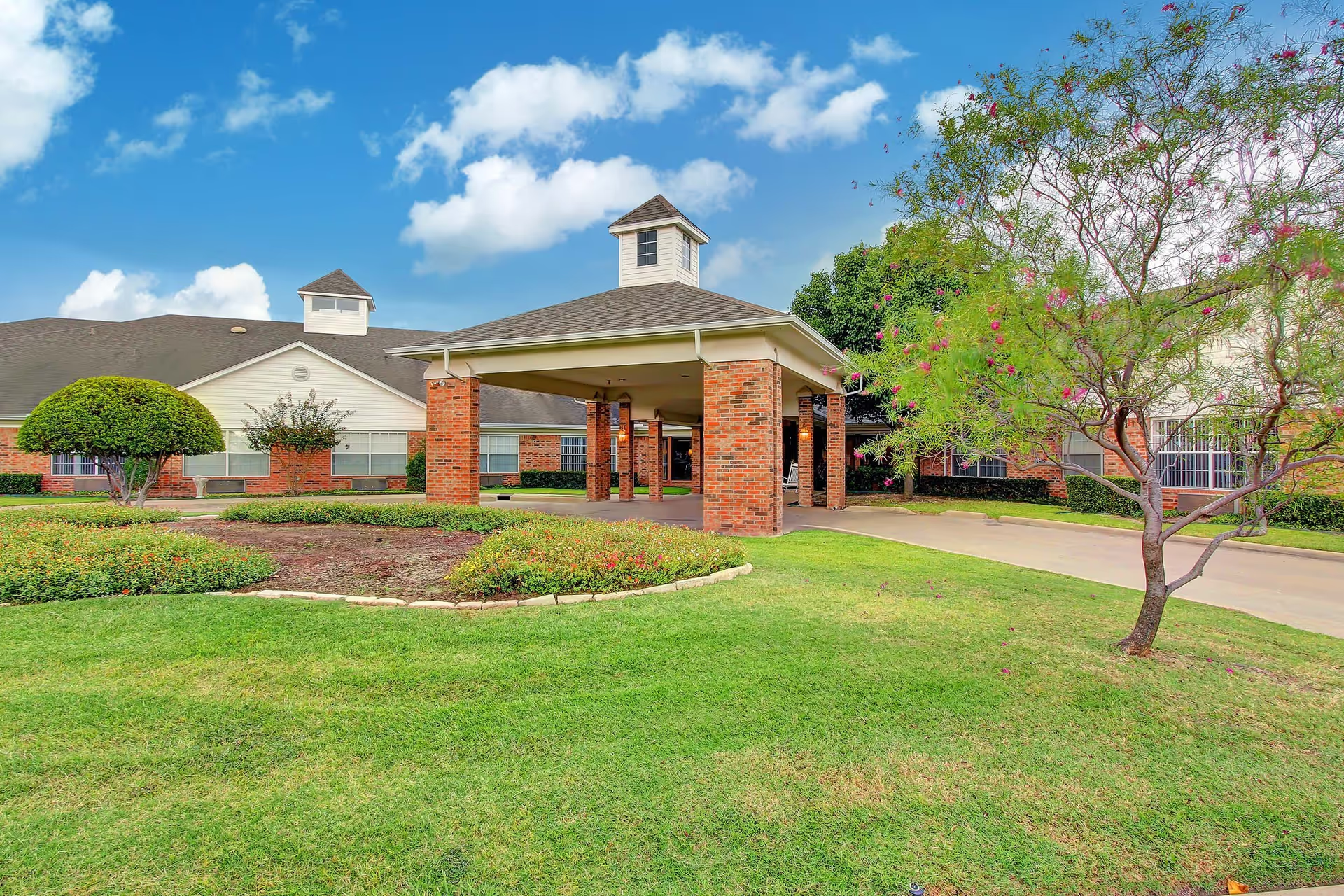
Facilities and ambience: The building is described as an older facility that may require modernization. Observations about poor interior lighting and an overall dim ambience suggest the physical plant has not been consistently updated to enhance resident comfort and safety.
Management, administration, and incident handling: Reviewers raised concerns about administrative organization and records management, including difficulty locating medical or hospital records. There are also serious concerns about property security: allegations of theft from residents and weaknesses in how those events were addressed were reported, with at least one account of a resident recovering belongings independently. Taken together, these items point to gaps in incident response procedures, documentation, and escalation to ownership or outside authorities when appropriate. Some families additionally expressed a sense that fees paid do not align with the level of service received.
Notable patterns and guidance for families: The pattern across summaries is one of mixed direct-care strengths overshadowed by systemic operational weaknesses—chiefly understaffing, administrative disorganization, property-security vulnerabilities, insufficient activity programming, and an aging physical environment. Prospective residents and families should consider asking the operator for details on staffing ratios, security and valuables policies, recent renovations or capital plans, sample activity calendars, dining menus and food-safety procedures, and how the facility documents and follows up on incidents. Observing a meal service, meeting multiple direct-care staff members, and requesting recent inspection or incident logs may help clarify whether the facility’s strengths are consistently applied and whether the documented weaknesses have been addressed.