Reviews of Monument Healthcare Bountiful Skilled Nursing present a mixed picture with clear strengths in clinical rehabilitation and many aspects of day-to-day care, alongside recurring operational concerns that families should evaluate during a tour. The facility's therapy teams (PT/OT) and rehabilitation services receive frequent praise for helping residents regain mobility and independence; reviewers commonly cited rapid functional progress and engaged therapists. Nursing and CNA staff are often described as compassionate and dedicated, with numerous accounts of individual employees and administrators who provided helpful admission support, family education, transportation coordination, and discharge planning.
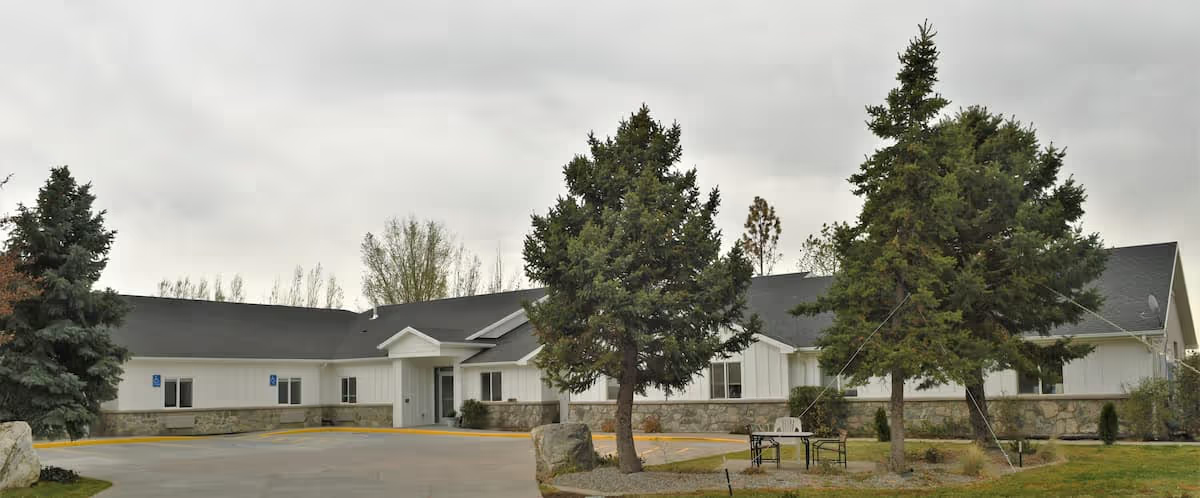
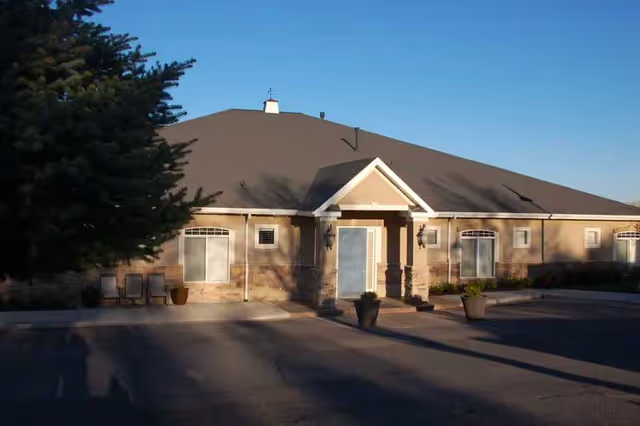
Facility spaces are regularly noted as clean, updated, and accessible, with pleasant common areas and a convenient location. Activity programming, outings, music time, and social/recreational offerings were frequent positives; many families appreciated meal variety, occasional treats, and a welcoming reception process. Hospice partnerships and social-work support were also identified as available resources that contributed to family confidence in end-of-life or complex-care planning.
Counterbalancing those strengths are operational patterns that recur across reviews. Several families reported inconsistent staff responsiveness (delays in answering call buttons or responding to family requests), variable personal-care practices (bathing and grooming schedules), and medication-management issues, including delays and unclear communication about dosing. Reviewers described uneven dementia-specific programming and supervision, which suggests the facility may be a better fit for some cognitive-care needs than others. Therapy delivery also shows variability: while some families praised robust therapy, others described reliance on contracted therapy assistants with short sessions rather than sustained in-house therapy coverage.
Administrative and management issues are another theme. Communication breakdowns around billing, paperwork, change-of-address/mail handling, and refund processing were repeatedly mentioned, along with difficulty reaching executive leadership for escalation. A number of reviews expressed concern about staffing levels and turnover, which families linked to slower response times and uneven care quality. There were also isolated but serious allegations related to medication practices and financial handling; those accounts, while not the norm of most reviews, merit direct inquiry with facility leadership and review of inspection or regulatory records.
Practical guidance for prospective residents and families: verify staffing patterns for the unit and shifts you are considering; ask detailed questions about medication administration and pharmacy oversight; review dementia-care protocols if the prospective resident has cognitive impairment; confirm who provides therapy (in-house vs. contract), typical session length, and therapist-to-resident ratios; and clarify financial, property, and post-discharge policies in writing. Overall, many families experienced high-quality rehabilitation and compassionate day-to-day care, but the variability in responsiveness, administrative processes, and dementia-specific services means an individualized assessment is advisable prior to placement.