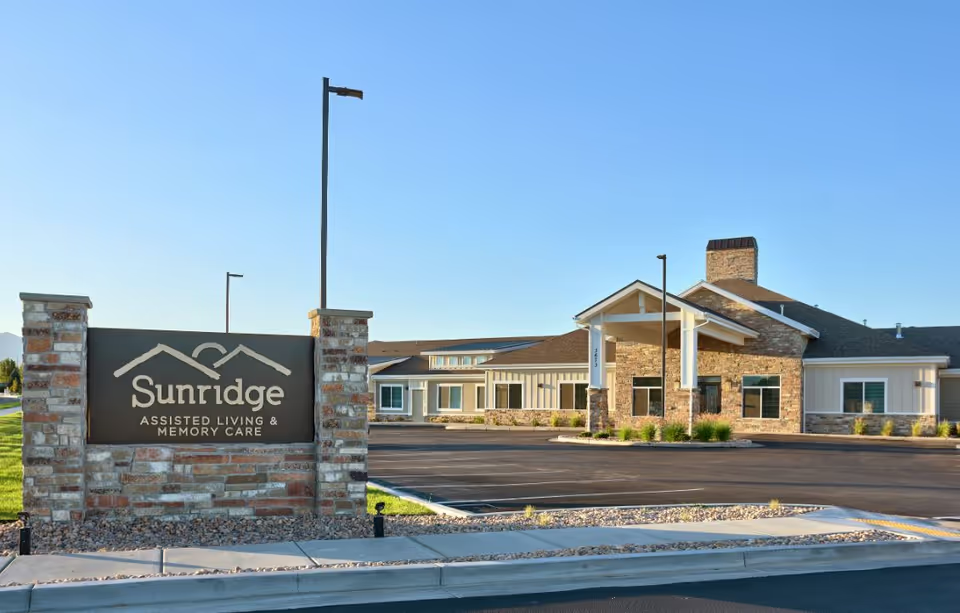
Legacy House Assisted Living of Ogden elicits strong praise for its staff culture, social programming, and dining, but also shows consistent operational gaps that prospective residents and families should evaluate closely.
Care quality and clinical oversight: Families frequently describe attentive, compassionate caregivers and effective care coordination, including positive experiences with allied services such as physical therapy and hospice. At the same time, there are clear concerns about clinical consistency — reviewers indicate limited on-site registered-nurse coverage, a high proportion of early-career direct-care aides, and specific lapses in routine personal-care tasks (for example, delays in bathing schedules, assistance with oral care, and hydration). Medication-administration processes were highlighted both positively and negatively; while some families praised medication follow-up, others observed errors or inconsistencies. These patterns suggest the facility can provide good outcomes when staffing and clinical leadership align, but that oversight and staffing levels may vary shift-to-shift.
Staff and management: Staff are repeatedly described as warm, welcoming, and family-oriented; many reviewers name individual staff and leadership as reasons they feel comfortable leaving a loved one there. The activity director and front-desk team receive particular praise. Management is visible and engaged in many accounts, though some families noted unkept promises or occasional lapses in follow-through. Communication tools such as a shared event calendar and a Facebook page are used and valued by families. Prospective residents should clarify clinical staffing ratios, supervisory RN presence, and how the facility handles staff training and turnover.
Dining and nutrition: The dining program and food quality are commonly cited strengths — chef-prepared meals, attractive menus, and enthusiastic feedback from residents. That said, there is some inconsistency in meal quality and in the kitchen's ability to accommodate specialized diets (for example, vegetarian protein substitutions and supplemental beverages). The dining room itself is noted as relatively small, which can cause seating constraints and limit the ability of couples to dine together unless they arrive early. Families should ask about meal accommodation procedures and dining-room seating policies.
Activities and social life: The community offers a robust activities calendar, regular outings, shopping trips, and frequent common-area engagement; many residents report a vibrant social life and regained energy. However, activity hours and weekend programming were described as limited by some — examples include short weekday activity blocks and reduced weekend offerings. If consistent daily engagement or weekend programming is important, confirm current schedules and staffing for activities.
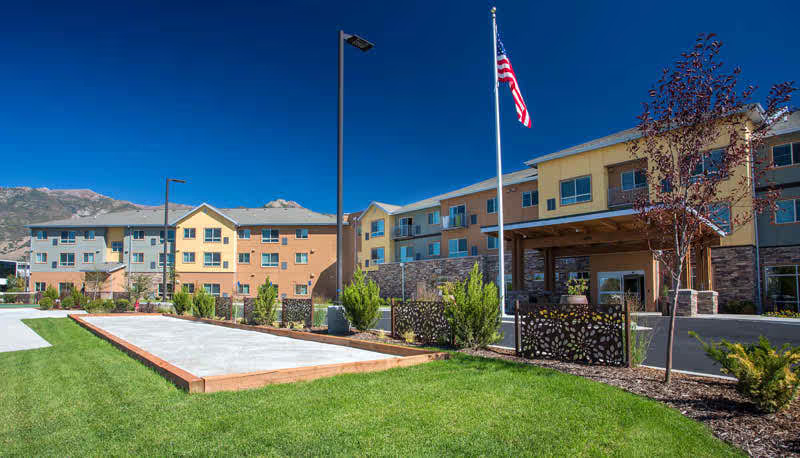
Facilities and housekeeping: Reviewers generally describe a clean, well-kept facility with comfortable apartment options, including larger one- and two-bedroom units. Positive comments include tasteful rooms and pleasant common spaces. There are, however, intermittent housekeeping inconsistencies (missed vacuuming, irregular room cleaning, and missed shower schedules cited) and accessibility limitations in some apartments that may not comfortably accommodate larger mobility devices. Prospective residents should tour specific unit layouts to confirm accessibility and inspect housekeeping schedules and expectations.
Notable patterns and practical recommendations: Overall sentiment skews positive on staffing demeanor, social programming, and the dining experience, with a meaningful minority pointing to operational weaknesses around clinical supervision, consistency of personal care, housekeeping reliability, and billing transparency. Before committing, families should ask for: current RN coverage and clinical oversight policies; staff training and turnover metrics; written medication-administration protocols; housekeeping and bathing schedules; dining accommodation procedures for special diets and couples; accessibility measurements for specific units; and full disclosure of fees and billing practices. These checks will help determine whether the community’s strong social and cultural fit matches the level of clinical reliability a particular resident requires.