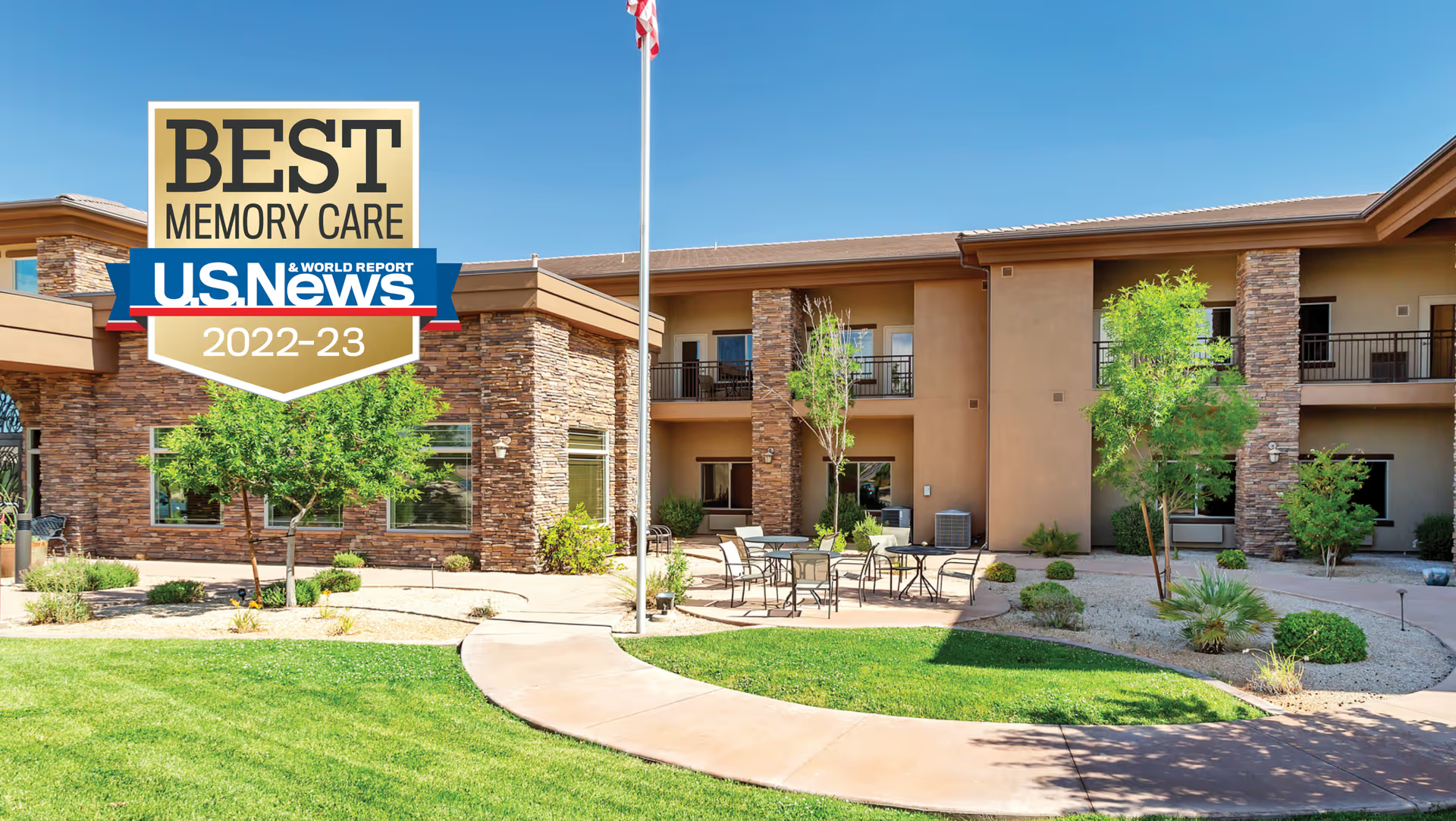
Legacy Village of St. George presents as a modern, resort-style senior living community with a wide range of amenities and a strong social culture. The building, apartments and public spaces are consistently described as bright, new, and well maintained; many reviewers highlighted spacious units with balconies and mountain views, attractive dining rooms, multiple on-site recreational amenities (pool, spa, putting green, courts) and transportation options. The recreation department and event programming are prominent strengths: regular classes, live entertainment, themed parties and a varied activities calendar contribute to an engaged resident community and a lively social atmosphere.
Staff behavior and day-to-day caregiving receive substantial positive comment. Many families and residents describe warm, attentive interactions, staff who learn residents' names, conscientious move-in assistance, and a family-like culture among employees. Memory-care services are noted as structured and manageable due to a capped population, and some reviewers described dementia-focused care as specialized and life-changing. Housekeeping and basic hospitality services (weekly housekeeping, guest rooms, concierge-style assistance) are seen as conveniences that support independent and assisted residents alike.
Dining is a mixed area of strength and variability. Numerous reviews praise chef-prepared, made-to-order meals, fine-dining nights and variety of menu choices; others describe intermittent problems with meal delivery timeliness, cold entrees for residents who cannot dine in the dining room, portion sizes and limited diabetic-specific options. The community offers multiple dining venues and weekly special events, but operational consistency in meal service and dietary accommodation appears uneven.
Care quality on the assisted-living side shows a dual pattern: while individual caregivers and some licensed staff are praised for compassion and hands-on attention, several reviews raise concerns about clinical staffing levels, nursing follow-through and consistent adherence to individual care plans. Related operational weaknesses include delayed responses to call lights, transfer-assistance gaps and training shortfalls for some frontline staff. These patterns suggest variability in clinical oversight and staffing coverage between shifts or units rather than across-the-board clinical deficiency.
Operational, administrative and safety-related issues recur as themes families should evaluate closely. Reviewers describe billing opacity and month-to-month charge variability, occasional delays in deposit refunds, and extra or unexpected fees; there are also mentions of contractual constraints such as required pharmacy use. Communication gaps are noted between families and management or reception, including difficulty reaching the administrator and inconsistent coordination among departments (dining, activities, housekeeping). More serious concerns include pest-control issues and instances that generated family alarm about safety-incident handling; these point to the need for stronger incident-response protocols, clearer family communication, and tighter environmental controls.
Bottom line: Legacy Village of St. George offers many of the hallmarks of a high-end, activity-rich senior community—attractive facilities, varied programming, and a generally compassionate staff culture—paired with practical conveniences that appeal to independent and memory-care residents. Prospective residents and families should weigh these strengths against operational concerns that appear concentrated in assisted living and back-office functions: evaluate clinical staffing patterns and shift coverage, verify dietary accommodations and meal-service procedures, review billing practices and contractual vendor terms, and ask for documentation of pest-control and incident-response policies. An on-site, detailed conversation with nursing leadership and management—covering care-plan enforcement, staffing ratios, training protocols and communication escalation paths—will help determine whether the community’s positive aspects align with an individual resident’s safety and clinical needs.