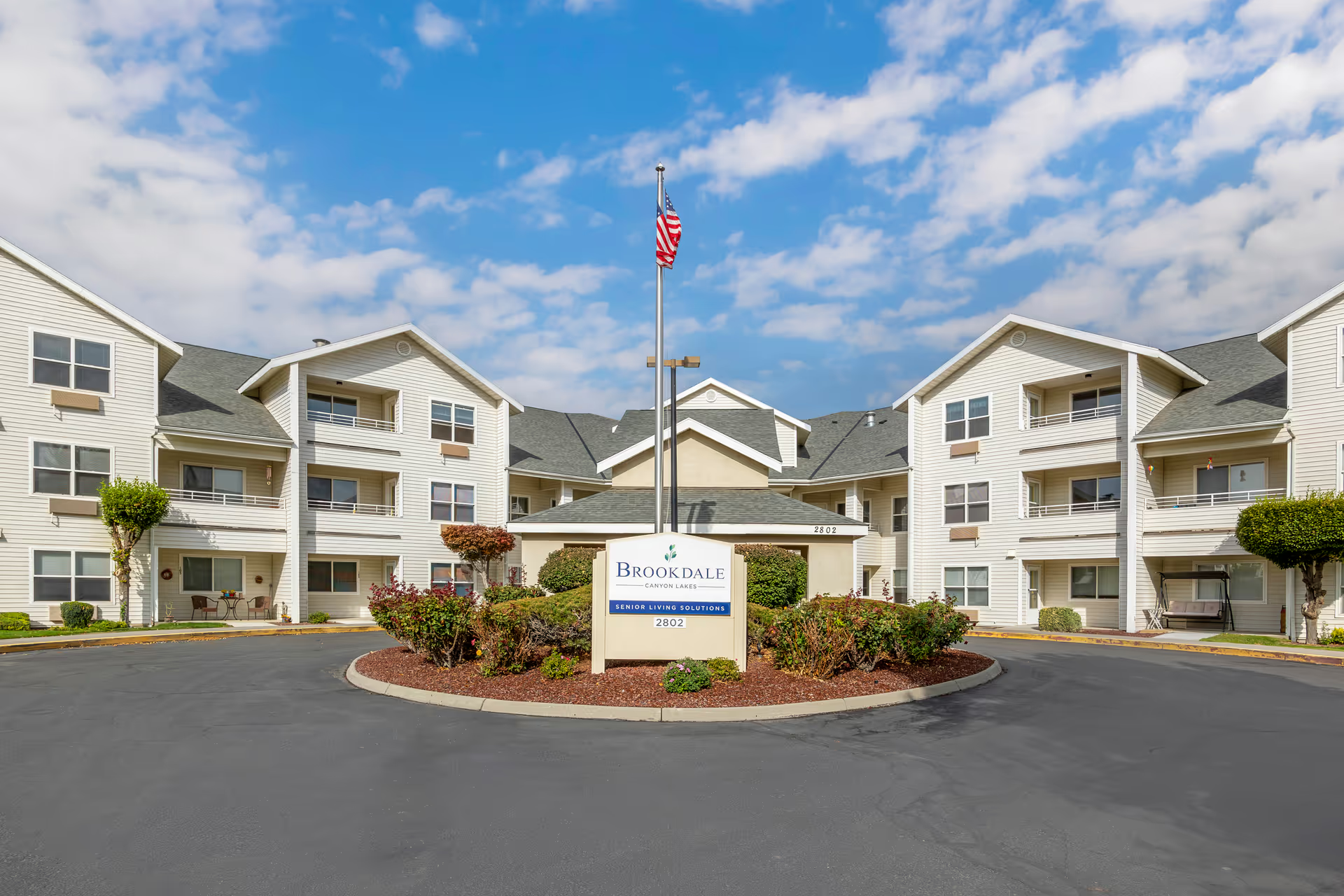
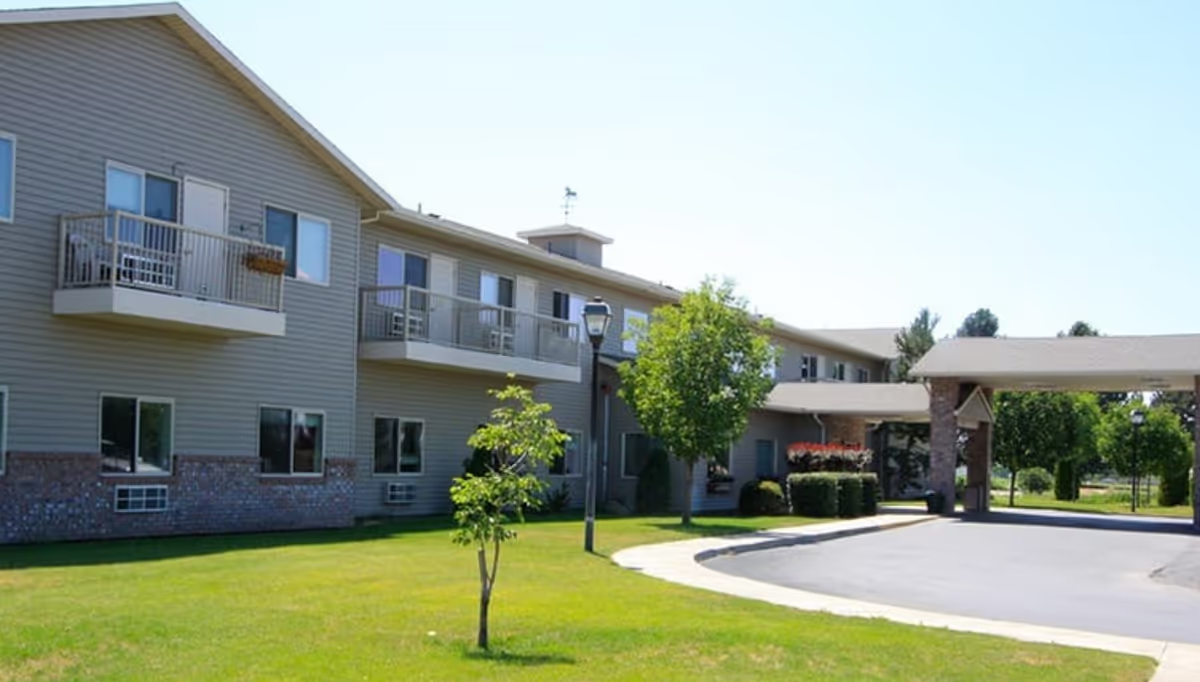
Reviews for Brookdale Torbett are strongly mixed, with a clear split between families who describe excellent, attentive care and those who experienced operational weaknesses that affected daily living. Many commenters praise individual caregivers, memory-care teams, and specific leaders for compassionate, hands-on work — citing personalized care plans, effective move-in support, strong family communication, active engagement, and social programming that improved resident mood and safety. The community also earns positive marks for an inviting physical environment in many areas, an on-site salon, transportation services, and festive activities and outings.
At the same time, a recurrent pattern of operational variability appears across reviews. When staffing and leadership are stable, families describe reliable care and meaningful activities; when staffing is thin or leadership is in transition, families describe a range of concerns. These operational gaps include sanitation concerns and inconsistent linen management, lapses in personal-care routines (including bathing and incontinence-related care), and medication-management issues. Several accounts also describe failures in timely response and monitoring that contributed to falls or delayed incident notification to families; this points to gaps in fall-prevention protocols and post-incident communication in some instances.
Staffing and supervision are central themes. Positive experiences are closely tied to long-tenured, well-coordinated teams and proactive administrators; negative experiences correlate with understaffing, high turnover, and poor shift-to-shift communication. Reviewers note that these personnel patterns affect nearly every domain of care — from the regularity of activities and mealtimes to laundry accuracy and room upkeep. Management consistency and local leadership responsiveness appear to strongly influence whether day‑to‑day operations run smoothly.
Dining and activities likewise show variability. Several families describe appealing meals, social dining, and creative activities (crafts, games, outings, holiday events). Others report inconsistent meal quality and timing, limited snack/after-hours options, long waits for meals, and cancellations or limited frequency of outings when staff are unavailable. Activity programming can be a strength when staffed and scheduled, but some reviewers found programming unreliable during staffing shortages.
Facility maintenance and housekeeping receive positive comments when processes are functioning, but sanitation and odor concerns, missed linen changes, mixed or lost clothing, and slow maintenance response emerge repeatedly as operational weaknesses. A few families also raised concerns about reception coverage and resident privacy that suggest gaps in oversight during busy periods or staff shortages.
For prospective residents and families, the notable pattern is variability: Brookdale Torbett can deliver high-quality, compassionate memory care and an engaging community experience under stable management and staffing, but operational weaknesses tied to staffing, communication, and housekeeping have produced serious consequences for some families. When evaluating the community, visitors should ask about current staffing ratios, turnover history, medication-safety protocols, fall-prevention and incident-notification procedures, laundry and linen processes, daily activity schedules, and examples of recent leadership changes. A daytime and evening visit, along with conversations with the director and direct-care staff, can help assess whether the current operational conditions align with a family’s expectations for reliability and safety.