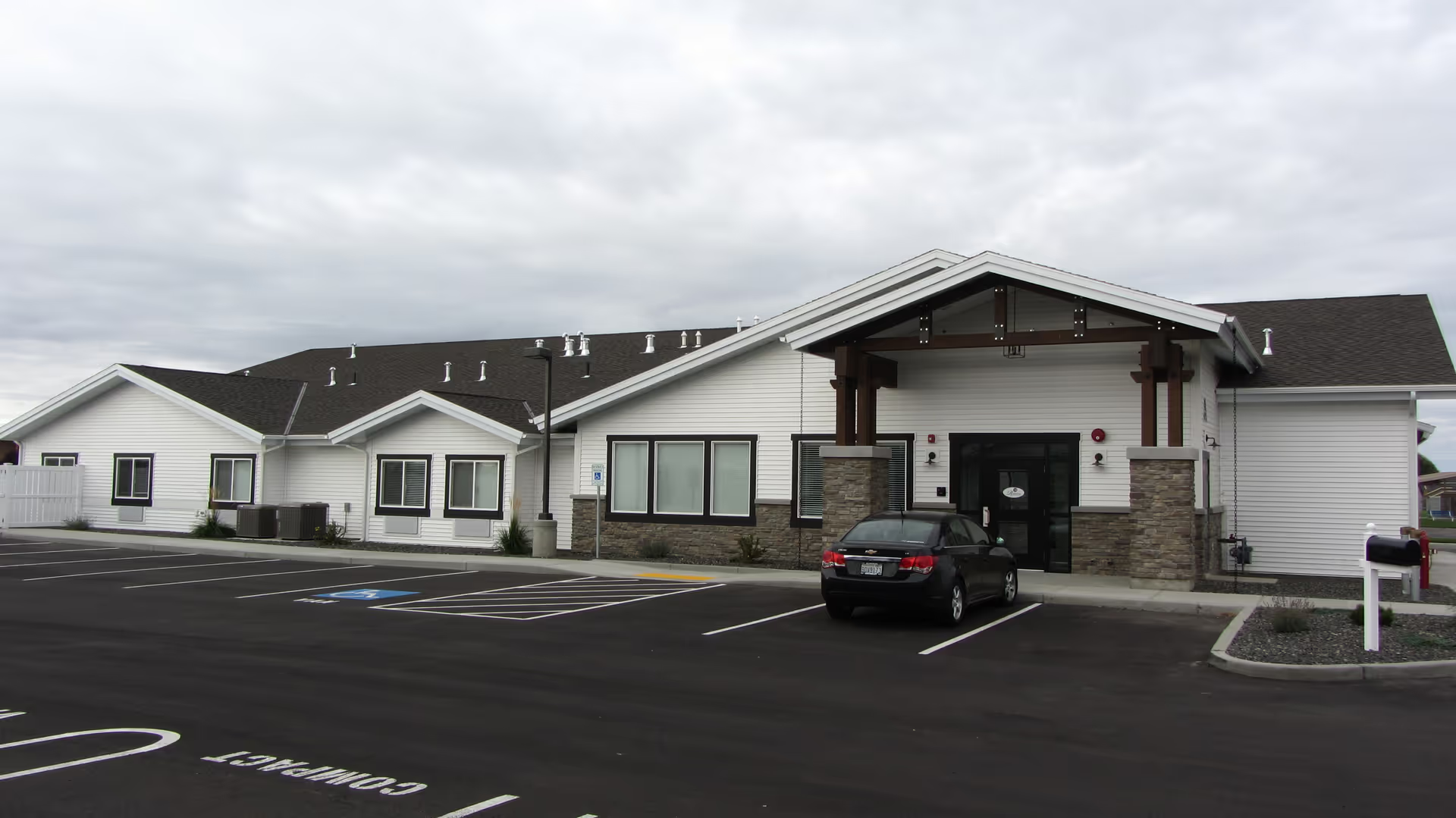
Overall impression: Reviews depict Clovernook Adult Family Home as a small, well-kept adult family home with consistently positive feedback on caregiving and the living environment. Families emphasize a warm, family-like atmosphere, strong dementia-care skills, and reliable day-to-day management. The tone across comments is that of trust and relief: staff are described as attentive, patient, and professionally capable, and several families named individual caregivers positively.
Care and staff: Care quality is consistently characterized as compassionate and individualized. Reviewers cite on-time medication administration, attention to dietary needs, knowledgeable nursing oversight (an RN), and experienced dementia care that includes safety-focused modifications and patient, kind interactions. End-of-life support and clear communication with family members are recurring themes, suggesting that the team prioritizes both clinical needs and family engagement. Staffing is portrayed as dedicated and willing to ‘‘go above and beyond,’’ contributing to a sense of security and continuity.
Dining and activities: Dining is described positively — home-cooked meals and attention to individual dietary needs are highlighted, along with residents being well-fed. Daily routines are said to be well managed, which supports a predictable, calm environment for residents. There is less detail in the reviews about formal recreational programming or a broad activities calendar, which is consistent with the home's small, residential model; prospective families should ask about specific activity options if robust programming is a priority.
Facilities and management: The facility is repeatedly described as clean, cozy, and welcoming, with pleasant views and a homelike décor. Management is characterized as organized and communicative, supporting a safe and nurturing atmosphere. The adult family home scale, which reviewers explicitly or implicitly reference through terms like ‘‘home-like’’ and ‘‘cozy,’’ brings clear advantages in personalization and warmth but also suggests limits in capacity and on-site specialized services compared with larger senior living communities.
Notable patterns and guidance: The dominant patterns are strong, person-centered caregiving, dementia competence, and good family communication. Potential trade-offs tied to the home's scale include more limited on-site therapy options and a narrower range of formal activities. For prospective residents and families, useful next steps are to confirm bed capacity and staffing patterns (including night coverage and RN availability), ask about access to external therapy or specialty services, and review the activity schedule and meal accommodations to ensure they match the resident's needs.