Sea Cliff Healthcare Center elicits strongly mixed impressions. Many families and residents describe caring, attentive caregivers, effective nursing services (including wound care and pain management), and a therapy program that supports rehabilitation goals. Reviewers frequently note individual staff members and CNAs who go above and beyond, daily housekeeping and linen service, and parts of the building that have been recently renovated and tastefully decorated, creating a homelike atmosphere for some residents.
At the same time, recurring operational issues are prominent. Staffing levels are described as inconsistent, with reviewers noting delays in responding to call lights and toileting assistance; those delays are linked to concerns about dignity and timely care. Several accounts indicate gaps in clinical follow-up and care coordination, including missed follow-up on equipment needs, delays in nursing assessment, and inconsistencies in adherence to infection-control protocols during outbreak events.
Dining and nutrition present a mixed picture: the facility appears able to provide dietary accommodations and substitution lists, and some families report positive dining environments. However, other comments describe incorrect meal deliveries, inconsistent breakfast availability, and variable food quality. Activity programming and therapy availability are similarly uneven—there are reports of an active therapy department, recent gym renovations, and organized activities, but other accounts mention interruptions to therapy services and a lower activity level for some residents, especially those with cognitive impairment.
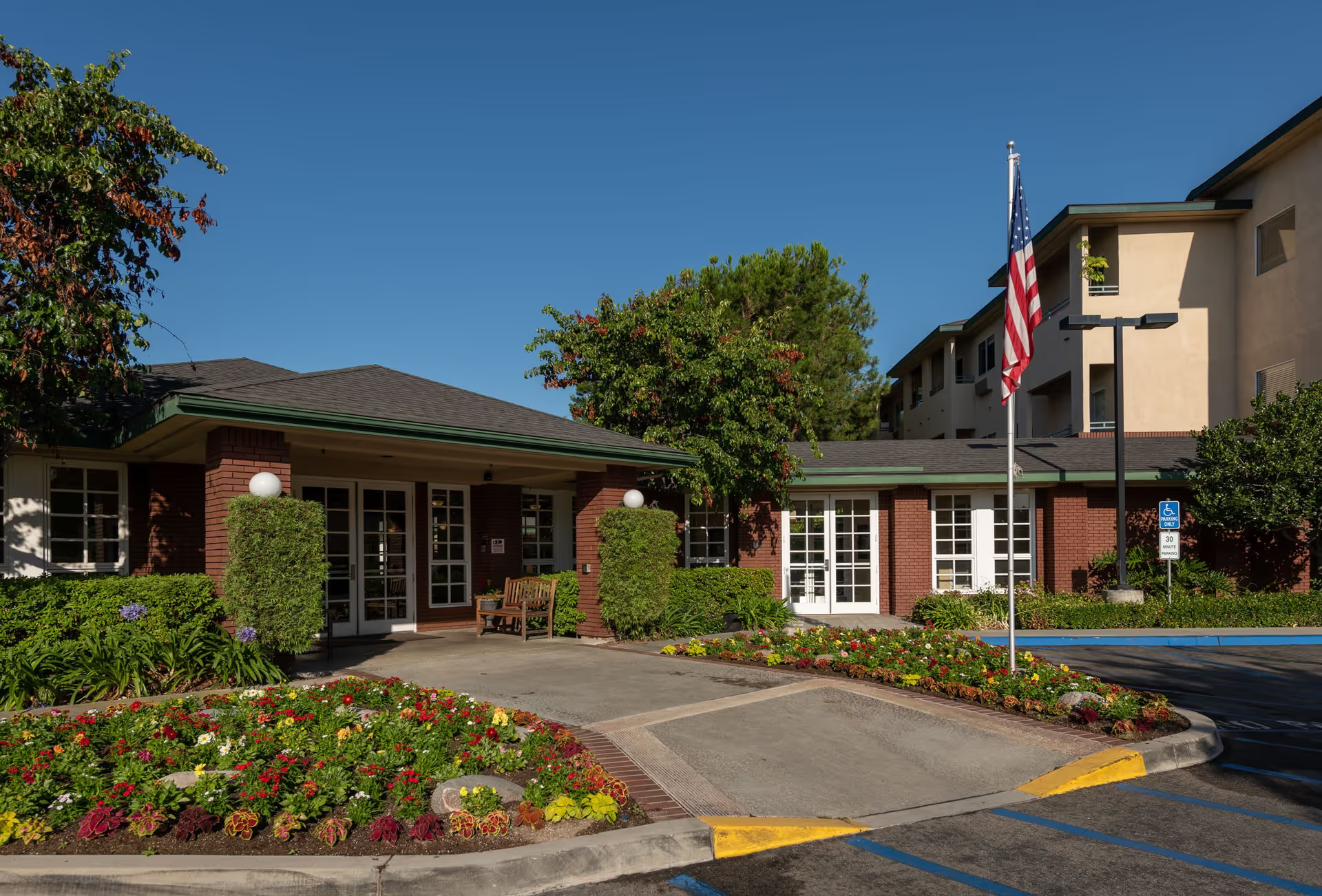
Facility condition and administration show polarization. Portions of the center are described as clean, bright, and recently updated, while other descriptions emphasize maintenance and accessibility issues—small shared rooms in older parts of the building, peeling paint, and ADA shortcomings. Communication with administration is another recurring theme: some families praise responsive front-desk staff and casework, whereas others report unreturned calls, poor follow-up on concerns, and a perception that complaints are not always addressed effectively.
Taken together, the pattern suggests a facility with meaningful strengths in individualized caregiving, therapy services, and areas that have been modernized, alongside operational vulnerabilities tied to staffing, sanitation control, care coordination, and management responsiveness. Prospective families should consider an in-person tour that checks current staffing ratios, observed call-response times, recent infection-control history, maintenance and accessibility in specific units, and the scheduling consistency for therapy and dining services. Asking about recent administrative changes and examples of improvements may clarify whether positive changes reported by some families have been implemented consistently across the facility.