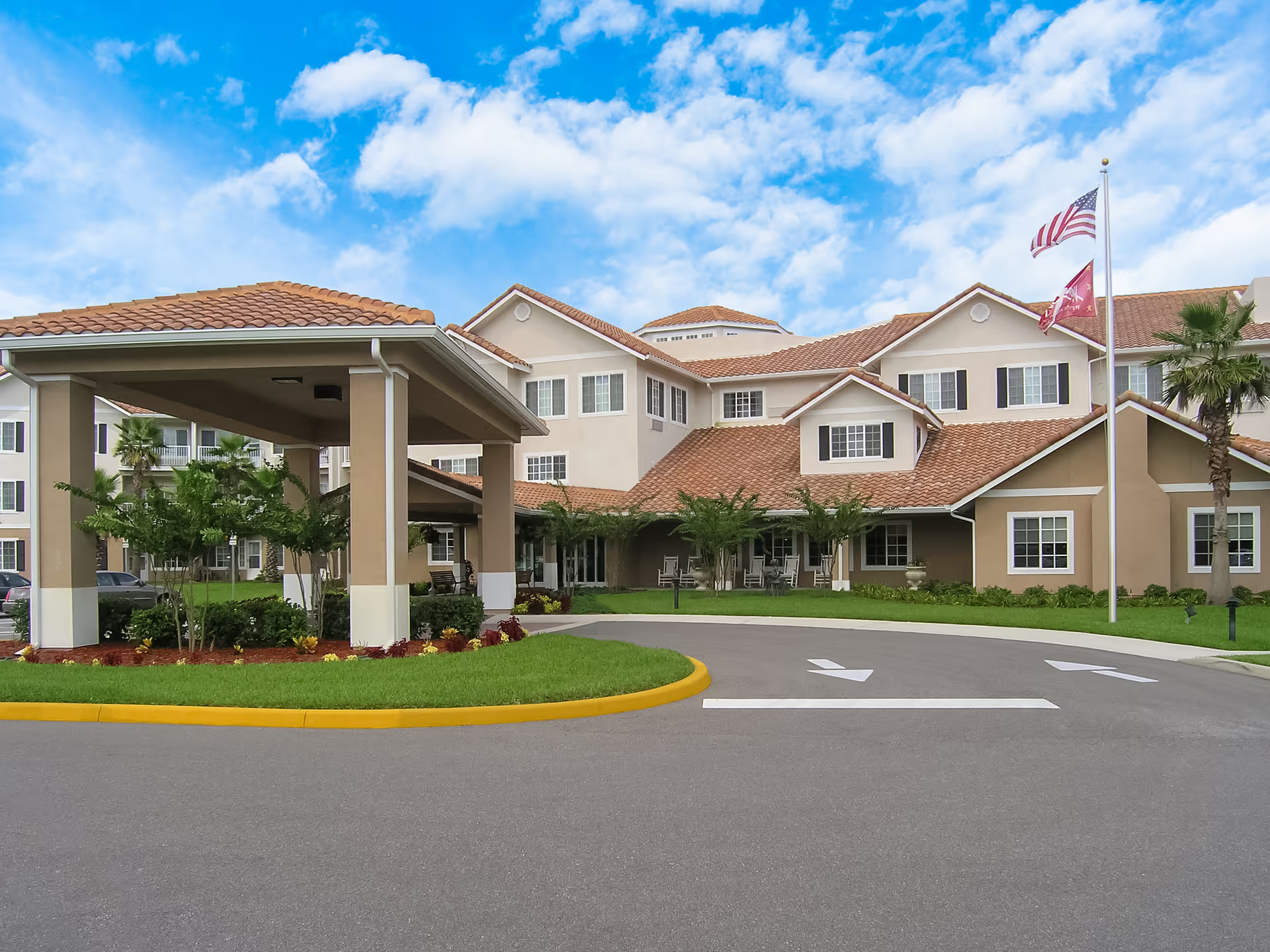
Overall impression: Feedback is polarized: several accounts describe strong clinical rehabilitative outcomes and compassionate front-line caregivers, while others raise significant operational and safety concerns. Prospective families will encounter both positive reports of therapy-driven recoveries and critical reports describing delays and systemic staffing problems.
Care quality: Rehabilitation services are a clear strength; multiple accounts emphasize effective therapy after orthopedic surgery, with residents achieving notable functional gains. Nursing and therapy staff are frequently described as caring and skilled, and there are reports of successful wound-prevention and healing. However, there are persistent operational weaknesses affecting day-to-day clinical care: chronic staffing shortfalls, inconsistent follow-through on individualized care plans, delays in medication administration, and slow response times to call lights and care requests. These operational gaps are associated with lapses in basic care processes including incontinence-care timeliness and supervision that can affect resident safety.
Staff and management: Front-line staff — therapists, nurses, and CNAs when available — receive positive remarks for compassion and willingness to engage with families. Leadership receives mixed commentary: some families praise the administrator and director of nursing for responsiveness, while other reports note a management-heavy presence relative to clinical coverage. This suggests variability in operational focus and possible imbalance between administrative and bedside staffing.
Dining, activities, and facilities: The dining program is noted for offering multiple menu choices, and staff engagement around resident milestones indicates active encouragement of personal goals. Facility cleanliness is described positively in several accounts, though there are also specific room-level sanitation concerns; cleanliness appears inconsistent across units. Equipment reliability is another area of concern, with at least one account describing failures of respiratory equipment and broader questions about maintenance processes.
Admissions and communication: Admissions and bed-coordination processes are identified as problematic in multiple accounts — slow or unreturned calls, conflicting information, and limited bed availability during the intake process. Families report mixed experiences with how information is communicated during admission and transitions.
Notable patterns and recommendations: The dominant pattern is divergence between strong rehabilitative and caregiving episodes and systemic operational weaknesses (staffing, supervision, care-plan adherence, equipment maintenance, and admissions coordination). Prospective families should seek up-to-date information on staffing ratios and turnover, ask for examples of how individualized care plans are audited and enforced, review equipment-maintenance logs, inquire about recent regulatory history, and request to observe peak-shift staffing and response times. Doing so can help clarify whether the facility’s strengths in therapy and individual caregiver engagement are matched by consistent operational practices across the resident population.