Reviews describe a facility with notable strengths in rehabilitation and transitional support alongside recurring operational concerns. The therapy department, particularly physical and occupational therapy, receives consistent positive feedback for clinical skill, engagement, and successful rehab outcomes. Several families pointed to motivated therapists who kept residents active and contributed to smooth discharges. Admissions and transition processes are also highlighted as informative and helpful, with clear explanations of Medicare and insurance matters.
Clinical care beyond therapy appears inconsistent. Some reviewers praised attentive caregiving and professional, personable staff; others described delays in basic care tasks, inconsistent responsiveness from nursing and aides, and lapses in medication administration and timely pain control. There are repeated references to privacy intrusions and concerns about behavioral-health decision processes, which suggest variability in respect for resident autonomy and staff judgment. Overall, the pattern indicates reliable rehabilitation services but uneven performance in ongoing nursing and clinical oversight.
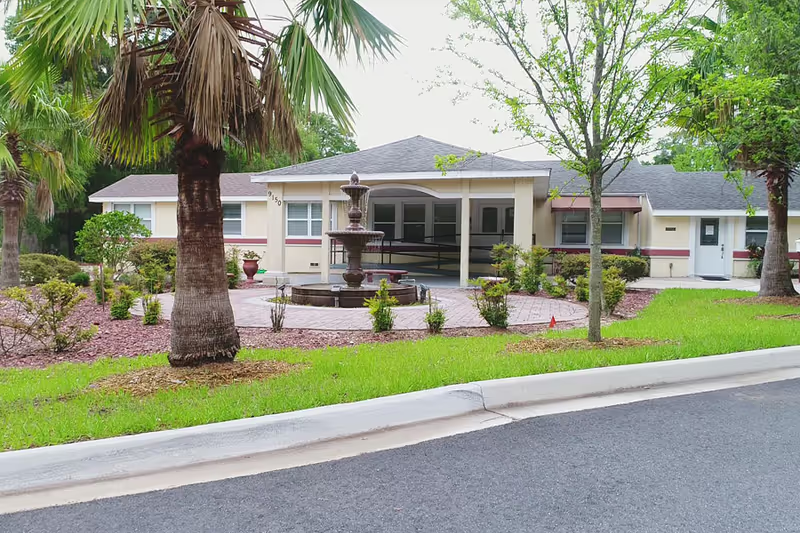
Dining and daily routines present mixed experiences. Positive comments about helpful staff and a pleasant patio do not fully offset criticisms of meal quality and portion inconsistency. Several reviewers reported dissatisfaction with food variety and portions. Activity-related feedback centers mainly on therapy-driven engagement rather than a broader activities program, so prospective families should clarify the facility’s recreational offerings beyond rehab.
Operational and environment issues are a recurring theme. While some guests describe clean, well-furnished rooms and tidy common areas, others raised sanitation and pest-control concerns, noisy nighttime staff behavior, and problems with laundry and personal-property handling. Multiple accounts of missing or mishandled clothing and belongings point to systemic weaknesses in property-management processes. Allegations of theft and unsecured personal items are among the most serious recurring complaints and should prompt direct inquiry.
Management and culture are described as mixed. Positive interactions with individual staff members contrast with perceptions of a top-heavy administration, poor follow-up on complaints, and instances of administrative pressure related to benefits or paperwork. These patterns suggest variable staff training, supervision, and complaint-resolution practices. The divergence between strong therapy outcomes and operational shortcomings indicates inconsistent implementation of standards across departments.
For prospective residents and families: the facility may be a strong option for short-term rehabilitation when therapy is the primary need, but it is important to verify current practices around nursing staffing, medication safety, property controls, laundry procedures, infection and pest-control measures, and roommate placement. Observe meal service, inspect resident rooms and common areas, ask for written policies on personal-property handling and incident reporting, and request up-to-date staffing/shift information to assess whether the facility’s strengths align with your relative’s priorities.