Overall impression: Providence Place’s long-term care unit presents a mixture of clear strengths and operational weaknesses. Many families praised the facility’s clean, homey environment, organized therapy program, and compassionate frontline staff. Therapy and rehabilitation are frequently highlighted as effective and improving residents’ mobility and function. Housekeeping and dining areas generate positive feedback for cleanliness, fresh meals, and a social dining atmosphere. The facility’s compact layout and pleasant common spaces are conducive to family visits, and proximity to the hospital is an additional logistical advantage.
Care and staff: Nursing staff are described as caring and personable by many families, with specific staff members receiving strong praise for hands-on attention. At the same time, reviewers indicate variability across shifts: staffing shortages and inconsistent coverage appear to affect responsiveness. Observations include delays answering call lights, uneven assistance with toileting and personal care, and occasional perceptions of low staff motivation or poor conduct. Rehabilitation therapists are generally seen as competent and proactive, though therapy scheduling sometimes limits residents’ ability to attend other activities.
Medication, clinical coordination, and management: A recurring pattern involves medication-management and discharge coordination concerns. Examples provided by families point to missed or delayed medications, incomplete medication lists at discharge, and communication lapses around injection administration and post-discharge supplies. In addition, families describe gaps in communication between the facility and external physicians and variable transparency during initial admissions and discharge planning. Administrative visibility can be inconsistent; front-desk availability and volunteer coordination have been noted as areas needing improvement.
Dining and activities: Dining receives largely favorable comments for food quality, healthy choices, alternate-menu options, and a convivial dining room. However, reviewers also described missed meals, issues with alternate meals not being available, and constraints on participation for residents who are on feeding protocols or heavily scheduled for therapy. Activity programming such as bingo, devotional time, and small environmental touches (birds in cages) are appreciated, but engagement can be limited by therapy schedules and staffing constraints.
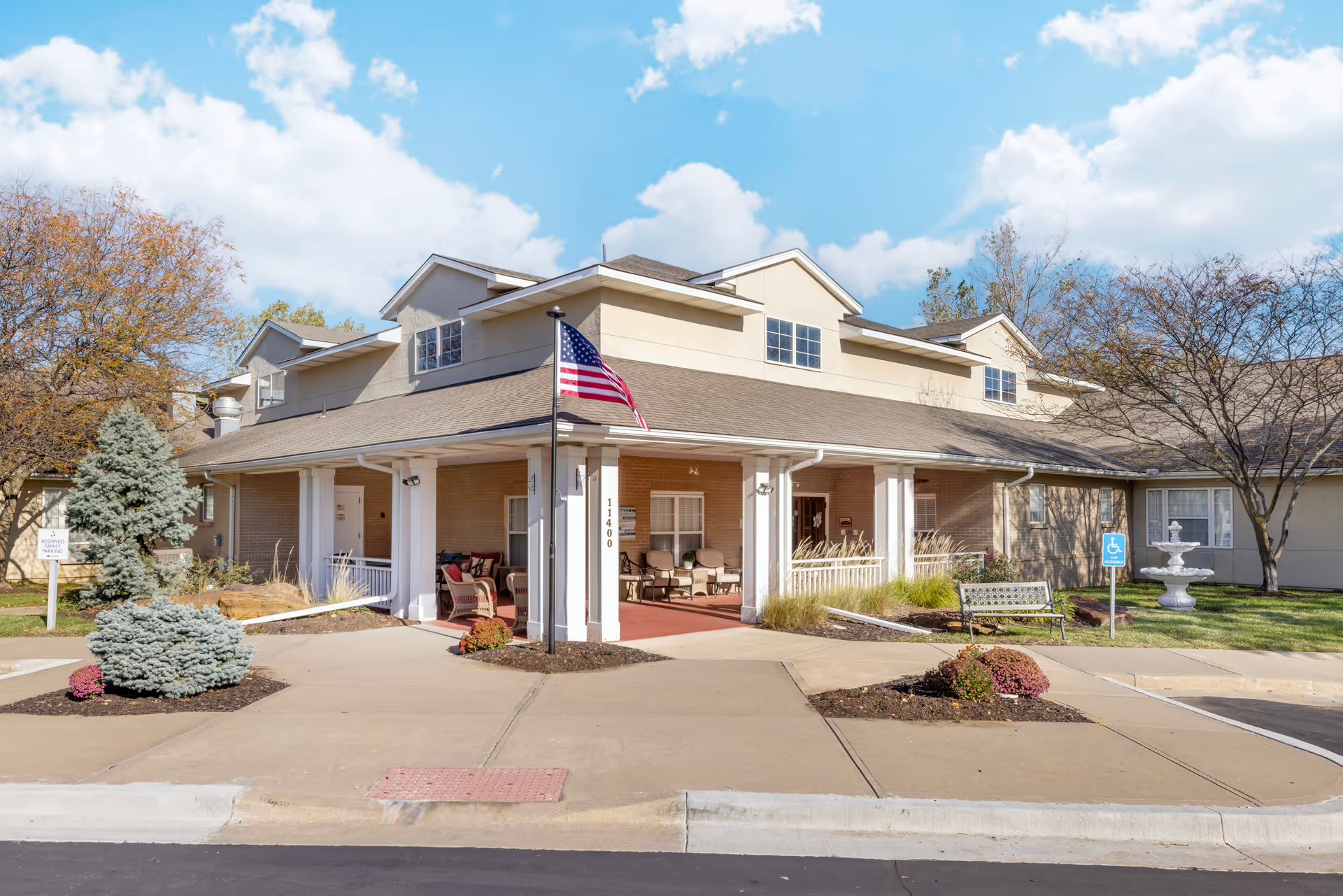
Facilities and environment: The unit is consistently described as clean, well-maintained, and pleasant. Family-friendly common areas and a compact, navigable layout are positive features. Some residents and families noted limited in-room entertainment quality (television) and occasional administrative unavailability that affect the experience.
Bottom line: Providence Place offers a strong rehabilitative focus, a clean and welcoming environment, and many attentive caregivers. Prospective residents and families should weigh these strengths against operational concerns including staffing consistency, medication and discharge coordination, responsiveness to personal-care needs, and administrative communication. Those considering the facility may benefit from direct conversations with management about staffing patterns, medication-discharge procedures, and activity scheduling to ensure these operational areas meet their expectations.