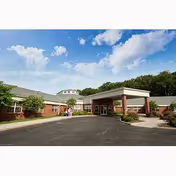
The reviews present a mixed picture of care at Kingston Care Center of Sylvania. Positive themes include strong rehabilitation services, particularly physical therapy, and a generally clean, well-maintained environment. Families and residents frequently describe staff as caring and approachable, and several accounts highlight administration engaging directly in individualized care planning. Those operational strengths appear to support residents' mental well-being and a sense of routine, which some families identified as beneficial for dementia-related needs.
Care-quality concerns focus on operational reliability and clinical oversight. Multiple comments describe delays in staff response to call systems and delays in attending to incontinence needs; these translate into a broader pattern of responsiveness issues that affect daily care. Some reviewers described serious clinical complications for residents, which suggests gaps in clinical monitoring and infection-prevention practices that warrant attention and follow-up. There are also reports indicating variability in care continuity across shifts and inconsistencies in dementia-specific practices, which can affect outcomes for residents with cognitive impairment.
Staff and management receive both praise and critique. Caregivers are often characterized as compassionate and easy to communicate with, and the administration is noted for working on care plans and responding to concerns. At the same time, reviewers describe shortcomings in initial resident assessment processes—examples include oversights about assistive devices such as glasses and hearing aids—and at least one allegation of discriminatory treatment toward a resident with dwarfism. These items point to opportunities for stronger admission protocols, clearer documentation of personal aids, and enhanced staff training on inclusive, dignity-preserving care.
There is little detailed feedback about dining and organized activities in the provided summaries. What is clear is that maintaining consistent placement and routine was important to several families and appeared to support emotional well-being. Physical therapy was highlighted as a positive clinical program that made a noticeable difference for at least one reviewer.
Overall, prospective residents and families should weigh the facility's strengths—rehabilitation services, a clean environment, and generally compassionate staff—against operational weaknesses that primarily involve responsiveness, clinical monitoring, dementia care consistency, and staff training on resident dignity and inclusion. If considering this facility, ask management for current response-time metrics for call systems, documentation of infection-control procedures, evidence of dementia-care training, and details on admission assessment practices for personal assistive devices.