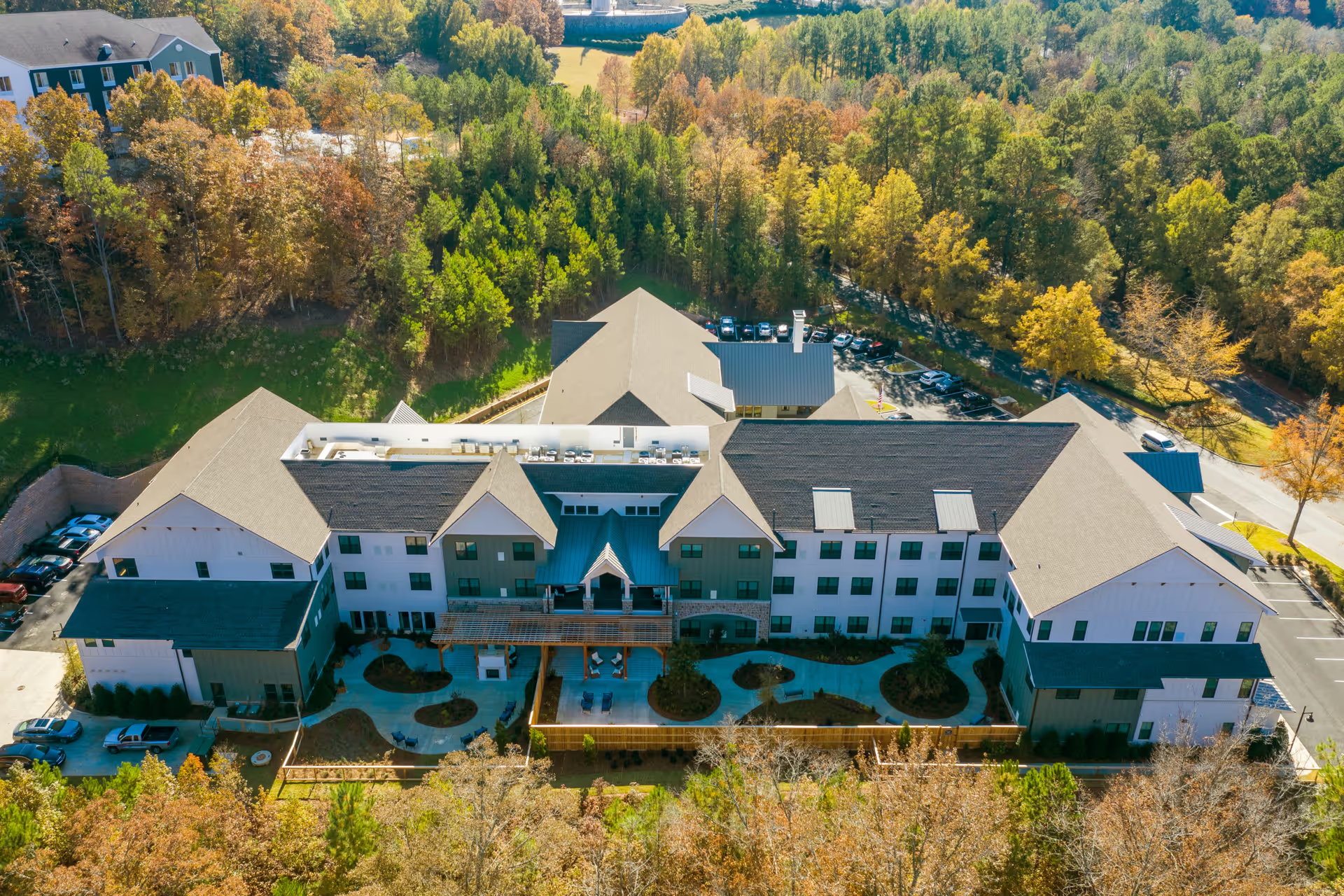
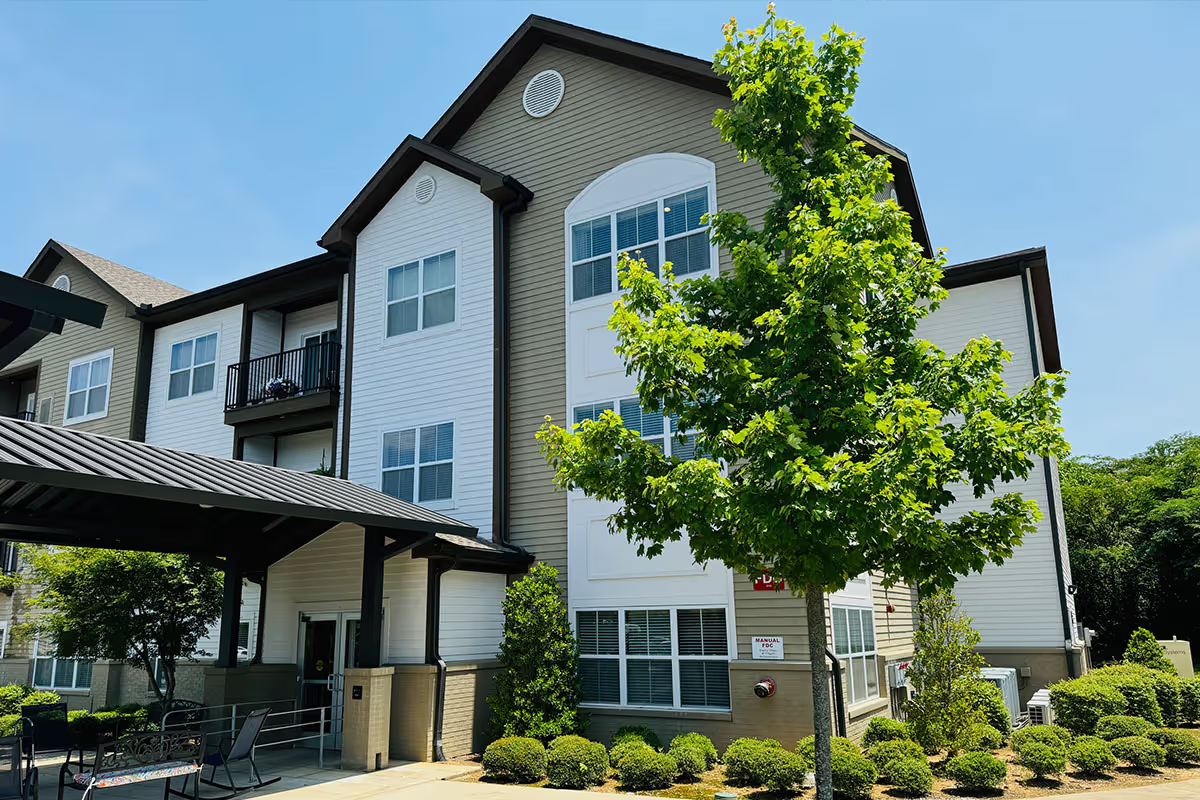
St. Martin's in the Pines presents a mixed but distinct profile. Many reviewers praise the physical plant: attractive, cottage-style buildings, generously sized apartments with patios or balconies, private rooms with large bathrooms, welcoming common areas including fireplaces and garden space, and an on-site pharmacy and geriatric specialist visits. The facility’s programming and amenities — on-site cooking, restaurant-style dining, varied activities (music, exercise, games, outings), raised-bed gardens and pastoral support — are frequently cited as strengths that create a home-like environment for independent and assisted living residents.
Care quality and staffing show a clear pattern of variability. Daytime staff, therapy teams, and certain RNs and administrators receive consistent positive remarks for attentiveness and professionalism; reviewers describe compassionate end-of-life and rehabilitation care in many cases. At the same time, there are recurrent operational concerns: inconsistent staff training and performance, notable gaps in night-shift responsiveness, and periods of understaffing or unreliable scheduling. These patterns have been associated with delayed assistance, missed medications or documentation gaps, and uneven rehabilitation experiences. There are also serious procedural concerns raised by some families, including allegations related to records and regulatory complaints, which warrant verification during any evaluation.
Dining and activities are generally regarded as positives. Several accounts describe food service as restaurant-like and enjoyable, with on-site cooking that supports communal dining. Others describe occasional inconsistencies in meal delivery (temperature, presentation). Activities programming is robust, with daily options and trips that support social engagement; the cottage model and smaller household sizes are often credited with enabling those opportunities.
Facility upkeep and infection-control topics are mixed. Many reviewers report clean, odor-free areas and well-maintained rooms, while others note sanitation inconsistencies, odor concerns in some rooms, and isolated pest-control concerns. Maintenance quality also appears to vary across cottages and wings; some areas feel recently updated while other parts are described as dated and in need of attention. Reviewers distinguish between the independent-living and rehab/short-stay experiences, with rehab services noted as effective at times but also described as understaffed or inconsistent by others.
Management and oversight show divergent experiences. Several families commend responsive administration and strong clinical oversight, while others describe turnover, leadership changes after ownership transitions, and lapses in communication and incident follow-up. Given that experiences range from highly positive to significantly critical, prospective residents and families should verify current staffing ratios, night-shift coverage protocols, medication-administration and documentation practices, infection-control and pest-management records, recent inspection history, and specific policies for respiratory equipment and end-of-life/hospice care.
In summary, St. Martin's in the Pines offers many facility-level strengths — attractive accommodations, a strong activities program, on-site clinical resources, and a home-like cottage model — but also exhibits operational weaknesses that affect clinical consistency for some residents. An in-person visit, targeted questions about the items above, and direct conversations with current families and clinical leadership will help clarify whether the facility’s present practices align with an individual’s care needs and expectations.