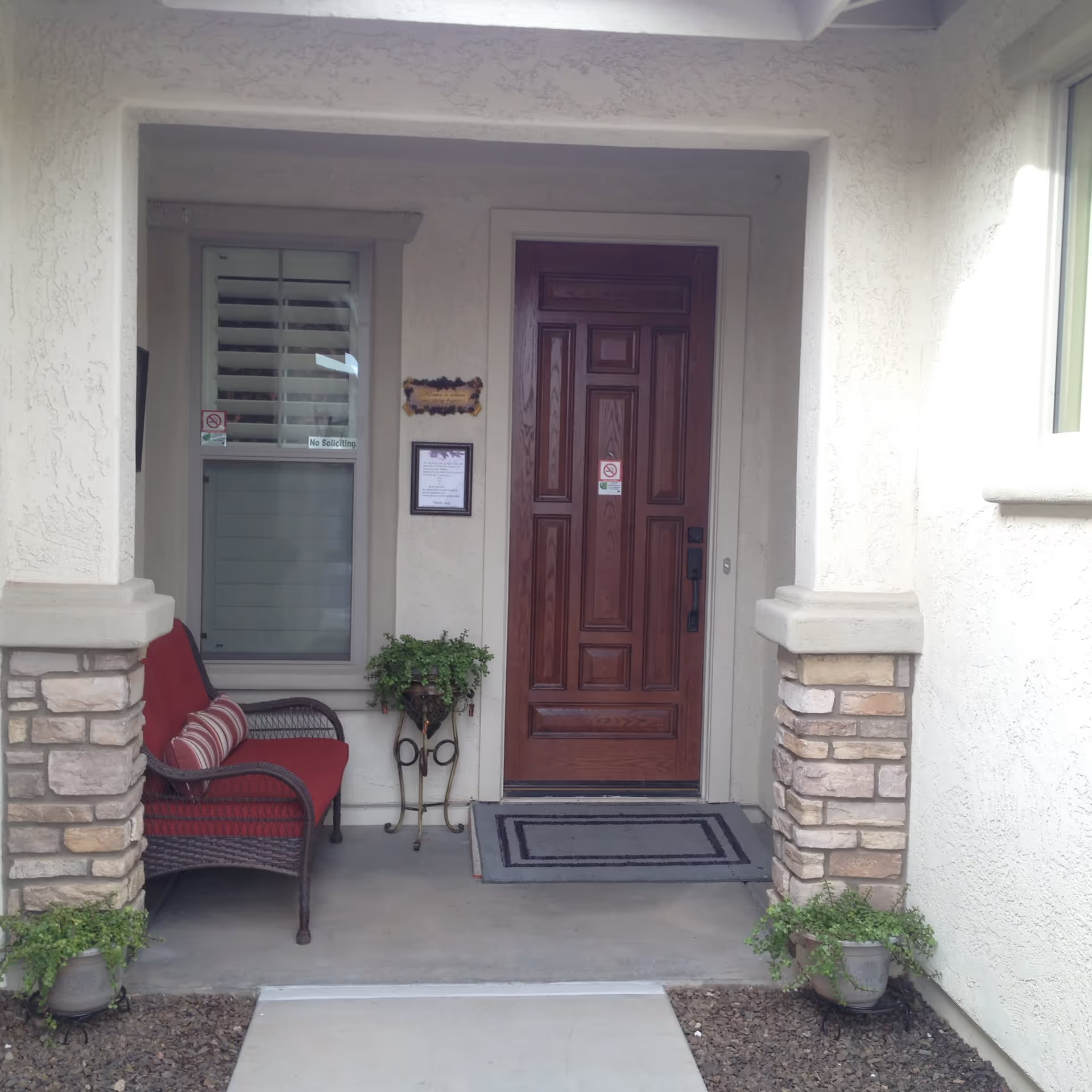
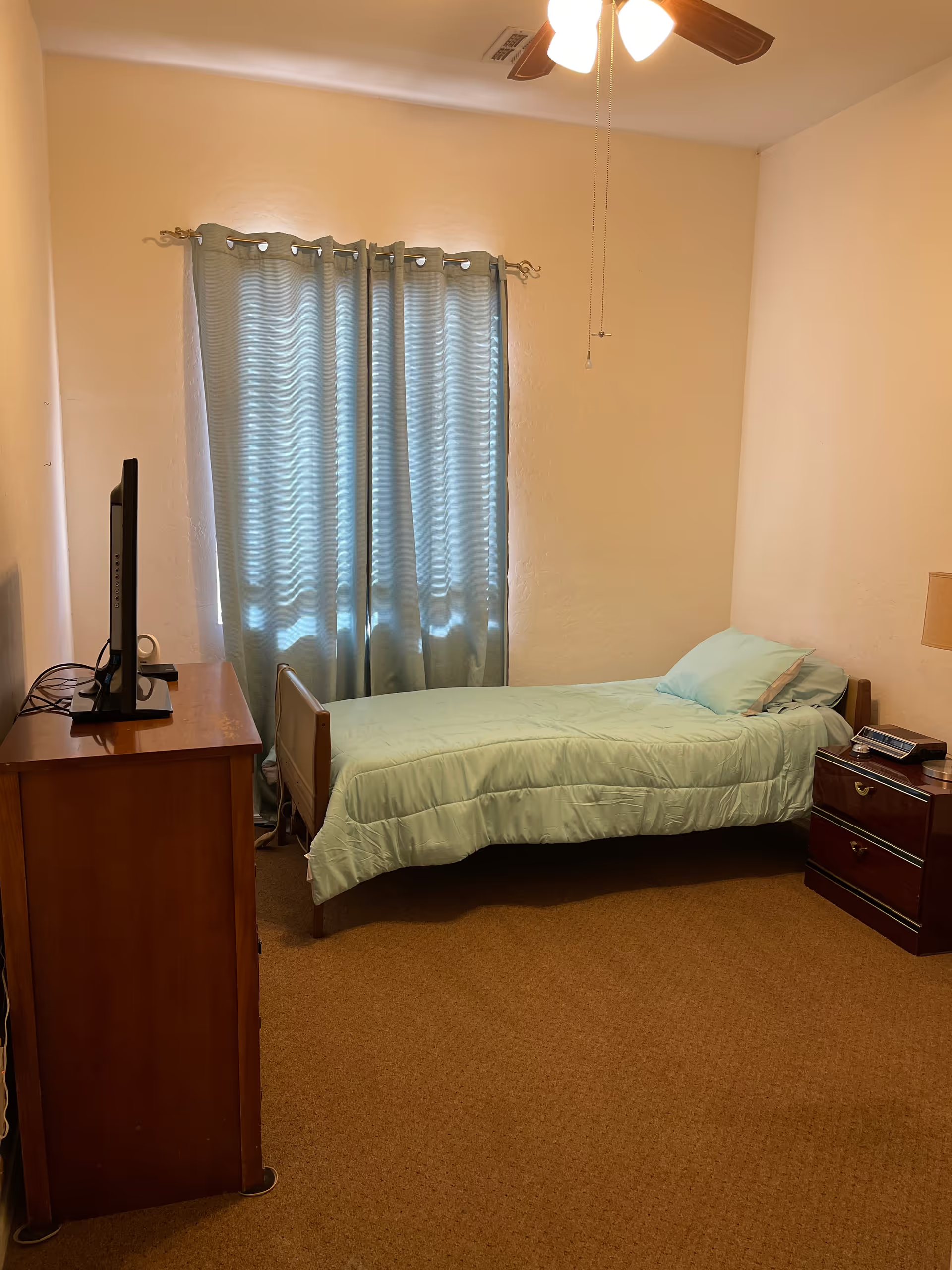
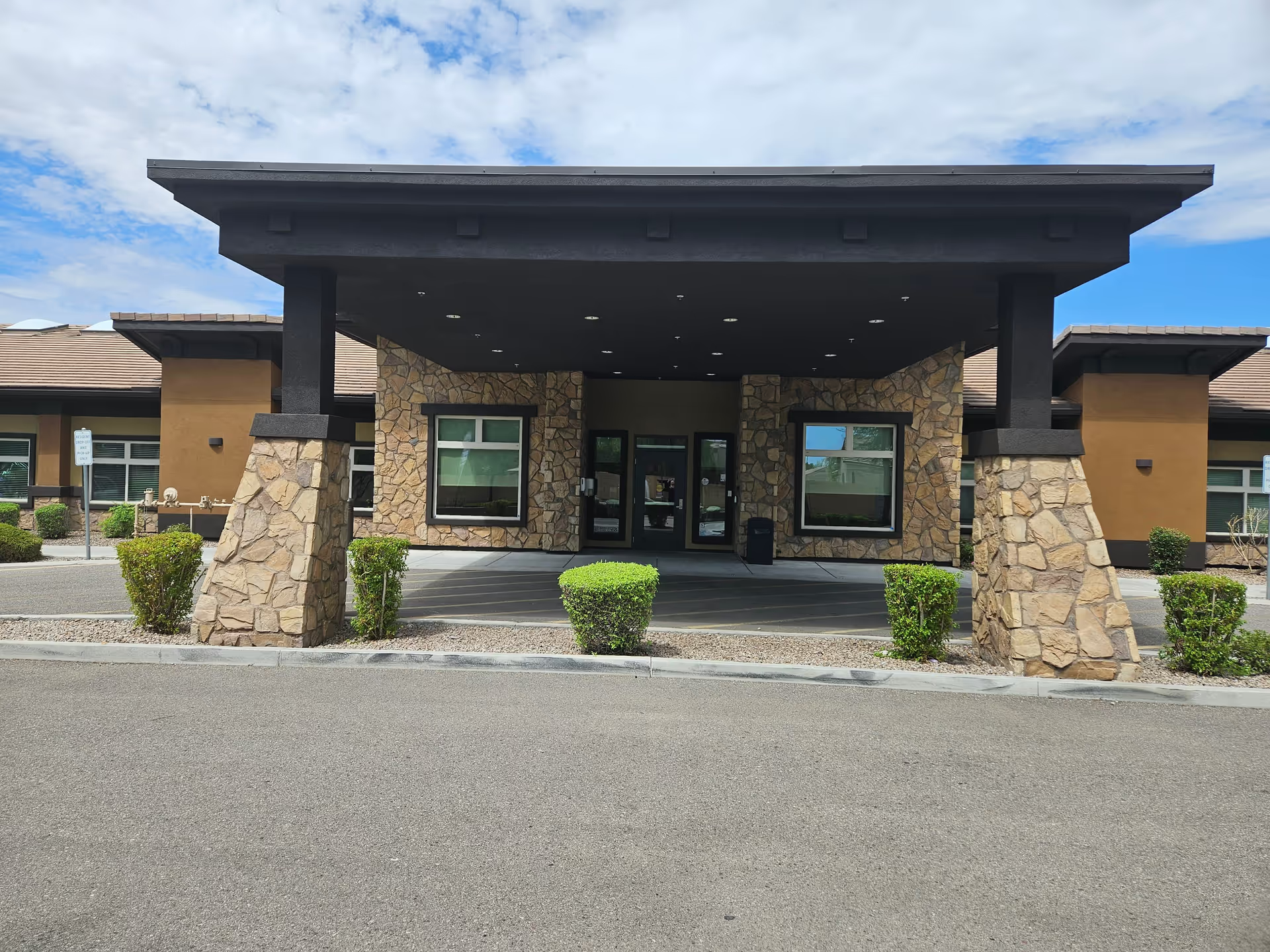
Overall sentiment across the reviews for Gardens at Ocotillo is mixed but leans positive for independent living and lower-acuity assisted living residents. Reviewers consistently praise the facility’s physical environment: it is frequently described as beautiful, bright, new, clean, and hotel‑like with well‑appointed common areas. Amenities are a clear strength — residents and families repeatedly mention the pool, gym/weight room, movie theater, library, salon, bistro, multiple recreation rooms, and in‑unit washer/dryer options. Many reviewers find the tours, initial intake, and move-in assistance informative and welcoming, and they report a strong sense of community, home‑like atmosphere, and active social life when residents participate.
Staff and customer service are the most commonly cited positives. Numerous reviews highlight compassionate, attentive caregivers and management who remember residents’ names, respond promptly to buzzers and emergency buttons, and communicate well with families. Specific leadership and staff members were called out by name for strong service. Many families expressed relief and gratitude that their loved ones are treated with dignity and that staff go “above and beyond.” On‑site clinical and support services such as rehabilitation (PT/OT), an on‑site salon, shuttle services, and COVID precautions contribute to a perception of safety and comprehensive amenities for many residents.
However, several recurring and significant concerns emerge, and they cluster around care consistency, memory care, dining, and business practices. Reviews reveal a pattern where the community excels for independent or lower‑need residents but struggles when residents’ medical or cognitive needs escalate. Multiple accounts describe caregiver turnover, inconsistent training and performance among direct care staff, and a decline in care quality for residents who become more dependent. Several families reported poor outcomes in the memory care unit — lack of engagement, residents heavily medicated, staff that appeared disengaged or distracted, unhealthy meal choices (deep‑fried food), and even instances where residents were transitioned out quickly. These reports indicate that the community may not reliably provide high‑quality advanced dementia care or be a true aging‑in‑place environment for some families.
Dining and food quality are areas of clear polarity. Many reviewers applaud an excellent dining room experience, full menus, and attentive servers with daily specials. At the same time, a sizable portion of feedback criticizes the food as mediocre, unhealthy, overly carbohydrate‑heavy, or even shipped‑in and institutional in quality. Memory care dining receives particular criticism. Operationally, families also noted restrictive or awkward guest‑dining policies (limited seating for non‑residents, to‑go meals that are charged), and issues like mis‑listed late‑night snacks. Housekeeping and other service reliability were sometimes inconsistent — a number of reviewers said they needed to call to confirm housekeeping, and a few reported move‑in maintenance problems (broken shower, non‑functional ice maker, heavy sliding blinds, cable TV problems).
Operational and management concerns are another consistent theme. Several reviewers described confusing or unfavorable billing and contract terms: termination penalties, unexpected care-level upcharges, and perceived bait‑and‑switch marketing. Communication about medical coordination and transitions (hospice, physician coordination) was variable — while some families praised excellent communication from leadership and the memory care director, others found it slow or insufficient, especially during care decline. A pattern emerges of uneven quality between shifts and departments: nursing, dining, admissions, and front desk experiences could vary dramatically by reviewer. Pool maintenance and outdoor upkeep surfaced in multiple reviews (dirty deck, filter/heater not working, bird droppings), pointing to gaps in facility operations.
Activity programming and social engagement are generally viewed positively, but two caveats appear: first, the quantity and variety of activities are strong on paper and many reviewers loved the offerings (trivia, bingo, themed meals, happy hours, outings), yet some families observed that many residents stay in their apartments and do not consistently engage, leaving common spaces under‑utilized. Second, memory care activities were frequently described as limited or depressing, with low engagement levels. The community receives credit for being pet‑friendly and for offering many recreational options, but real participation levels and suitability for cognitively impaired residents can vary.
Value and suitability depend heavily on the resident’s acuity level and family expectations. Many reviewers felt the community provided good value for independent or moderately assisted residents, praising the cleanliness, strong staff, and resort‑like amenities. Conversely, several reviews warned that the community is expensive and may not deliver the necessary clinical depth for residents with advanced Alzheimer’s, complex medical needs, or rapid decline in health — families described difficult exits when needs increased and urged careful contract review before signing. Billing disputes and occasional reports of mismanagement of resident belongings (memory care disposals) amplify those concerns.
In summary, Gardens at Ocotillo offers an attractive, well‑equipped environment with many amenities and a strong customer‑service culture in many areas. It is frequently recommended for independent living and for families seeking a resort‑style, engaged community with kind, personable staff. However, multiple independent reviews point to recurring operational weaknesses: inconsistent caregiver training, turnover, variable clinical coordination, questionable performance of the memory care unit, dining quality inconsistencies, occasional maintenance and housekeeping lapses, and opaque billing/contract practices. Prospective residents and families should visit multiple times (including during different shifts), tour the memory care unit separately, ask detailed questions about staffing ratios and training, review the residency agreement carefully for termination and care‑level billing clauses, and observe meal service and activity engagement to confirm the community matches the resident’s current and anticipated needs.