Overall impression: Reviews show a small, owner-run facility with clear strengths in individualized attention, mealtime quality, and a clean, orderly environment — but they also describe operational inconsistencies that prospective families should evaluate. Many families highlight the personal touch provided by involved owners and a core of compassionate caregivers; at the same time, other accounts point to variability in how those strengths are delivered day-to-day.
Care and staff: The dominant positive theme is that staff are caring, patient, and willing to go the extra mile; owners are frequently cited as actively involved in care decisions. These attributes contribute to smooth move-ins, straightforward admission logistics, and generally good communication for many families. However, reviewers also raise concerns about inconsistent staff engagement, understaffing, and instances of distracted caregiving (for example, staff device use while on duty). These issues translate into uneven experiences: some families report excellent hands-on care, while others describe gaps in responsiveness and respect for resident privacy.
Dining and pharmacy: Dining receives consistently favorable comments — meals are described as high quality, with variety and attentive service. The facility’s home-delivery pharmacy arrangement is noted as a convenient operational advantage. These elements appear to be reliable strengths for residents who prioritize nutrition and medication logistics.
Activities and social engagement: Accounts conflict on programming. Several families praise an active schedule and a welcoming community, but an equal number communicate that engagement can be minimal beyond basic care and television rooms. The pattern suggests that activity quality and meaningful resident engagement may depend on staff availability and prioritization rather than on a well‑resourced, structured program.
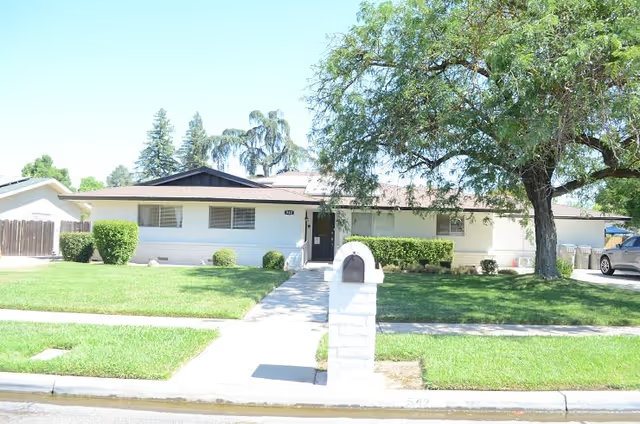
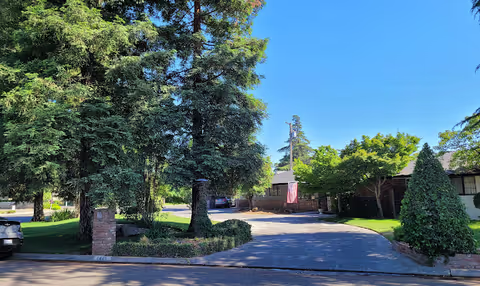
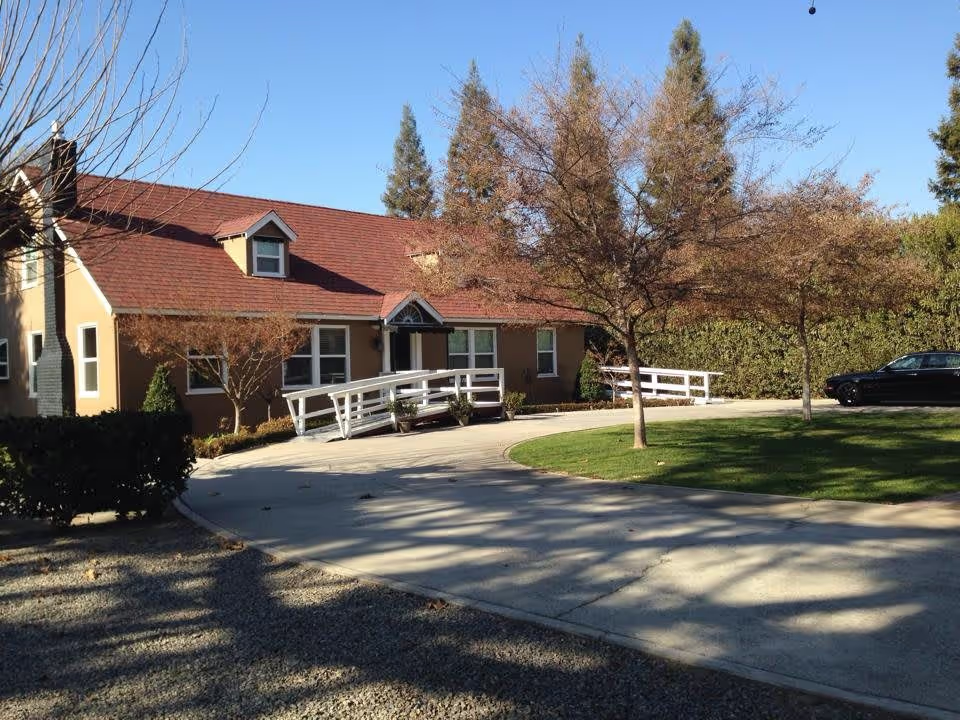
Facilities and grounds: Interior spaces are generally described as clean and orderly, supporting the positive impressions of many visitors. At the same time, reviewers call out small resident rooms and limited private space. Outdoor amenities are described as inadequate or unsafe for unassisted use — a busy street and an underdeveloped yard reduce opportunities for secure outdoor time.
Management and communication: Management behavior shows a clear split in impressions. Some families commend the owners for being caring and accessible; others report intrusive management, pressure to decide quickly at admission, and inconsistent communication from leadership. This mixture suggests that family experience may hinge on which staff or manager they interact with and on how admissions and communication policies are applied in practice.
Notable patterns and guidance for families: The facility’s strengths center on a small, owner-operated model with warm, committed caregivers, good meals, and convenient pharmacy services. Its weaknesses are operational: variable staffing levels, inconsistent engagement in daily activities, occasional lapses in privacy protocol, and limited outdoor space. Prospective residents and families should consider focused questions during a visit about current staffing ratios, daily activity schedules and attendance, privacy policies, the extent of owner involvement, how the facility manages device use during caregiving, and what outdoor options are available for safe resident use. An in-person visit during an activity period and conversations with multiple staff members can help clarify whether the facility’s positive attributes are consistently delivered for a particular resident’s needs.