Reviews of Mid-Wilshire Health Care Center present a mixed picture. Several families describe effective rehabilitation services, positive functional gains from therapy, and hands-on care from nurses and CNAs who are characterized as friendly and professional. Reviewers also highlight strong aspects of daily care such as routine grooming and nail services, generally clean interior areas, and active programming that supports resident engagement. Physicians and clinical staff are described as accessible in some accounts, and some families describe a family-like atmosphere and timely CNA responses for routine needs.
At the same time, there are recurring operational concerns. Multiple reviewers raised issues with staff conduct and tone, including inconsistent professionalism, perceived favoritism, and delays in attending to residents' pain or toileting needs. These comments cluster with observations about variability in staff responsiveness and engagement, which families link to uneven care experiences. There are also specific worries about gaps in clinical leadership and interdisciplinary teamwork; several reviewers mentioned inadequate coordination of care and communication that affected clinical follow-up and rehabilitation continuity.
Dining and activities receive mixed feedback. Some residents and families praise meal taste and active programs tied to recovery, while others cite inconsistent meal quality and limited accommodation of cultural or dietary preferences. Activity offerings and rehabilitation therapies are noted as a strength where they are present, contributing to measurable health improvements for some residents.
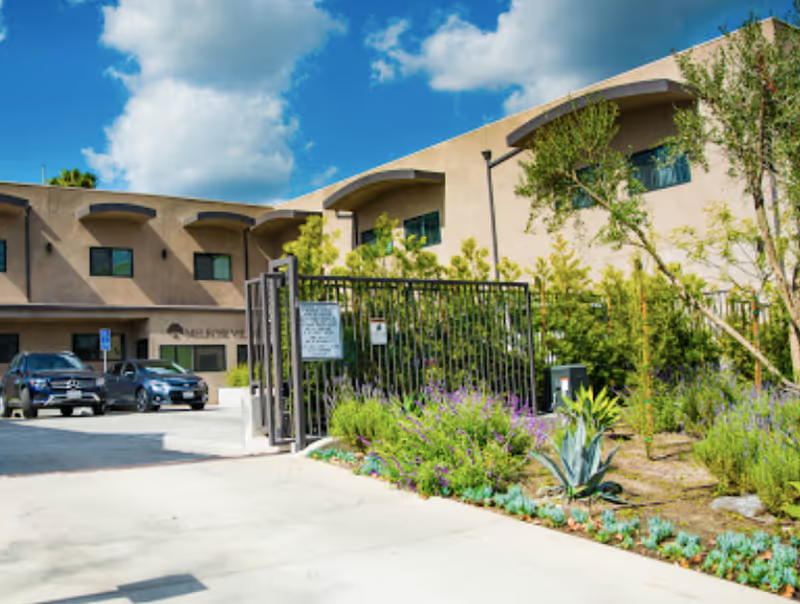
Facility- and site-level issues were also raised. Space constraints and limited parking are commonly noted as practical inconveniences for visitors and staff. Some reviewers expressed concern about exterior maintenance and safety conditions near the property, which may affect perceived security and access. A subset of comments describe patterns that suggest culturally based segregation of placement or dining; this is presented as a facility practice concern rather than an isolated interaction.
Management and regulatory matters are a salient pattern in the feedback. Several families described problems with care-planning transparency and family communication, and a few reviews referenced formal allegations and requests for investigation by external authorities. Those accounts point to the need for clearer clinical oversight, improved family outreach, and strengthened incident- and complaint-response processes.
Overall, prospective residents and families should weigh the facility's strengths in rehabilitation, certain caregiving relationships, cleanliness, and active programming against reported inconsistencies in staff conduct, care coordination, dining consistency, and site logistics. Direct conversations with facility leadership about staffing stability, care-team coordination, cultural accommodations, visitor parking, and any recent regulatory activity are advisable before making placement decisions.