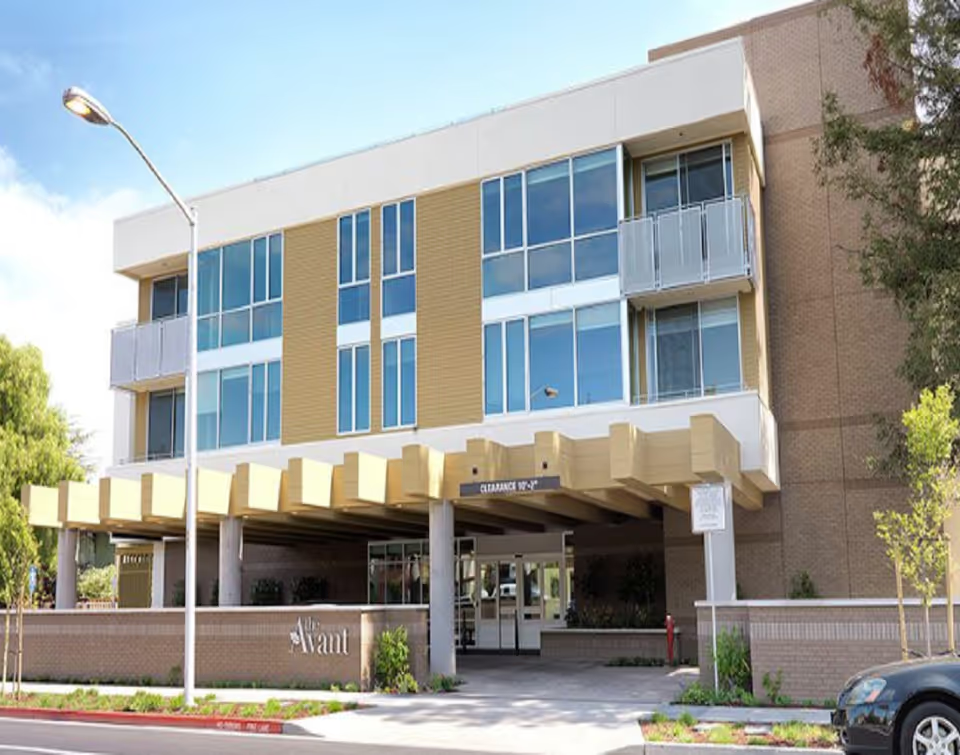
Oakmont of Redwood City presents a strongly polarized profile: reviewers consistently praise the physical plant and social offerings while describing significant operational variability that affects daily care. The community is new, well appointed and clean, with a contemporary, hotel-like aesthetic, abundant natural light, numerous amenity spaces (bistro, movie theater, rooftop garden) and well-designed apartment options. Many residents and families describe active programming, field trips, exercise classes, and opportunities for social engagement that contribute to a welcoming, community-oriented atmosphere.
Care quality and staffing emerge as the center of contradiction. Direct-care teams receive frequent commendations for compassion, responsiveness and hands-on medical support; several accounts highlight attentive med-techs, transportation assistance to appointments, and warm interpersonal interactions. At the same time, a persistent theme is understaffing, high turnover, and heavy reliance on agency or inexperienced staff. Those operational gaps are associated with delays in assistance, inconsistent supervision (including wandering and fall-risk management concerns), and difficulties locating staff when needed. Reviews indicate variability in caregiver skill levels and training, which translates to uneven resident outcomes depending on the shift and personnel on duty.
Dining and activities show similar mixed results. Some families praise the dining room, accommodating chefs and pleasant servers, and point to tailored dietary options. Conversely, other accounts describe inconsistent meal quality, reheated or repetitive offerings, missed mealtime assistance for residents who need help, and interruptions to dining service. Programmatic activities appear robust on paper, but execution is sometimes curtailed by staffing constraints; when staff levels are adequate the schedule is lively, whereas shortages have left residents with minimal engagement beyond television.
Operational processes and property services are also split. The facility’s maintenance and common-area housekeeping are frequently noted as excellent, and many residents appreciate the attention to public spaces. However, there are recurring concerns about personal-laundry handling, missing belongings, and inconsistent in-room sanitation-related care. Clinical and administrative processes are another area of concern: reviewers describe gaps in incident documentation, inconsistent family notification after clinical events, miscommunications around medication orders, and uneven infection-control practices. These process weaknesses contribute to a perception of poor accountability in some cases.
Management responsiveness is uneven across accounts. Some families point to engaged leadership, proactive outreach from an executive director, and constructive problem-solving. Other families describe absent management, poor follow-through, and unclear communication about extra-care charges or contract terms. The combination of high fees and variable perceived value has led some families to pursue alternatives; there are instances of external advocacy involvement and formal complaints noted in the feedback.
In summary, Oakmont of Redwood City offers an attractive, well-equipped environment with clear potential for a high-quality residential experience when staffing and leadership are stable. Prospective residents and families should evaluate current operational stability during their decision process: verify typical staff-to-resident ratios by shift, ask about reliance on agency staff, request written incident-reporting and family-notification policies, review how extra-care fees are billed, and observe a full mealtime and an activity session. Regular, sustained management engagement appears to be the differentiating factor between very positive experiences and significant care gaps at this community.