Reviewers' experiences with French Park Care Center are strongly polarized: many families and patients praise frontline caregivers, rehabilitation services, activities, and the outdoor environment, while others raise substantive operational concerns that affect safety, comfort, and transparency. The facility appears capable of providing high-quality, recovery-oriented care in its skilled-nursing and subacute units—particularly in physical, occupational, and speech therapy, wound care, and short-term rehabilitation. Several accounts describe compassionate CNAs, attentive nurses, effective therapists, helpful admissions and case-management staff, and a welcoming grounds and patio that support family visits and outdoor recreation.
Care quality shows a dual pattern. Positive reports highlight individualized attention, strong rehab outcomes, and coordinated interdisciplinary meetings involving nursing, dietary, rehab, and case management. Conversely, recurring operational issues include delayed responses to call lights, inconsistent medication and patch-management practices, lapses in fall-prevention follow-through, and equipment delivery delays. These process gaps are linked to family concerns about incident notification and clinical follow-up, including situations where families were not informed promptly about falls or changes in condition.
Staffing and clinical leadership are frequent themes. While many frontline staff are described as kind and committed, reviews indicate persistent understaffing, high turnover, and reliance on temporary or registry personnel whose training and qualifications are perceived as uneven. Several accounts point to limited visibility or responsiveness from nursing leadership (for example, director-level staff), which appears to exacerbate day-to-day care inconsistencies and family communication problems.
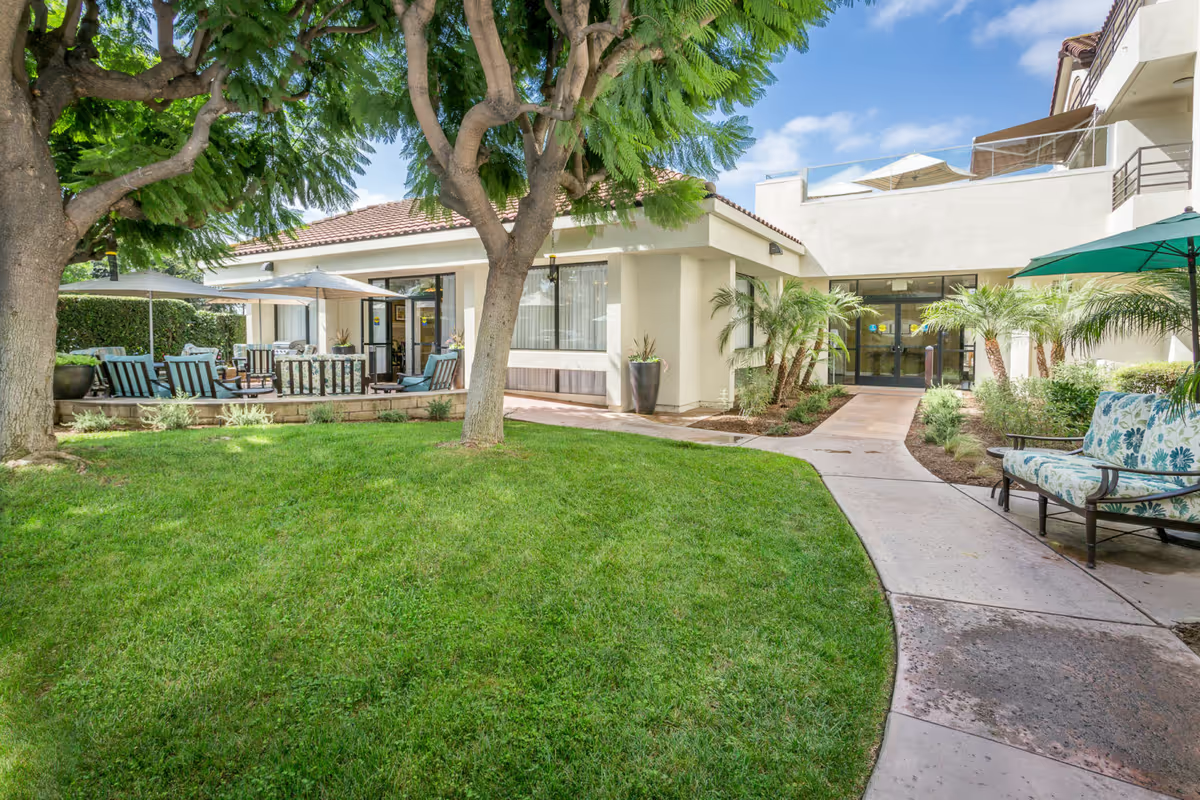
Facilities and maintenance feedback is similarly mixed. The property, grounds, and on-site therapy gym are commonly cited as strengths, and parts of the interior are described as clean and cheerfully decorated. At the same time, reviewers note building-maintenance failures—intermittent hot-water or HVAC problems, ventilation concerns, outdated décor in some wings, and infrastructure compliance issues such as an expired elevator license or trash-disposal problems—that can negatively affect resident comfort and safety.
Dining and activities are generally viewed positively. The facility offers a variety of activities tailored to residents' interests, an in-room dining option, and menu alternatives. Meal quality and service continuity are described as variable, however, with some families perceiving inconsistencies in food quality or meal delivery.
Management and admissions receive mixed feedback: some reviewers praise the admissions team, administrator, and certain directors for responsiveness and coordination, while others describe misleading marketing or representations of the facility’s rating and condition. There are also accounts of cultural or floor-integration inconsistencies that families perceived as segregation by language or ethnicity; this pattern suggests a need to clarify unit assignments and cultural-inclusion practices.
Notable patterns for prospective residents and families: the facility can deliver strong rehabilitative and bedside care under well-staffed conditions, but outcomes appear sensitive to staffing levels, leadership engagement, and building infrastructure. Before placement, families should consider an in-person tour of both clinical and long-term care neighborhoods, ask for current staffing ratios and recent inspection reports, verify maintenance and infection-control status, inquire about medication and fall-prevention protocols, and confirm how the facility communicates incidents and changes in condition to families. These targeted questions can help clarify whether the facility’s strengths align with a prospective resident’s needs and expectations.