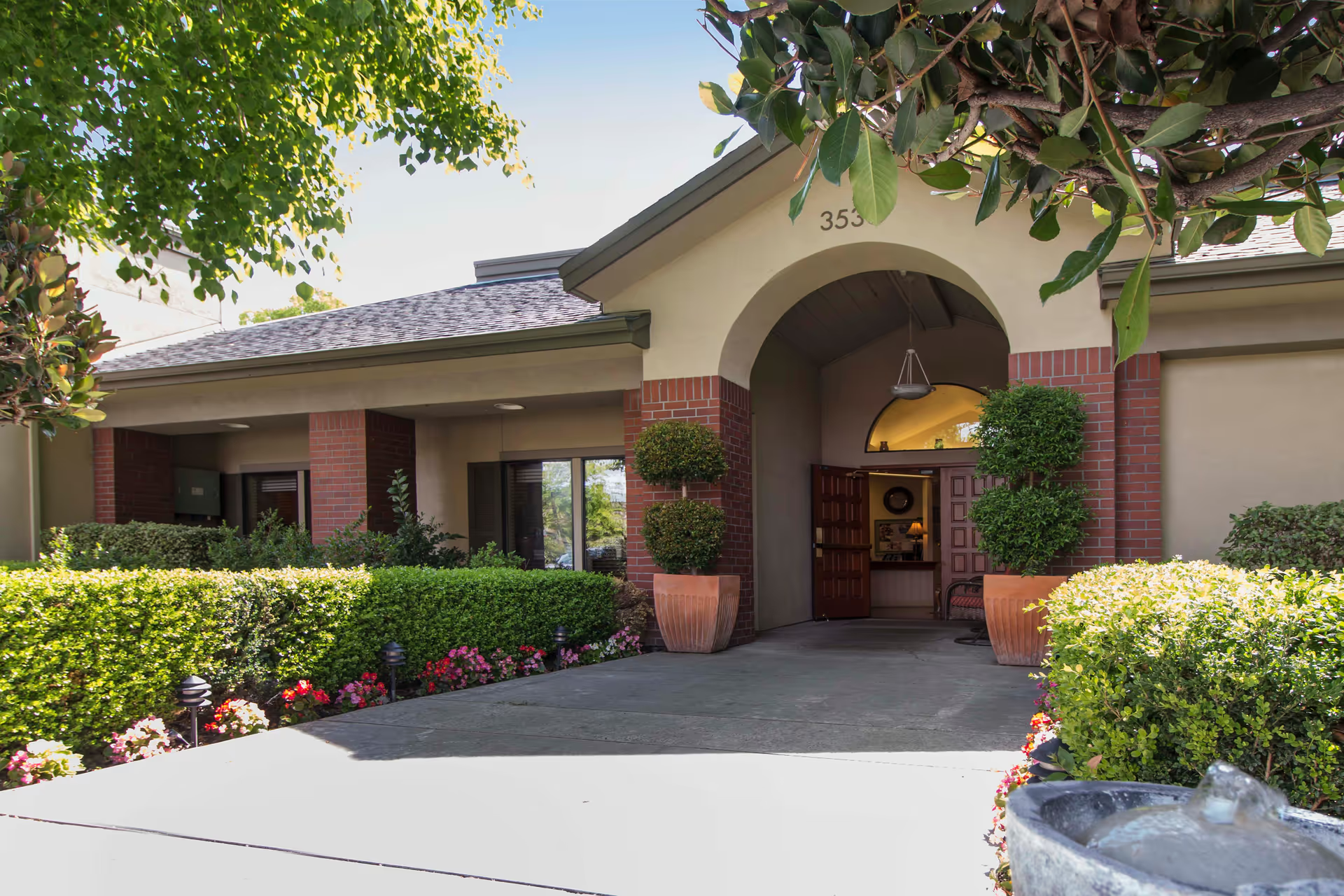
Overall sentiment: The reviews convey an overwhelmingly positive and grateful tone toward Oxford Manor. Family members describe the care received as exceptional and, in at least one case, lifesaving. Reviewers repeatedly emphasize the emotional impact of the care—gratitude, relief, and renewed hope—indicating that the facility met or exceeded expectations in very meaningful ways.
Care quality and outcomes: A central theme across the summaries is strong clinical and rehabilitative effectiveness. Reviewers report measurable improvements in residents' conditions: a mother who now walks, talks, recognizes people, and knows who her family member is. Descriptions such as "exceptional care" and "lifesaving care" point to situations where the facility’s interventions were both timely and significant. The reviews highlight both physical recovery (mobility) and cognitive/communicative gains, suggesting coordinated attention to multiple domains of health.
Staff and relationships: Praise for staff is consistent and specific. Caregivers are described as loving, caring, and patient; residents are said to be treated as family. Several summaries name individual caregivers (Penya, Evelyn, and Faith), indicating that particular staff members made a notable positive impression on families. The repeated mention of extra patience and being "treated as family" suggests strong interpersonal skills, empathy, and continuity of care that helped build trust and emotional security for residents and families alike.
Personalization and responsiveness: Reviewers emphasize that staff listened to and respected changes in care plans, indicating responsiveness and flexibility. This personalization of care appears to extend beyond basic tasks to active engagement with each resident’s evolving needs—both physical and mental. The emphasis on mental and physical well-being shows a holistic approach rather than a narrow focus on medical or custodial functions alone.
Facilities, dining, activities, and management: The provided summaries do not offer any explicit information about facility amenities, dining quality, social or recreational activities, or administrative/management practices. Because these areas are unmentioned, no assessment can be made from these reviews about the physical environment, food service, programing, or operational leadership. The absence of negative remarks in the summaries also means there are no documented concerns in these domains to analyze.
Notable patterns and limitations: The reviews consistently highlight high-quality, compassionate caregiving and clear functional improvements for residents. Named staff recognition suggests strong individual performance as well as the potential for positive staff–family relationships. Limitations of this dataset include the absence of comments on logistics (cleanliness, safety protocols, scheduling), non-care staff, costs, and ancillary services; these omissions mean a comprehensive evaluation of every aspect of Oxford Manor is not possible from these summaries alone.
Conclusion: Based on the available summaries, Oxford Manor excels in personalized, compassionate caregiving that yields meaningful health and cognitive improvements for residents. Staff interpersonal skills, patience, and attention to individual care plans stand out as consistent strengths, with several caregivers singled out for praise. While these reviews give strong evidence of high-quality direct care and supportive relationships, further information would be needed to evaluate facility features, dining, activities, and administrative aspects. Overall, the sentiment is strongly positive and suggests confidence and gratitude from families whose loved ones experienced notable recovery and compassionate support.