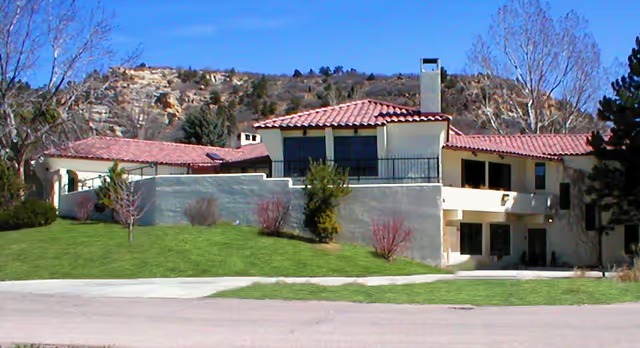
Overall impression Brookdale Briargate is frequently described as a small, family-style assisted living/memory care community with a notably compassionate staff and active resident engagement. Many families describe quick, warm rapport between caregivers and residents, with staff who learn names, encourage independence, and foster a home-like atmosphere. The site’s single-level layout, controlled access, courtyard and outdoor areas, and pet-friendly policies contribute to a secure and accessible environment for many residents.
Care quality and staff Caregivers and nursing personnel receive the most consistent praise: reviewers highlight attentive daily care, clear communication from nurses and administrators, and proactive responses to medical issues, including coordinated ambulance transfers when needed. Hospice transitions and end-of-life support are singled out as strengths. At the same time, there are recurring operational concerns: staffing levels fluctuate, turnover is noted, and newer aides sometimes require additional training. These staffing patterns have been connected in some reports with slower response times for personal-care tasks and inconsistent scheduling. A small number of reviewers raised more serious, isolated concerns—including inconsistent personal-care scheduling and allegations of discriminatory conduct—while other families described seamless, dignified care.
Dining and nutrition Dining is consistently framed as a positive feature. The community offers varied menus, specialty monthly dinners, and efforts to accommodate picky eaters or special diets; multiple reviewers described gourmet or well-prepared meals and supportive dining staff. Meal schedules, posted menus, and rotating seating are noted. A minority of reviewers found food quality uneven at times, but overall the dining program appears well organized and responsive to resident preferences.
Activities and engagement Brookdale Briargate maintains a robust activities calendar with music, singing, exercise classes, games, crafts, knitting/crocheting, puzzles, outings, and memory-focused programming. Music and group social events receive particular praise, and the activities director is frequently described as energetic and engaged. Reviewers indicate the program is tailored by cognitive level in memory care, though several comments suggest activity variety could be expanded for residents with higher-functioning cognitive needs.
Facilities and maintenance Common spaces, courtyards, and outdoor seating areas are cited as attractive and well-maintained. The community’s small size and single-floor design are conveniences for many families. However, some reviewers describe older or dated suites, very small apartments with limited storage and lighting issues, and a handful of sanitation or odor concerns in parts of the building. Maintenance responsiveness is uneven by account—many mention helpful, responsive maintenance staff, while others report slow resolution of room-specific issues.
Management, policy, and cost Leadership and family communication receive repeated positive mention, with specific praise for engaged administrators and nursing leaders who keep families informed. Conversely, reviewers also describe corporate-level constraints: limited Medicaid acceptance, pricing perceived as high relative to apartment size, and staffing compromises possibly linked to compensation and resource allocation. The facility does not consistently provide 24/7 registered nurse coverage according to some reviewers, which may affect residents requiring higher-acuity care. Transportation to appointments and other amenities are generally available but may vary.
Notable patterns for prospective families Strengths: attentive, compassionate caregiving; active social and music-based programming; supportive hospice transitions; secure, single-level campus with outdoor access; and a dining program that accommodates preferences. Considerations: if a resident requires advanced nursing care or late-stage dementia services, families should verify clinical capacity and RN coverage; ask specific questions about staff-to-resident ratios, training for new aides, maintenance response times, and sanitation/odor management. Also confirm financial and insurance acceptance policies up front, since Medicaid acceptance and pricing flexibility are limited. Touring the community during activity hours and speaking with current family members can help gauge whether the activity mix and apartment size meet a prospective resident’s needs.