Overall impression Feedback about StoneCreek of Flying Horse is sharply mixed. Many families and residents praise the campus design, amenities, and individual caregivers; others describe operational and clinical gaps that have materially affected care experience. The result is a polarized picture: a modern, well-appointed community with strong examples of compassionate caregiving alongside recurring operational weaknesses that prospective residents should evaluate carefully.
Care quality and clinical oversight Strengths include numerous accounts of attentive, compassionate caregivers, individualized attention from certain nurses and care staff, and coordination with clinicians and hospice when needed. The community offers memory-care programming and in‑community transition options that several families found beneficial. However, a persistent operational theme is inconsistent frontline staffing and elevated turnover, which reviewers connected to uneven adherence to care plans and rounding schedules. Families expressed concerns about medication-management processes, gaps in clinical administration, and times when clinical leadership (including RN availability) was not clearly present. These patterns suggest variability in day-to-day clinical reliability even where individual staff demonstrate strong practice.
Staffing, conduct, and safety Staff professionalism and interpersonal warmth are regularly cited as strengths; numerous reviewers described staff who are kind, communicative, and who go beyond expectations. At the same time, there are patterns indicating insufficient staffing levels and periods of inadequate supervision—particularly overnight or during peak demand times—resulting in delays in attending to residents and isolated safety incidents. Reviewers also identified issues with staff attention (for example, device use or distracted behavior) and frequent personnel changes, which can affect continuity of care. These are operational characteristics to assess during tours and conversations with leadership.
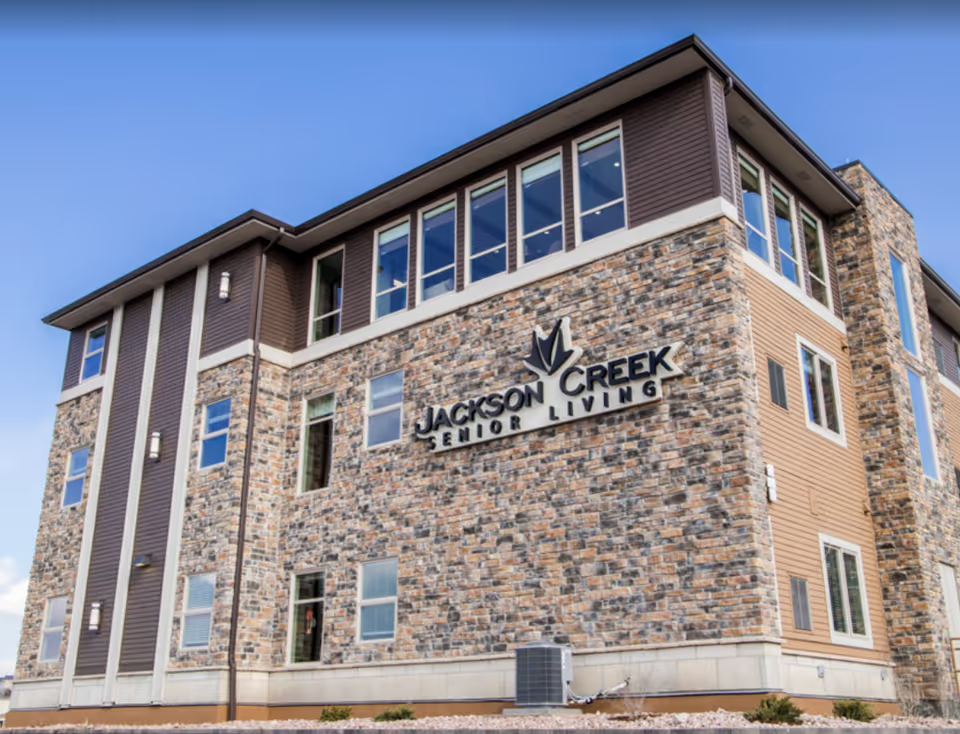
Dining, housekeeping, and environment The facility’s physical environment receives consistent praise: modern architecture, abundant natural light, attractive dining spaces, and a well-maintained courtyard. Dining is often described positively for presentation and menu variety, and on-site culinary leadership is noted. Counterbalancing that, multiple accounts describe interruptions to meal-service continuity and occasional shortages of food items or supplies. Housekeeping and laundry processes were cited as inconsistent—examples include missed linen changes, misplaced clothing or sheets, and variability in room cleaning and sanitizing. Reviewers also noted pest-control and sanitation concerns in some areas, which point to uneven performance of environmental services.
Activities, amenities, and logistics Activity programming and social offerings are widely viewed as a strength: concerts, games, outings, and therapeutic options were highlighted, and the activities team drew specific praise. Amenities such as the salon, gym, and therapy spaces complement programming. That said, transportation and organized outings were described as limited or inconsistently provided by some families. Accessibility to outdoor spaces can be weather-dependent, and prospective residents should verify seasonal or operational limitations.
Management, administration, and value Administratively, experiences vary. Some reviewers describe responsive leadership, excellent move-in coordination, clear family communication tools, and a welcoming admissions process. Others experienced billing and contractual disputes, dissatisfaction with fee handling, and perceived gaps between marketed services and actual delivery (example: promised clinical visits or vendor services not consistently available). Price and perceived value surfaced repeatedly: many appreciate the facility’s amenities and would pay for that level of service, while others felt the cost was high relative to the consistency of care delivered. The community’s status as a new facility and the operational impacts of the COVID period were cited as contributing factors to uneven performance.
Notable patterns and guidance for families The dominant patterns to weigh are: (1) strong examples of compassionate, capable staff and an attractive environment; (2) recurring operational weaknesses around staffing levels, housekeeping/laundry, meal continuity, clinical oversight, and administrative consistency. These are trait-level items rather than single incidents—meaning that performance can vary shift-to-shift and family-to-family. Prospective residents and families should tour multiple times, ask for written policies on staffing ratios and RN coverage, review the contract and refund/fee terms carefully, inquire about environmental-services protocols (laundry, pest control, linen management), and request examples of how leadership handles missed care or billing disputes. Doing so will help align expectations with the facility’s strengths and known operational risks.