Overall assessment Reviews describe a highly mixed experience at the facility, with consistent praise for therapy services and individual caregivers but repeated operational weaknesses that affect day-to-day care. Positive accounts emphasize effective occupational and physical therapy, successful therapy-driven discharges, and several caregivers and therapists who provide attentive, compassionate care. At the same time, many families describe recurring problems with basic resident care, safety processes, and facility operations.
Care quality and clinical management Clinical strengths appear concentrated in the therapy department, where occupational and physical therapists are frequently identified as skilled and effective. Nursing and caregiving quality is variable: some reviewers describe professional, attentive nurses and CNAs, while others describe delays in attention, missed medications, and inconsistent clinical follow-through. Medication-administration and documentation errors are a recurrent concern, alongside delays in responding to requests for assistance. There are also multiple accounts suggesting gaps in wound and incontinence-care practices and inconsistencies in bathing and linen management.
Staffing, training, and responsiveness A dominant theme is staffing instability: understaffing and frequent use of agency personnel are said to strain the unit-level workforce and reduce responsiveness. Reviewers describe delayed call responses, uneven supervision of CNAs, and variability in clinical skill and training. These patterns contribute to families perceiving slow incident response, inconsistent bedside attention, and limited after-hours coverage. Communication between staff and families is often described as poor or inconsistent, and front-desk/phone access problems are noted as barriers to timely updates.
Dining and activities Dining experiences are mixed. Several reviewers commend meal variety and positive dining options, while others note inconsistent food quality, portioning, and temperature control. Recreational programming receives positive mentions in many accounts — bingo, music, exercise sessions, and other activities are cited when present — though other families report limited engagement or lack of organized activities on certain units or shifts.
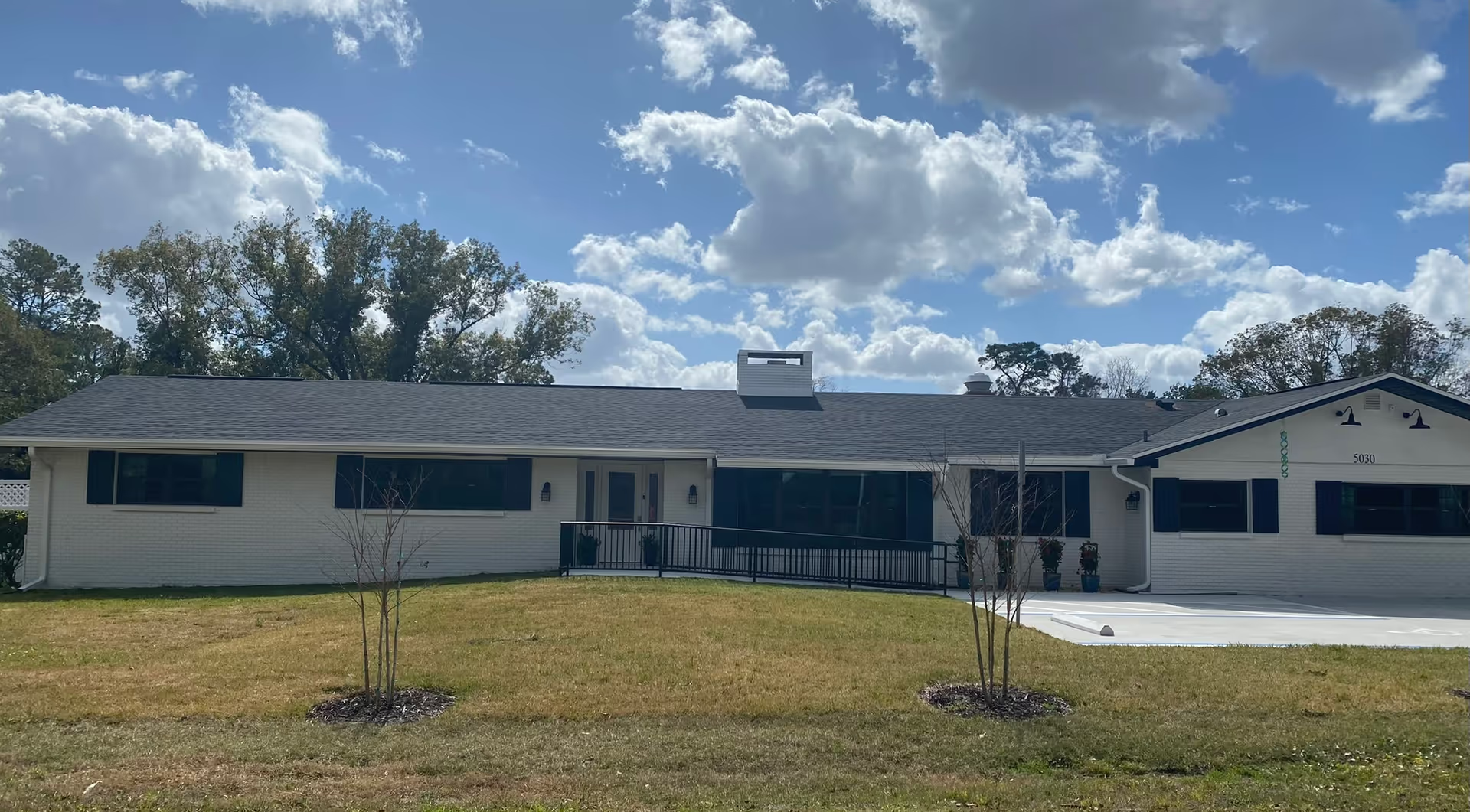
Facility condition and safety The facility is repeatedly characterized as older and in need of maintenance: outdated equipment, broken amenities (ice machines, call-button systems, doorbells), and temperature-control problems are described. These infrastructure issues intersect with safety concerns — reviewers cite roommate conflicts, falls, and delays in incident reporting or documentation. There are also sanitation and pest-control concerns raised in some accounts. Collectively, these issues suggest uneven unit-level housekeeping and environmental maintenance.
Management, administration, and transitions Management responsiveness is inconsistent. Some families describe helpful administrators and successful problem resolution; others report poor follow-up on billing, discharge coordination problems, and limited flexibility after hours. A few serious and specific family concerns about end-of-life handling and medication decisions were also raised; these are individual, high-severity allegations that families may wish to investigate further with the provider or regulators. Communication lapses around transitions, medication changes, and incident reporting recur as an area needing improvement.
Notable patterns and guidance for families The picture that emerges is one of polarized experiences: strong therapeutic capacity and caring individuals exist alongside systemic operational weaknesses (staffing variability, medication controls, hygiene and maintenance issues, and inconsistent family communication). Prospective residents and families who consider this facility should weigh its therapy strengths against the possibility of inconsistent nursing responsiveness and older infrastructure. If choosing this facility, families should confirm staffing ratios, clarify medication and incident-reporting processes, discuss after-hours communication protocols, and verify room amenities and temperature control. For those with complex nursing needs or high safety risk, it may be prudent to seek facilities with more consistent staffing and documented medication-safety systems.