Overview: Reviews for Jupiter Rehabilitation and Healthcare Center describe a polarized experience: numerous families and residents praise the clinical therapy teams, concierge/social-services support, and many caregiving staff, while a distinct set of reviews raises operational and clinical concerns. The facility shows clear strengths in rehabilitation-focused care and front-line interpersonal service, but also recurring weaknesses in staffing, communication, and facility maintenance that may affect outcomes for higher-acuity residents.
Care quality and clinical patterns: Therapy services (PT/OT) and rehabilitation programming receive consistent positive feedback: families describe measurable functional improvement, engaged therapists, and coordinated care plans that support discharge goals. Nursing and aide performance is frequently characterized as compassionate and attentive, with multiple staff singled out for exceptional service. However, there are repeated concerns about clinical consistency—specifically medication-management practices, wound care, and timeliness of escalation to higher-level care. A subset of reviews describe serious clinical incidents requiring hospital transfer; these suggest gaps in clinical escalation protocols and post-operative monitoring for some residents.
Staffing, communication, and conduct: Staffing levels appear uneven: many accounts note hardworking, dedicated employees but also report chronic understaffing, high turnover, and long response times to call signals. Language barriers and inconsistent family communication are recurring themes; some families experienced difficulty reaching physicians or obtaining timely medical records. While management and certain staff members are described as responsive and helpful in many cases, other reviews describe variability in administrative follow-through and occasional restrictive visitor or virtual-visit policies.
Dining, activities, and social services: Activity programming and social engagement are a clear strength. Multiple families praised diverse daytime activities, events (including family-focused celebrations), and supportive concierge services that eased transitions. Dining evaluations are mixed: several reviews commend the food and dining atmosphere, while others cite inconsistent meal quality and interruptions in meal service. Social services and concierge personnel are often highlighted as helpful resources for care coordination and Medicare/insurance navigation.
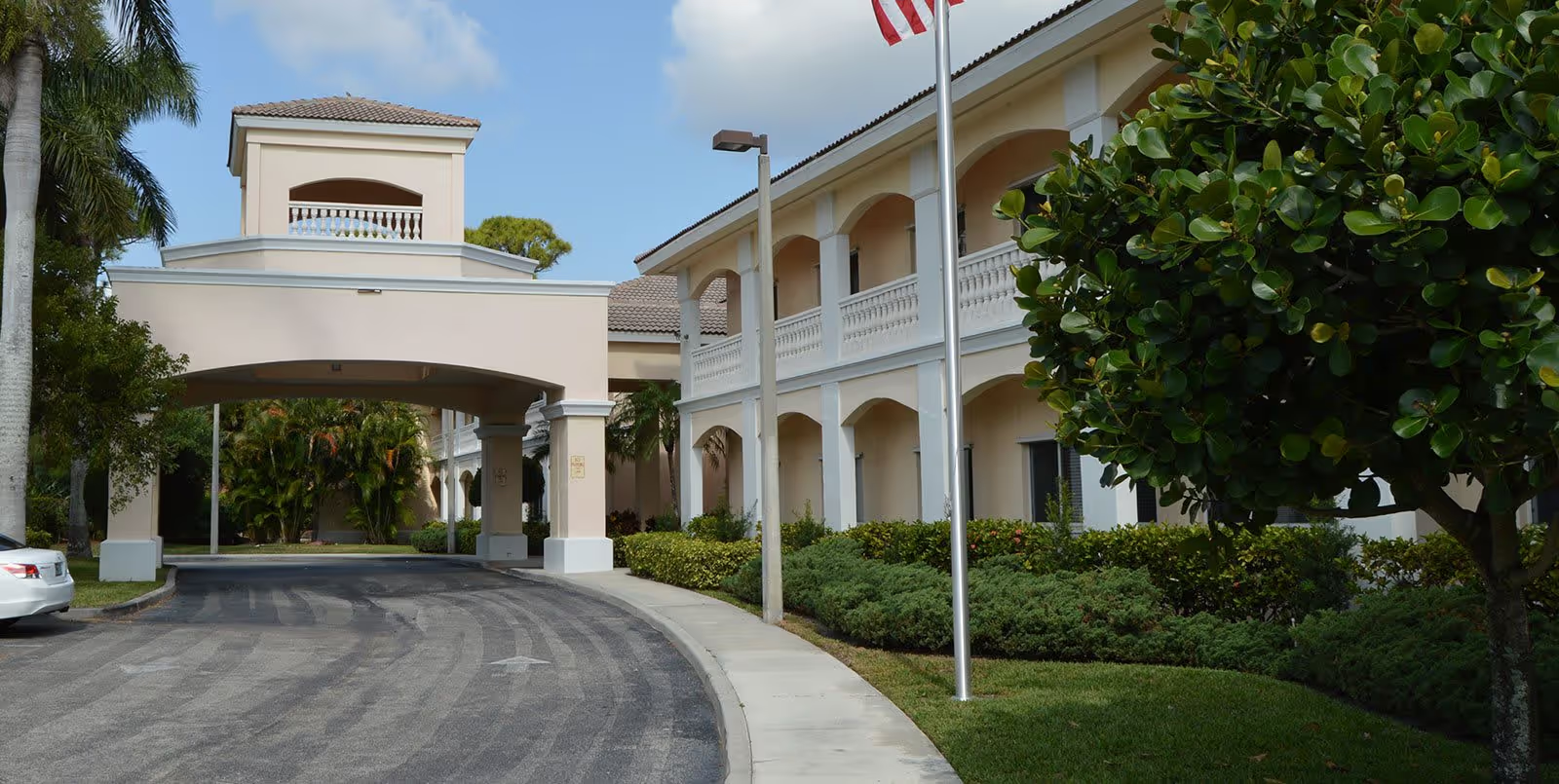
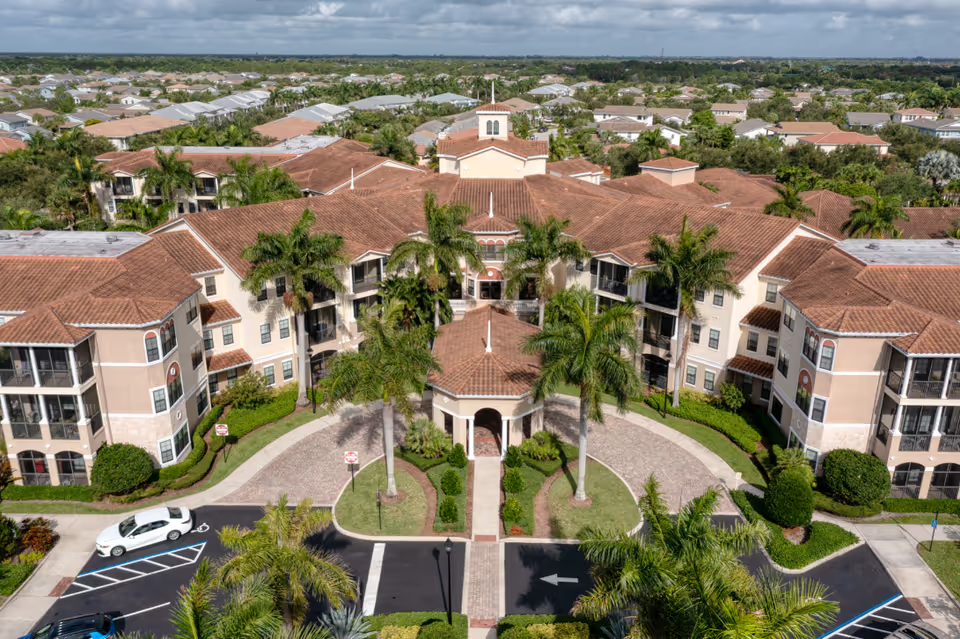
Facilities and environment: The physical plant receives mixed feedback. Many reviewers find the facility clean, welcoming, and secure, with pleasant outdoor spaces and an inviting reception area. At the same time, recurring issues include small, semi-private rooms with limited privacy, dated bathrooms and ventilation problems, odor and sanitation concerns in some areas, and occasional pest-control or maintenance complaints. These infrastructure issues appear to contribute to variable perceptions of overall cleanliness and comfort.
Management and notable patterns: Two themes recur across reviews: a strong appreciation for individual staff members and therapy outcomes, and operational variability that affects higher-acuity care. Management responsiveness is described as excellent by some families and insufficient by others, indicating inconsistent administrative performance. Important operational questions for prospective families include current staffing ratios, private-room availability, wound- and medication-management protocols, transfer/escalation procedures, and visitation/virtual-visit policies.
Guidance for prospective residents and families: Given the mixed picture, an in-person tour that includes observation of mealtime, therapy sessions, staff-resident interactions, and room/bathroom cleanliness is advisable. Ask about staffing levels on the unit of interest, language capabilities of clinical staff, infection-prevention and HVAC maintenance plans, medication reconciliation and wound-care protocols, visitor policies, and the process for obtaining medical records and physician-family communications. These targeted inquiries will help clarify whether the facility’s strengths align with the clinical needs and expectations of your loved one.