Magnolia House presents a generally positive picture of person-centered care, with multiple families praising compassionate and professional caregiving staff who create a warm, homelike environment. Reviewers emphasize attentive, familylike interactions, long-term resident continuity, and supportive services that include bereavement support. The facility appears to offer memory-care services and is described as clean and inviting inside, with appropriately sized rooms for standard furnishings.
Dining and daily life are strengths for many families. Several reviewers highlight meals prepared from scratch and diabetic-friendly options, along with an active calendar that includes bingo and other social programs. These elements contribute to resident engagement and a broadly favorable quality-of-life experience for those who find the setting a good match.
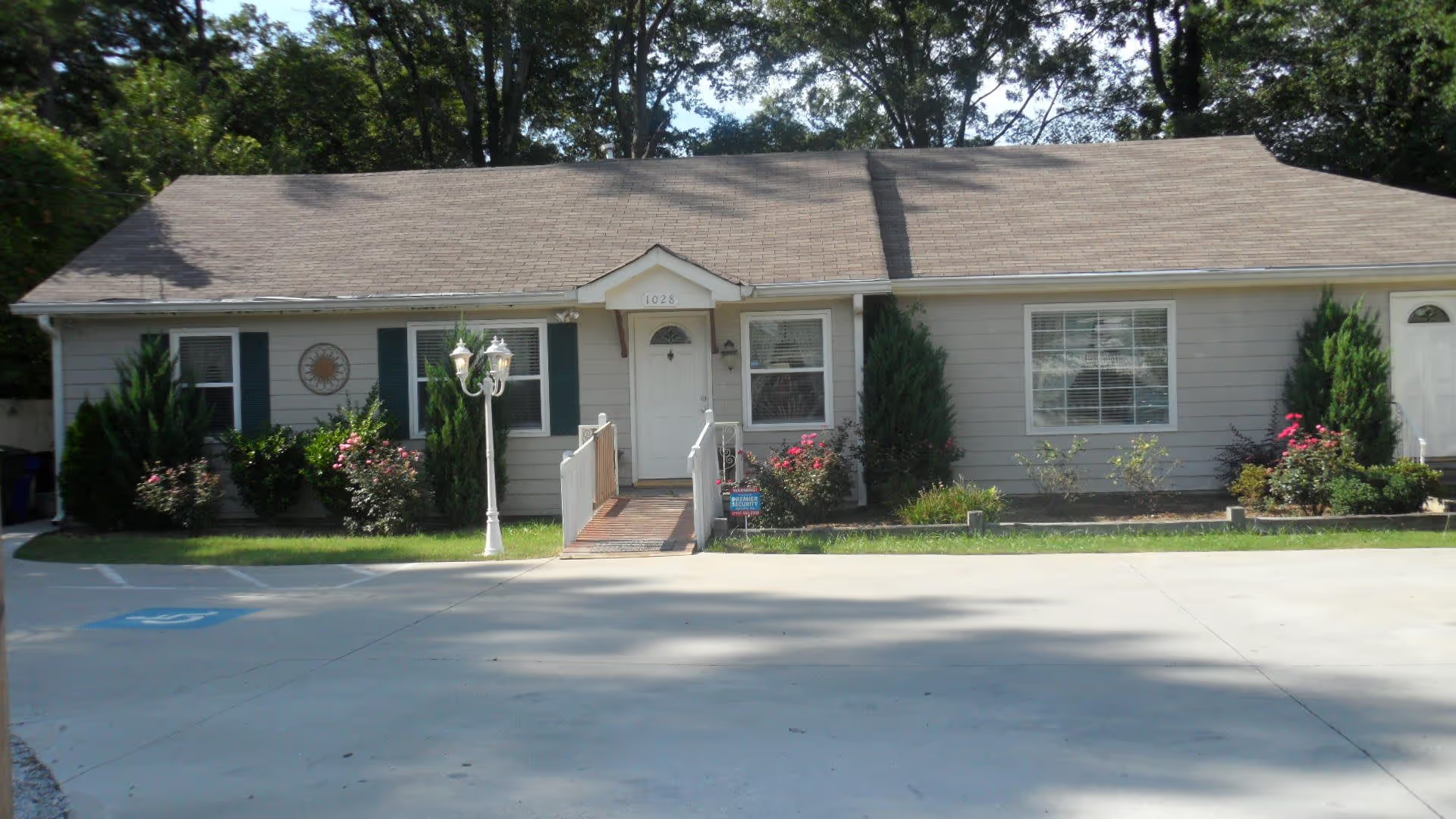
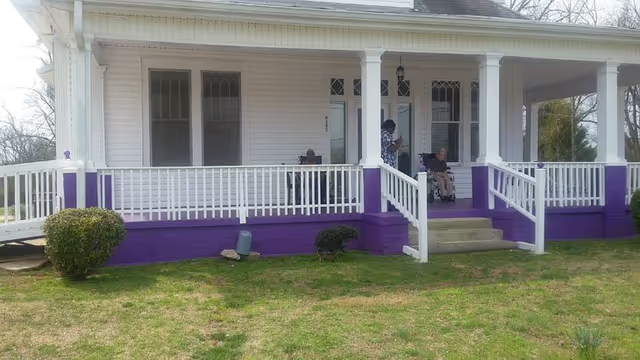
Facility condition and physical environment show mixed signals. While interior areas are often described as clean and pleasantly furnished, some accounts point to dim corridors and an overall somber hallway appearance that may affect mood and first impressions. Exterior cosmetic and maintenance shortcomings — such as peeling paint and damaged porch wood cited by visitors — suggest deferred upkeep that prospective residents should inspect during a tour. Room size is appropriate for standard furniture, but the facility has limited capacity to accommodate oversized pieces.
Management and administrative interactions are also mixed. Many families praise staff who are sensitive to family needs and willing to accommodate requests, including flexible room arrangements and occasional complimentary accommodations. However, other families have noted negative interactions with office staff or an unhelpful communication tone. Additionally, there is a serious individual allegation related to medication management during end-of-life care; this raises a facility-level concern about medication protocols that warrants direct inquiry during any evaluation.
Notable patterns for prospective residents and families: strong interpersonal care and homemade dining contrast with episodic facility-maintenance and administrative communication issues. There are also limitations around pet accommodations and the ability to accept large furnishings, and the setting may not suit every clinical or behavioral profile. Recommended steps before placement include an on-site tour to assess interior lighting and exterior condition, a review of medication-management and end-of-life care policies, clarification of pet policies and room-dimension constraints, and direct conversations with both caregiving and office staff to gauge communication style and responsiveness.