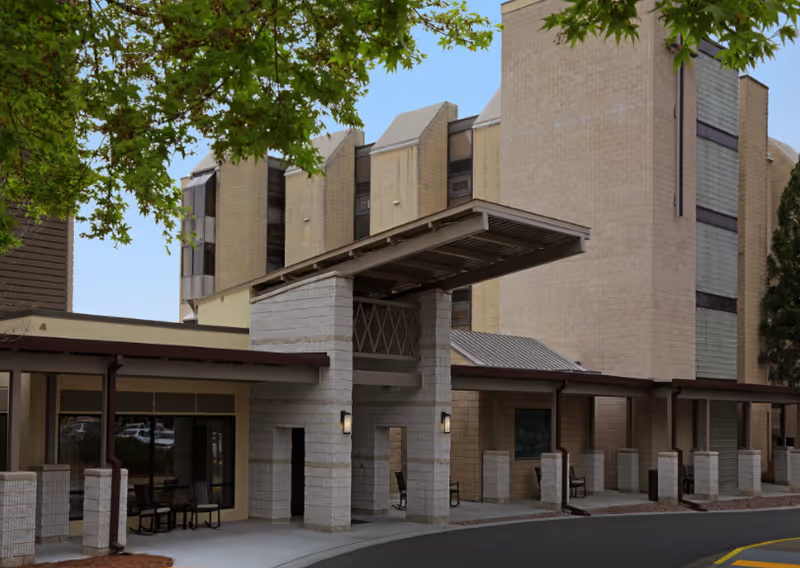
Reviews for Riverdale Center for Nursing and Healing present a strongly mixed picture. Many families and residents praised individual caregivers, therapists, and front-desk staff for compassion, clear communication, and effective rehabilitation outcomes; several accounts describe meaningful functional gains from physical therapy and positive discharge planning support. At the same time, repeated critiques point to operational inconsistencies that affect clinical reliability and day-to-day living.
Care quality appears uneven. Positive accounts highlight responsive nurses and successful therapy programs, while a number of reports describe lapses such as delayed medication administration, missed clinical follow-up, and inconsistent pain management. There are several statements about delayed responses to urgent needs and examples where family members perceived that orders or follow-up were not executed as expected. These patterns suggest variability in clinical oversight and shift-to-shift performance rather than uniformly predictable care standards.
Staffing and staff conduct are recurring themes. Reviewers commonly note variability across shifts and departments: daytime and rehabilitation staff are often described as attentive, while night and weekend staffing are associated with reduced responsiveness and negative interactions. Social-work and admissions staff are frequently commended for assistance, though some reviewers cited communication breakdowns and limited training. Reports also indicate morale and management challenges among staff and agency personnel, which can influence continuity of care.
Housekeeping, sanitation, and the physical environment are other salient areas of concern. Multiple reviewers cited cleanliness issues, incontinence-care delays, odor concerns in some areas, pest-control issues, and slow or inconsistent housekeeping. Facility-related problems such as dim lighting, dated furnishings, missing or malfunctioning equipment, limited in-room amenities (phones), and intermittent utility interruptions were also raised. Conversely, maintenance staff received praise in certain cases for prompt repairs and helpfulness.
Dining and activities show inconsistent experiences. Some families found meals acceptable and activities engaging (including onsite religious services and social programming), while others reported repetitive menus, heavy reliance on starches, and limited activity engagement. This inconsistency extends to personal-care routines as well—bathing and toileting schedules were described as reliable by some and delayed or missed by others.
Management and communication issues span contact responsiveness, care-plan follow-through, and administrative accountability. Several reviewers described difficulty reaching administrators by phone, missed or canceled care-plan meetings, unreturned calls, and poor coordination with outside physicians. There are serious individual claims, including allegations of staff theft and clinical errors; such matters, when raised, were sometimes escalated to state authorities. At the same time, other reviewers reported positive administrative interactions and felt well informed.
Notable patterns are the polarization of experiences and the clustering of concerns around specific operational domains: staffing consistency, sanitation/housekeeping, medication and clinical follow-up, and family communication. For a prospective resident or family, considerations should include verifying current staffing and oversight practices, visiting at multiple times of day to assess shift variability, confirming specific therapy plans and medication-management procedures, and asking about housekeeping, pest-control, and property-accountability protocols. The facility demonstrates strengths in individual caregiver commitment and rehabilitation capability, but families should seek clear, written assurances and observe operational practices in areas where reviews indicate recurring weaknesses.