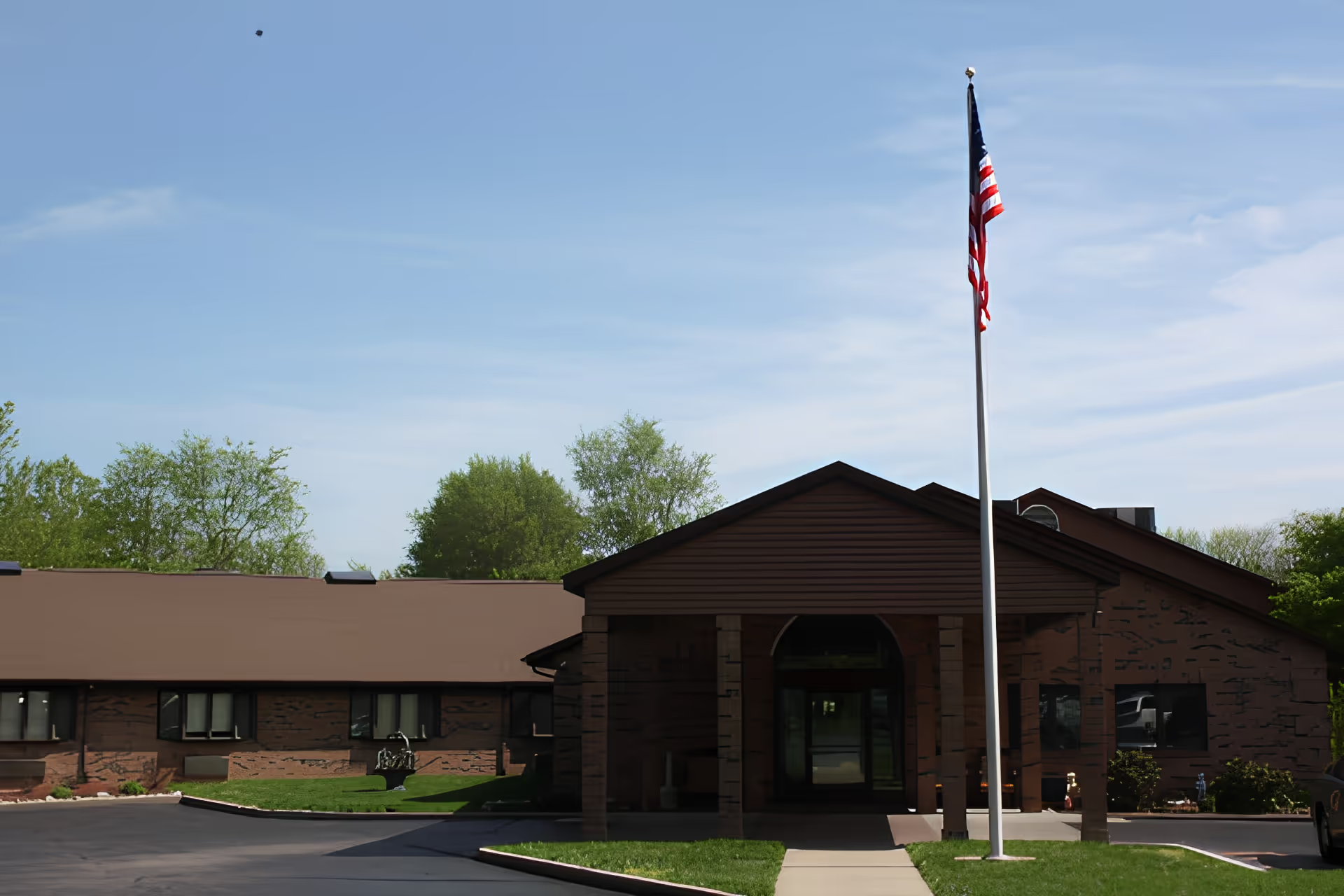
Overall impression: Arc at Hickory Point presents as a well-kept, attractive community with a home-like atmosphere and strong physical amenities. Many reviewers praise the facility’s cleanliness, landscaping, accessible grounds, and thoughtfully laid-out independent-living units. Admissions and front-desk staff are often described as helpful, and the presence of chaplain services and regular family updates are cited as strengths for family communication.
Care and staffing: The facility elicits mixed assessments on clinical care. Several families and former residents describe competent, compassionate caregivers and a knowledgeable nursing team; the rehabilitation and physical-therapy departments receive frequent, specific praise for producing rapid recoveries. At the same time, there are consistent operational concerns: staffing levels and turnover (including reliance on agency personnel) are described as contributing to inconsistent care continuity and delays responding to call lights. Reviewers also raised clinical-quality issues such as wound and infection-control gaps and inconsistent personal-care schedules. There are also serious family concerns about medication-management practices; reviewers flagged instances that point to weaknesses in medication controls and handling, including one or two serious allegations regarding controlled-substance handling.
Dining and daily living: Dining impressions are mixed. Several reviewers enjoyed the meals and described them as tasty and satisfying, while others reported cold or stale plates, incorrect orders, and a heavy-carbohydrate menu pattern. These comments suggest variability in meal delivery and temperature control rather than a uniform dining program. Families considering a placement should sample meals and ask about menu rotation, special-diet handling, and meal-delivery procedures.
Facilities and activities: The physical plant is a clear strength. Reviewers consistently describe the facility as clean, newer or recently remodeled in parts, and aesthetically pleasing. Accessible sidewalks and a quiet location are noted positively. Social spaces, community rooms, and landscaping receive favorable mention, and many residents appear socially engaged. Some comments note ongoing remodeling, and a few reviewers mentioned that the facility does not accept Medicaid—an important practical consideration for prospective residents.
Management and administration: Administrative experiences are variable. Several staff members in admissions, social services, and administration receive positive mention for responsiveness and compassion; nightly administrator updates and visible managerial communication are appreciated by families. Conversely, other reviewers described billing and insurance-administration problems, inconsistent follow-through on refunds or paperwork, and an uneven tone from some administrators or social-services personnel. A few reviewers linked a perceived decline in responsiveness to a recent ownership or management change, indicating that leadership transitions may be affecting operations.
Patterns and guidance for families: The dominant pattern is one of contrast: a generally attractive, therapy-capable facility with many caring employees, paired with operational inconsistencies that affect day-to-day resident experience. Before committing, families should investigate staffing ratios (including use of agency staff), review the facility’s medication-administration protocols and incident logs, sample meals, confirm insurance and billing practices (including Medicaid policy), and meet members of the therapy and nursing teams. Those priorities will help weigh the facility’s strong rehabilitation and environment against the operational weaknesses noted in family accounts.