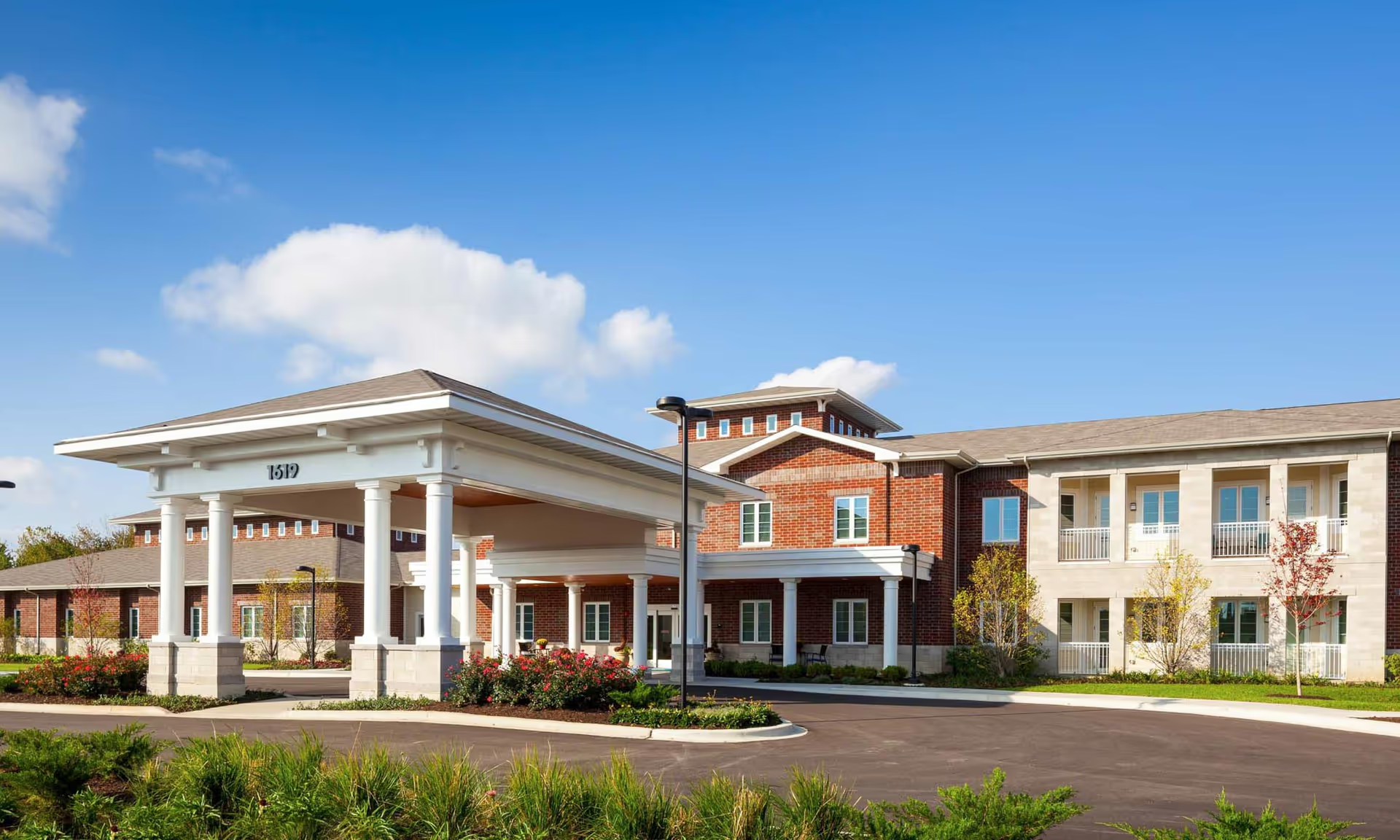
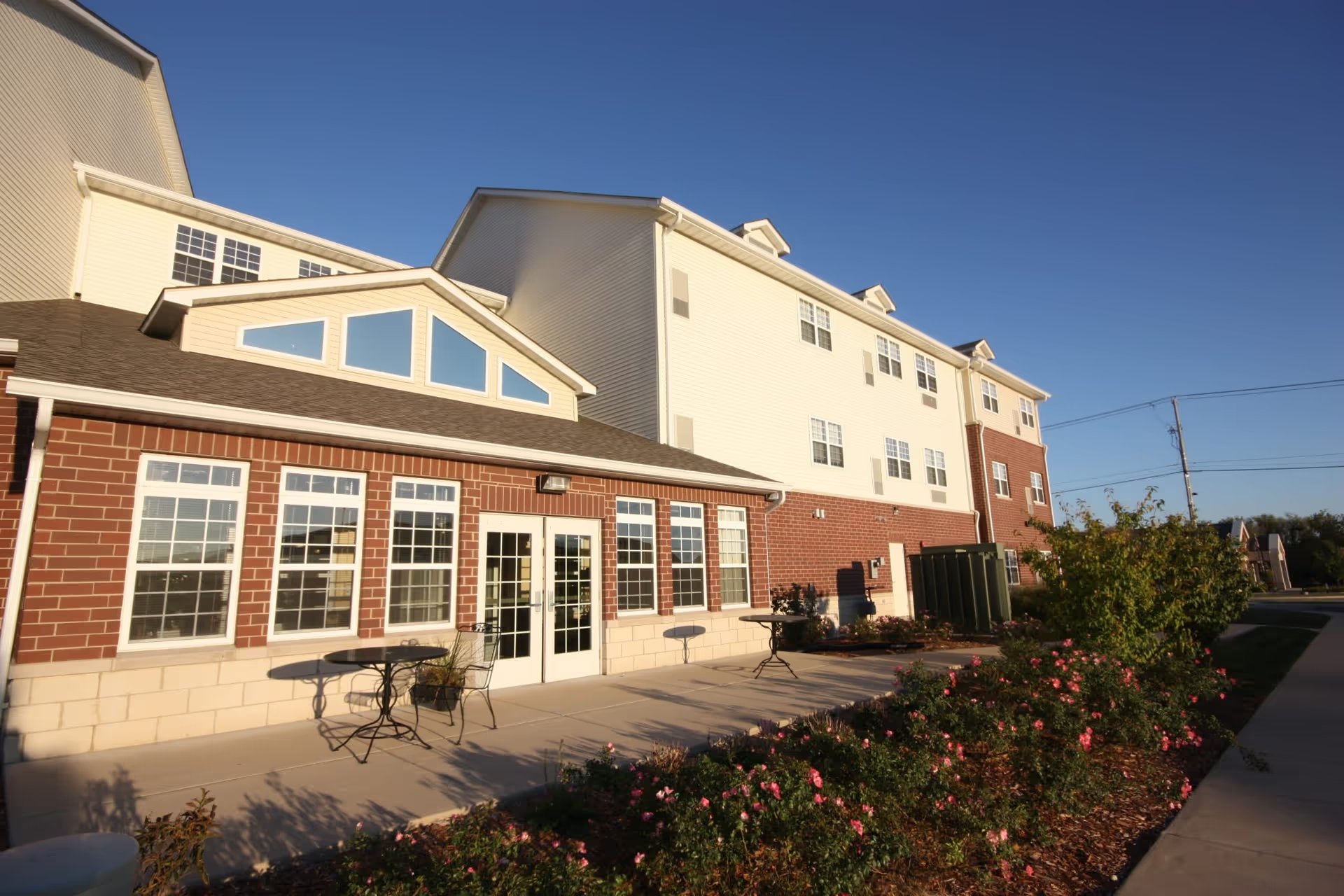
The Auberge at Naperville presents a mixed but distinct profile: many families describe a warm, activity-rich, and well-appointed environment led by compassionate nursing and caregiving teams, while other families report operational and oversight weaknesses that affect care continuity. Positive accounts emphasize attentive nurses and direct-care staff, an engaged activity calendar (including outings, on-site gardens, and social events), dementia-focused programming, a single-floor layout with an interior courtyard, and pet- and family-friendly practices. Recent capital refreshes and bright, open common areas contribute to a resort-like atmosphere for residents who experience stable staffing.
Care quality remarks vary. Numerous families praise skilled nurses, responsiveness in medical situations, and helpful transition support; dedicated staff members and an on-site social worker are cited as strengths. At the same time, several families described declines in clinical follow-through and examples of missed care tasks, which suggests inconsistency in training, supervision, or staffing ratios. There are also reports indicating gaps in medication and nutrition administration processes that prospective families should query directly.
Staff and workplace culture appear polarized. Many reviews highlight friendly, compassionate caregivers and a supportive administrative presence; others raise concerns about staff conduct, phone distractions, favoritism, and a rotating pool of temporary employees. These accounts point to uneven supervision and morale issues that can translate into variability in resident experience. Prospective families should ask about staff turnover rates, use of agency staff, and ongoing training programs when evaluating the community.
Dining and activities receive both praise and criticism. The facility offers multiple activities, outings, and in-house amenities that residents find engaging, and several reviewers appreciated resident-access kitchens and snack availability. However, dining quality and menu variety are described as inconsistent—occasional overcooked meals, dry entrees, and repetitive menu cycles were noted—so confirm current meal plans, special-diet accommodations, and sample menus during a visit. Activity scheduling is generally robust but reviewers cited variable follow-through in some cases; inquire about the activity calendar and staffing dedicated to programming.
Facility maintenance and housekeeping are other areas of divergence. Many families find the building clean, well-landscaped, and easy to navigate, with attractive outdoor spaces and recent refurbishments. Conversely, there are recurring references to inconsistent housekeeping, laundry delays, worn carpeting in some halls, and unresolved maintenance items. Infection-control practices were proactive in some periods but reviewers also recounted delayed isolation and outbreak handling in at least one instance, suggesting that policies and execution may fluctuate over time.
Management and communication show strengths and gaps. Some families commend responsive leaders, hands-on directors, and clear family outreach; others describe poor after-hours access, slow incident reporting, billing disorganization, and reduced communication following ownership changes. Several reviews reference a change in management or ownership correlated with perceived declines in staffing and oversight. For prospective families, clear contractual terms, escalation contacts, and documented communication protocols are advisable.
Overall, The Auberge at Naperville can offer a high-quality, activity-rich setting with strong dementia care capabilities and many compassionate staff members. At the same time, consistent performance appears sensitive to staffing stability, management practices, and operational follow-through. Prospective residents and families should tour the community, meet nursing and activity leadership, review staffing ratios and turnover data, examine housekeeping and maintenance schedules, sample meals, and ask for recent incident-response examples to assess current performance and fit for specific care needs.