The reviews for Gallatin Nursing & Rehabilitation present a predominantly positive picture of clinical care and staff engagement. Multiple comments praise the quality of care as excellent and highlight strong communication with families; reviewers describe staff who go "above and beyond," provide supportive guidance during difficult decisions, and maintain continuity for long‑term residents. The facility’s emphasis on community service and a commitment to excellence are recurring themes and are reinforced by mentions of long‑tenured staff and a willingness to welcome tours.
Staff are the most frequently noted strength. Descriptors such as friendly, respectful, supportive, and hardworking appear across the summaries, and several comments single out effective communication and help with family decision‑making. Long staff tenure suggests workforce stability, which reviewers link to consistent care and positive resident relationships. At the same time, there is at least one direct negative comment about staff tone; when aggregated, that indicates a potential variability in staff professionalism or responsiveness rather than a consistent systemic failure.
Dining and activities receive little direct commentary in the provided summaries. Because reviewers focus primarily on clinical care and interpersonal staff qualities, there is limited information about meal quality, menu variety, or the regularity and breadth of recreational programming. Prospective residents and families should request current menus, sample meals if possible, and an activities calendar during a tour to assess whether offerings meet individual preferences and needs.
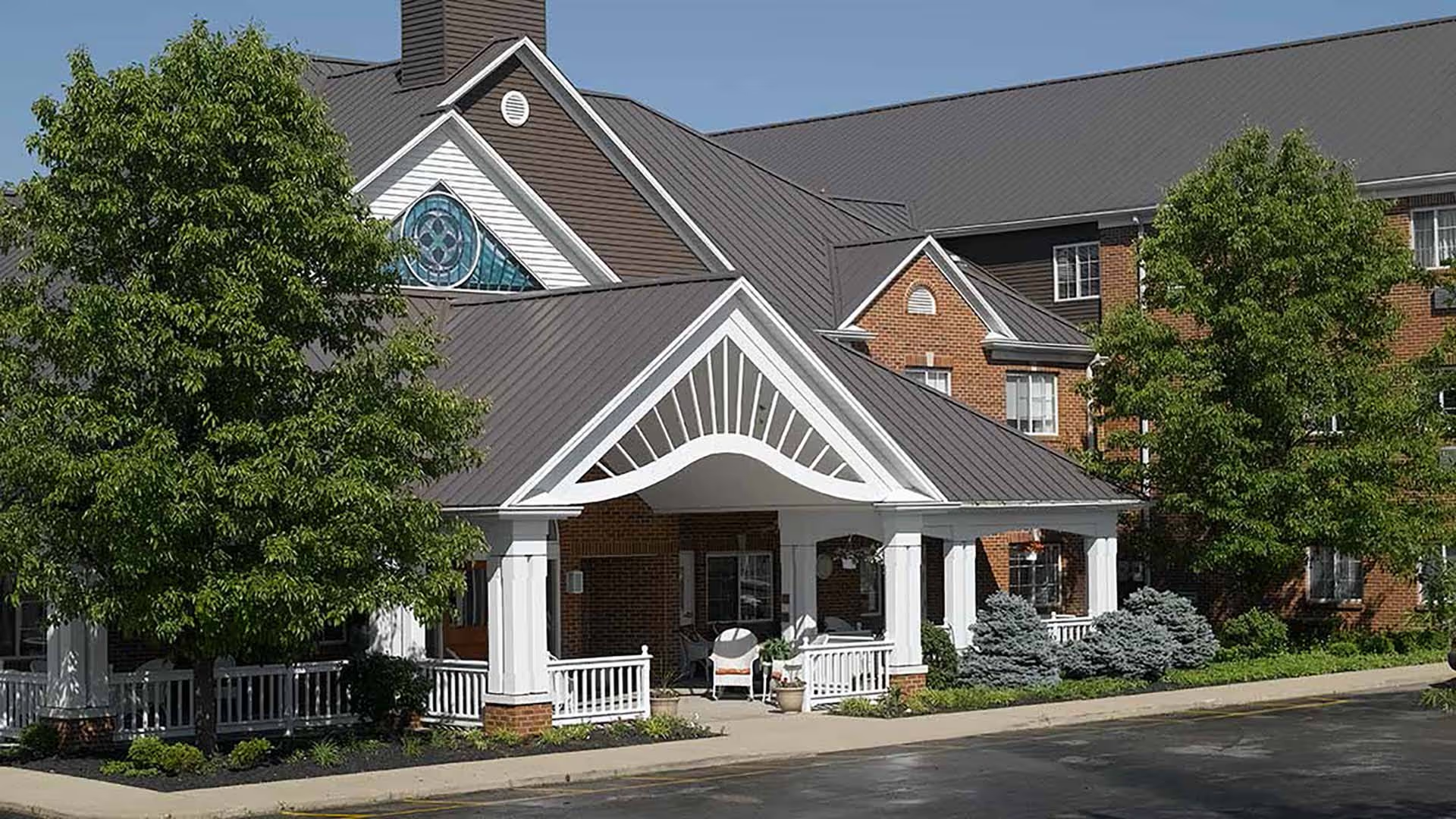
The physical and organizational setting is described positively in parts — a quaint river‑town location and an open invitation to tour suggest an accessible, community‑oriented environment. Management-related cues are favorable: reviewers note clear communication and an expressed commitment to excellence, which, together with long staff tenure, points to relatively stable leadership and operational practices. However, the presence of at least one negative remark about staff conduct points to a pattern-level caution: while overall feedback is strong, there appears to be occasional inconsistency in staff interactions or responsiveness.
In sum, the pattern in these summaries is one of strong clinical performance and family‑oriented staff support, anchored by experienced personnel and a community focus. Key areas for further inquiry during a visit are staff training and supervision practices (to clarify variability in conduct), specific dining options and how dietary needs are managed, and the regular activity schedule. Asking for staffing ratios by shift, examples of family communication protocols, and direct observation of meal service and activities will help prospective families confirm that the facility’s positive aspects align with their expectations.