Reviews of Capital Oaks Nursing & Rehabilitation Center describe a polarized set of experiences. Several families and visitors praise the facility’s nursing team and identify the Director of Nursing (named Jamie) and certain caregivers as committed, professional, and willing to go above-and-beyond. At the same time, other accounts raise substantive operational concerns that affect perceptions of overall care quality.
Care quality appears uneven. Positive accounts highlight attentive, compassionate nursing and individual staff members who provide strong hands-on care. Conversely, other accounts describe lapses in attentiveness during direct-care tasks and weaknesses in resident handling and transfers; these describe operational patterns such as inconsistent transfer- and transport-safety practices and occasions where staff appear distracted during care. There are also isolated but serious claims about potential staff impairment that suggest gaps in supervision and monitoring; these are notable and warrant follow-up by families and regulators.
Dining and front-desk communications are a recurring area of concern. Several comments reference blunt or negative tones from reception and dietary staff during phone and in-person interactions, indicating inconsistent customer-service standards. There is not a clear, consistent picture of meal quality itself in the available summaries, but communication around nutrition and dietary services has been experienced as problematic by some families.
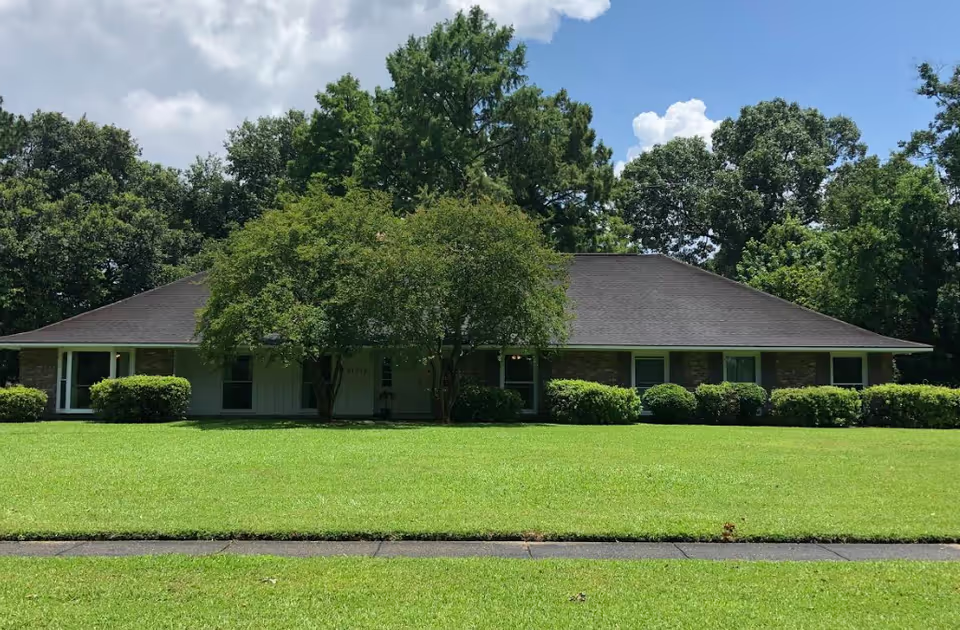
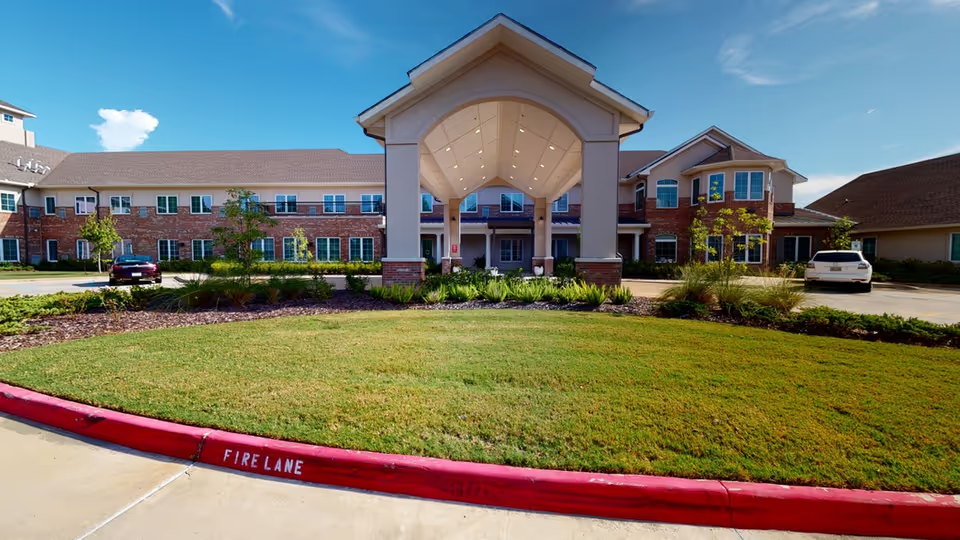
Facility condition and activities are described inconsistently. Some reviewers describe clean, well-maintained areas and positive impressions of upkeep, while others raise sanitation and cleanliness concerns in parts of the facility. Activity programming is not commonly discussed in these summaries, so there is limited information to evaluate offerings and engagement consistently.
Management and administration draw mixed feedback. A portion of reviewers note recent leadership changes and improvements, while others criticize administrative transparency, decision-making, and responsiveness to families’ concerns. There are also reports indicating gaps in how clinical incidents are handled and communicated to families — for example, follow-up after critical events has been described as insufficient.
Overall, the pattern is one of variability: distinct strengths in individual caregivers and certain leadership roles coexist with recurring operational weaknesses in supervision, communication, cleanliness control, and transfer/transport safety. Prospective residents and families should consider an on-site tour that includes observation of mealtime, a review of transfer and transport procedures, direct conversations with nursing leadership about staffing and incident-response protocols, and checks of regulatory and inspection records to clarify how the facility is addressing the concerns noted above.