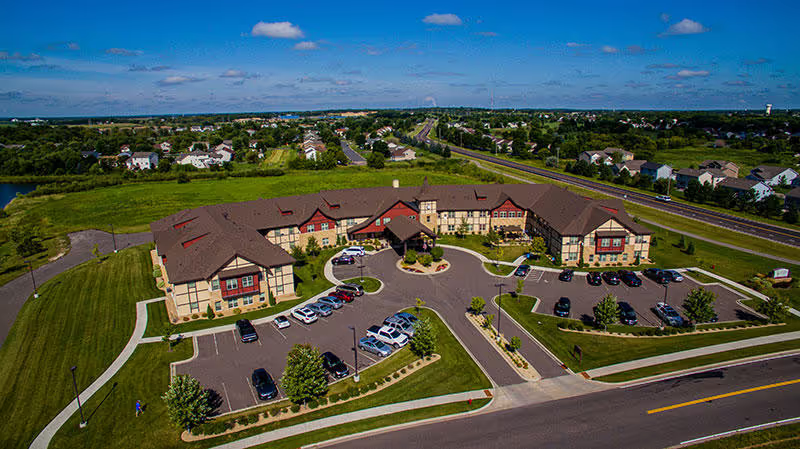
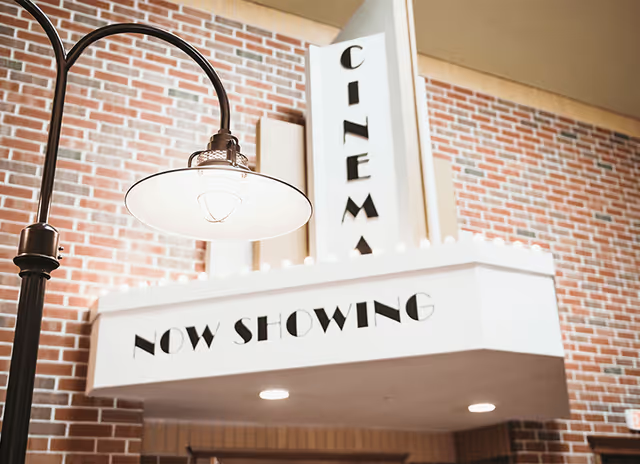
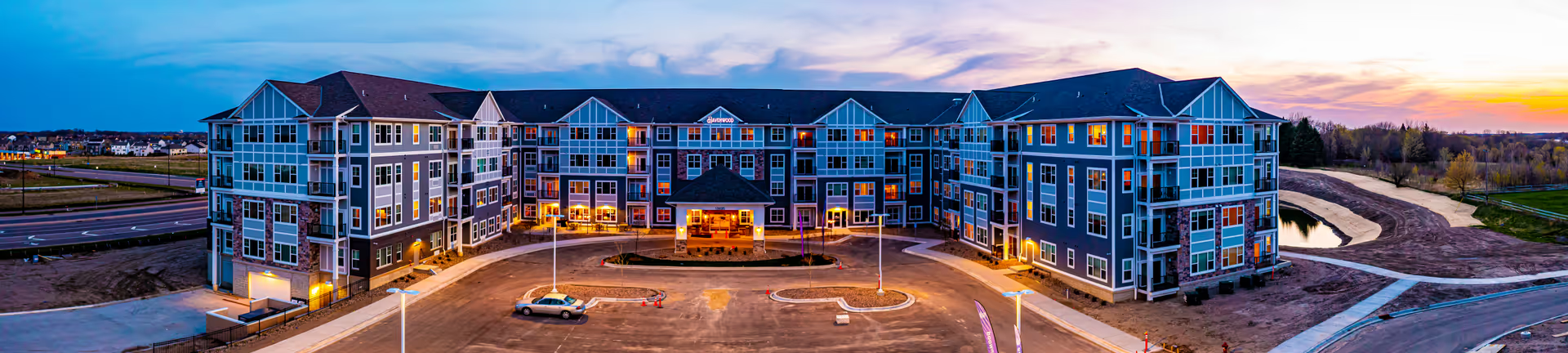
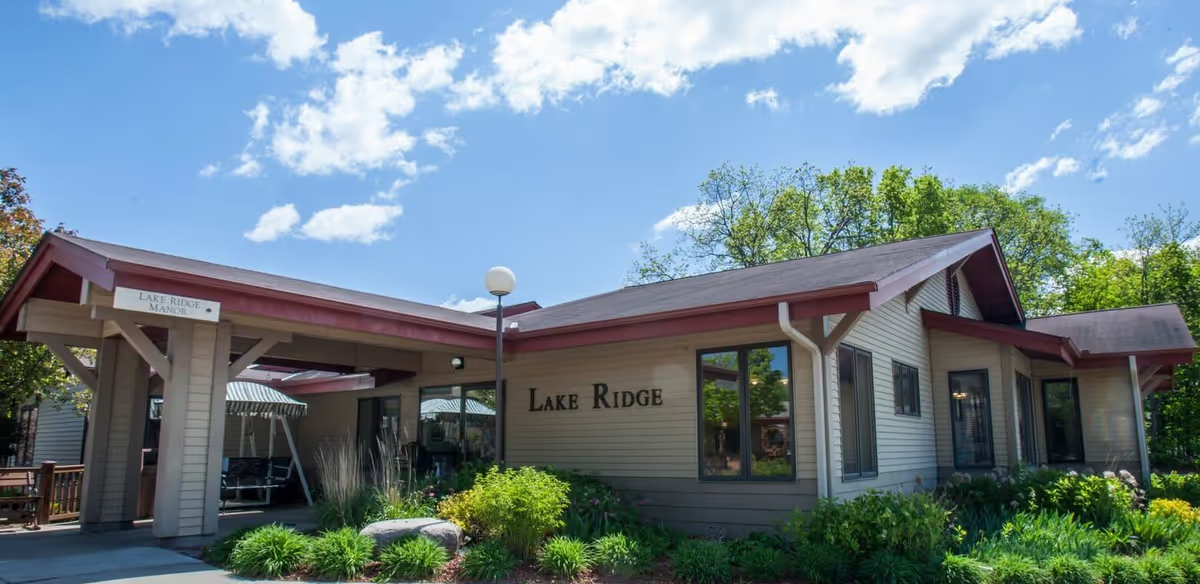
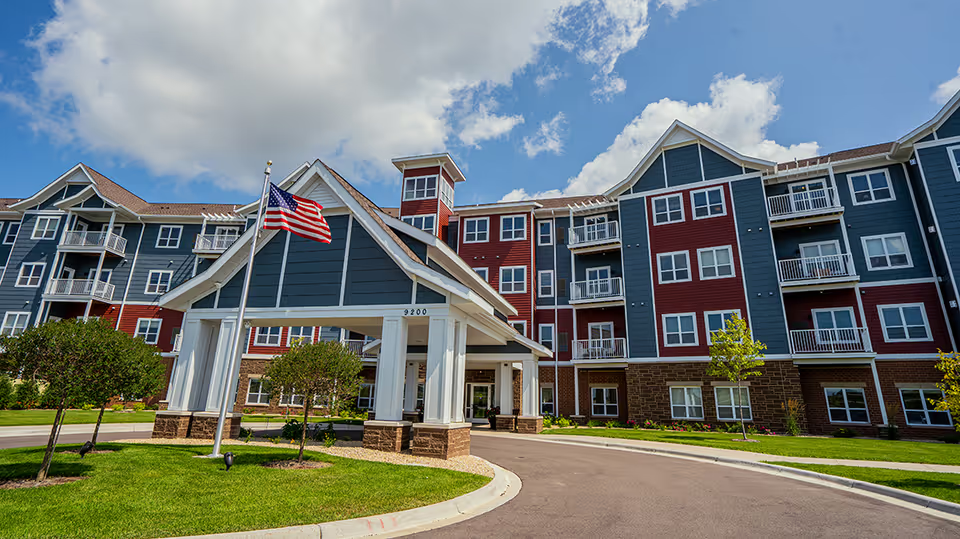
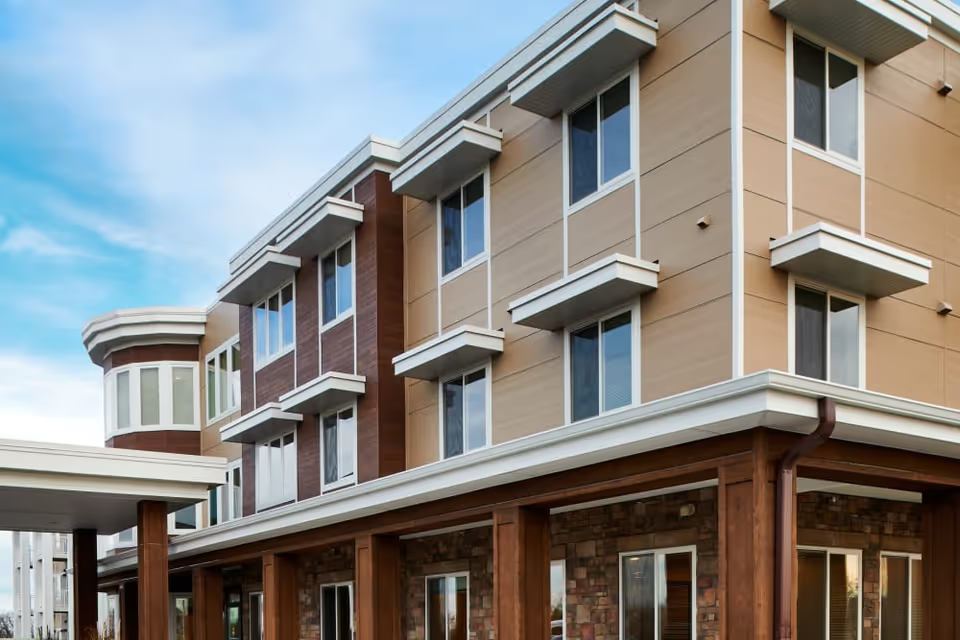
Reviewer feedback presents a mixed picture in which a well-appointed physical environment and several praised front-line caregivers coexist with operational and clinical-management concerns. The facility’s design, common spaces, and grounds receive consistent positive mention: reviewers describe the property as spacious, light-filled, and thoughtfully laid out. Many families and residents also highlight compassionate, personable direct-care staff—particularly during daytime hours—and specific programming such as one-on-one memory exercises and monthly cultural/themed events that include family participation.
Care quality perceptions vary widely. Several accounts describe attentive, family-like caregiving from direct-care staff and positive end-user experiences; others cite significant clinical-process weaknesses. Recurrent operational themes include high turnover among both direct-care and management personnel, disorganization in administrative roles, and inconsistency in medication ordering and administration. There are specific concerns about the facility’s medication-management controls, including instances where psychotropic medications appear to be emphasized in treatment plans rather than nonpharmacologic approaches.
Staffing and responsiveness are prominent concerns. Reviewers note nonfunctional or unreliable call-button systems and delayed staff response times, as well as comparatively weaker overnight coverage and oversight. These issues are tied to broader worries about continuity of care when staffing is unstable. Language barriers among staff are also noted as a complicating factor for clear resident communication and family interactions.
Dining and activities are described inconsistently. Some families praise the food and themed events; others find meal quality and continuity lacking. Activity offerings such as memory-support programming and themed visits are viewed positively when they are executed, but availability appears uneven and in some cases limited by staffing or scheduling. Access to outdoor spaces is appreciated from a property standpoint but is described as restricted without staff accompaniment, which may limit independent resident use.
Management and family communication present another clear pattern. Several reviewers describe disorganized administration, shifting responsibilities onto families, and strained interactions around billing and service expectations. There are also mentions of regulatory notations and referenced evidence tied to specific incidents; these raise concerns about the facility’s incident-response procedures and documentation. While some families report constructive resolution and improved boundary-setting with new leadership, others describe ongoing adversarial exchanges over payments and a perceived lack of empathy following adverse events.
Taken together, the reviews suggest that Volante Senior Living of Hanover has tangible strengths in its physical environment and in portions of its caregiving staff, but that those strengths are partially offset by operational instability—notably high turnover, inconsistent clinical controls (including medication practices), and variable responsiveness. Prospective residents and families should weigh the facility’s attractive environment and available programming against these operational risks, ask for up-to-date staffing and medication-management policies, request demonstrations of call-system reliability, and seek clarification on billing practices and regulatory history during the tour and contract discussions.