Overall assessment: The available reviews raise multiple operational concerns that bear on quality of care and family confidence. Clinical-process issues, interpersonal behavior, and responsiveness to family complaints are the most prominent themes. Prospective residents and their families should verify protocols and observe staff–resident interactions during a visit.
Care quality: The primary care-related concern is medication-administration delays. One review referenced a delayed administration of an over-the-counter analgesic; this type of report suggests potential gaps in medication-timing controls or in staff responsiveness to symptom relief requests. There are also generalized concerns about resident-handling practices that indicate the need to review transfer and personal-care procedures, staff training in safe handling, and documentation of care events.
Staff and communication: Multiple comments describe abrupt or discourteous interactions, instances of raised voices, and evidence of inter-staff conflict. Reported phone interactions that ended without resolution or an apology point to weaknesses in customer-service training and in escalation/grievance protocols. Together these observations suggest opportunities for improved staff communication training, formalized conflict-resolution processes, and clearer expectations for family outreach following incidents or complaints.
Dining: Concerns about meal portion sizes were noted, specifically that portions were very small. This points to potential issues with meal-planning, portion control, or resident satisfaction with nutrition and meal service. Families should ask about menu variety, dietary accommodations, and how portion sizes are determined during a tour or meal observation.
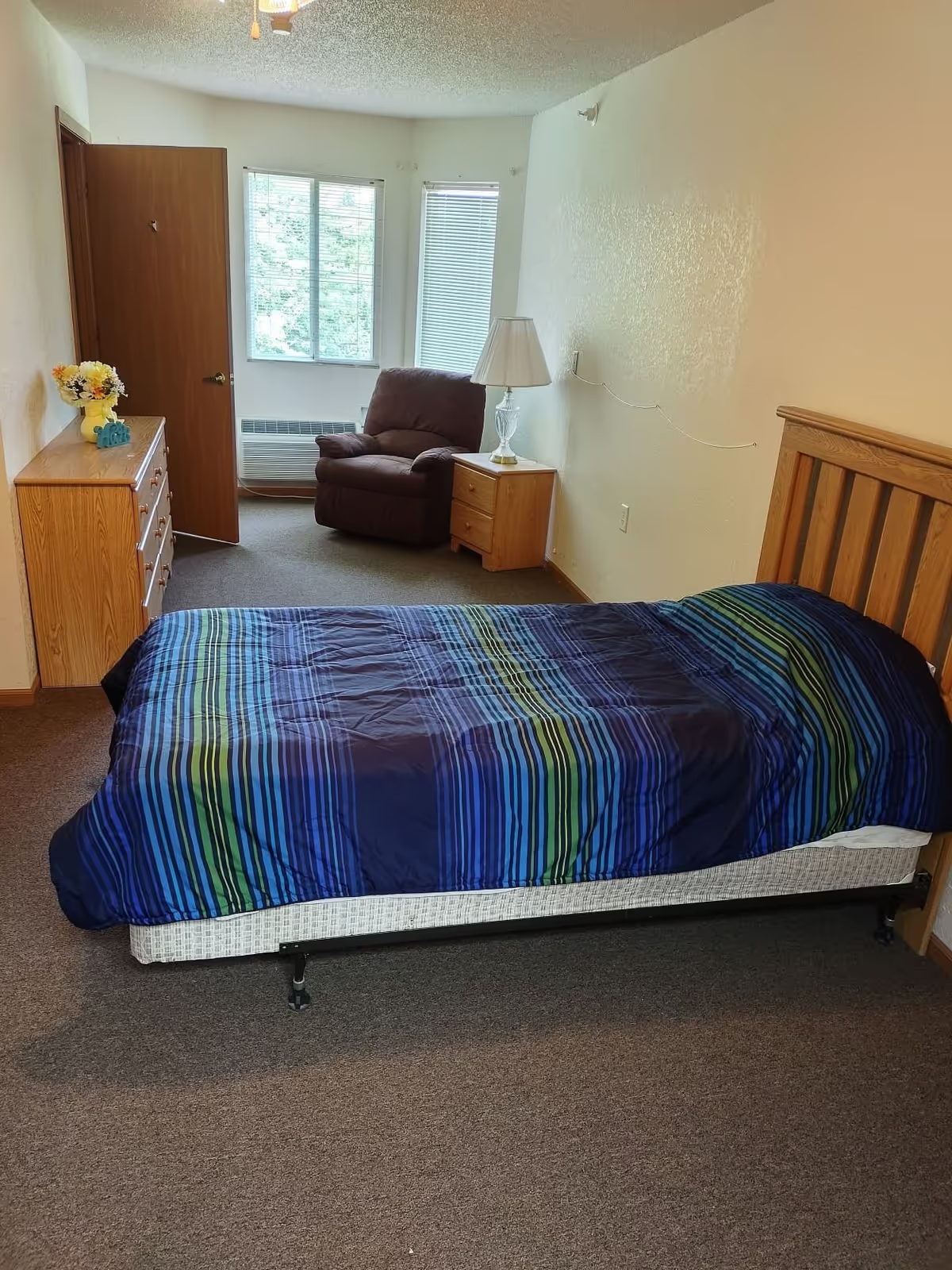
Activities and facilities: There is limited feedback available about activity programming and the physical environment in the provided summaries. Because these areas were not addressed, families should request the facility’s activity schedule, observe an activity session, and inspect common areas and resident rooms to assess engagement opportunities and overall upkeep.
Management and notable patterns: A recurring pattern concerns weak family outreach and complaint follow-up: reports of calls being terminated abruptly and no subsequent contact suggest gaps in incident follow-up and grievance handling. Combined with the behavioral concerns described above, these patterns indicate potential weaknesses in supervisory oversight and staff accountability. Prospective families should inquire about staff training, supervision ratios, medication-administration protocols, incident-reporting procedures, and the facility’s formal process for responding to family concerns.
Actionable suggestions for families: During a visit, observe mealtime service, ask to see medication-management policies, request examples of staff training and supervision, and test the facility’s responsiveness by presenting a hypothetical concern and noting how staff and management handle it. Confirm how the facility documents and follows up on complaints and requests for additional care.
In summary, the reviews reflect consistent concerns in medication timing, staff conduct and communication, meal portioning, and follow-up with families. These are operational areas that management can address through training, clearer protocols, and stronger complaint-resolution practices; families should seek direct evidence of improvements when evaluating the facility.