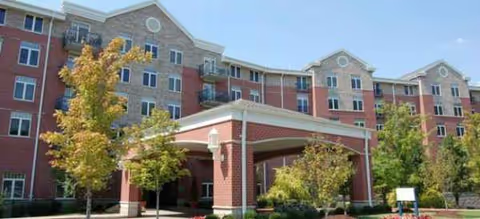
Reviews for St Sophia Health & Rehabilitation Center are highly polarized, with a set of reviewers describing positive clinical outcomes and a separate set raising substantial operational and safety concerns. Strengths that emerge include successful short-term rehabilitation (PT/OT), an on-site hemodialysis program, and an active activities department; several families praised individual caregivers and therapy staff for dedication and measurable clinical improvements. The physical environment is described positively in many accounts — bright common areas, recent flooring and artwork updates, and some examples of attentive wound care and effective clinical interventions.
Despite those positives, a consistent pattern of operational weaknesses appears across reviews. Staffing levels are described as inconsistent, particularly on weekends and nights, and reviewers linked this to delays in attending to residents' basic needs. Multiple accounts describe sanitation and odor-control deficiencies in resident rooms and hallways and inconsistent bathing and incontinence-care practices. Medication administration and documentation gaps were cited repeatedly, including medication delays and items left unattended, which families identified as a clinical risk.
Staff behavior and communication receive mixed assessments. Some reviewers emphasize compassionate, professional caregivers and an engaged activities director; others report variable conduct, distracted staff behavior, and long on-hold times or unreturned calls. Families frequently reported difficulty reaching administrators, slow or inadequate follow-up on incidents, and problems obtaining clear answers about billing, refunds, or the handling of personal property. These communication and administrative shortcomings amplified dissatisfaction when clinical or safety concerns arose.
Dining and activity programs likewise show variability. The activities program and social engagement were often praised, with structured boards and varied offerings. Meal service reports range from diet-conscious, portion-controlled dinners to complaints about cold or missing meals, high-carbohydrate menus, and inconsistent meal delivery — suggesting gaps in meal-service continuity and nutritional oversight for some residents.
Safety and incident management are recurring issues in the reviews. Families noted falls, transfers to hospital, and wound- or infection-related complications in some cases; reviewers also described delays in incident reporting and inadequate family notification. There are reports of administrative and billing disputes, problems with transfer communication, and at least one review that referenced regulatory escalation. At the same time, other reviews state that the facility meets regulatory standards and that transition processes can be smooth.
In sum, the facility appears to deliver high-quality rehabilitation and has skilled clinical staff in some areas, but consistency is a major concern. Prospective residents and families should plan in-person visits (including at different times of day), ask for details about staffing ratios and weekend coverage, review medication-administration and incident-notification protocols, inspect cleanliness in resident rooms and common areas, and request copies of recent inspection reports and policies on property and billing. Where possible, speak directly with therapy staff and the activity director to confirm the services most important to the prospective resident.