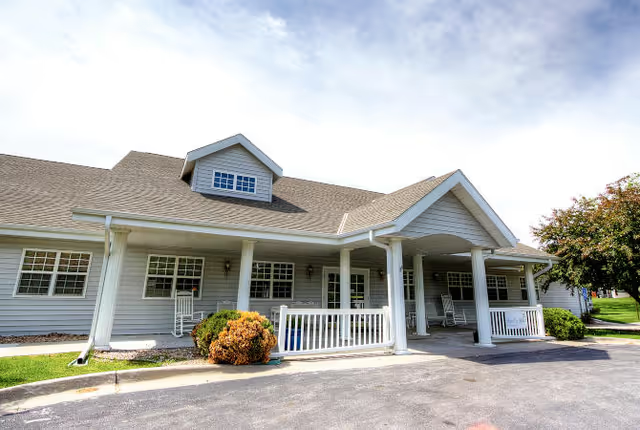
Harmony Court - Senior Living presents as a well-maintained independent-living community with a broad activity roster and visible social programming. Reviewers consistently highlight a lively schedule that includes exercise classes, games (bingo, cards, puzzles), crafts, themed parties, and regular outings supported by facility transportation. Common-area design — wide hallways, a courtyard, and accessible dining spaces — supports socialization and mobility. Apartment units with kitchenettes and amenities such as underground parking and biweekly housekeeping are noted as practical features for independent residents.
Staff and caregiving receive mixed but largely positive mentions. Many reviewers describe staff and tour personnel as friendly and supportive; several comments single out administrators and caregiving teams for strong interpersonal interactions. At the same time, there are recurrent concerns about workplace climate and inconsistent staff performance that could affect continuity of care. Prospective residents should assess current staffing levels, turnover patterns, and on-shift supervision during a visit.
Clinical services are limited by design: Harmony Court operates primarily as independent living and does not offer on-site nursing services. The facility does allow families to contract private caregivers when additional assistance is needed, but several reviewers emphasized the additional cost and logistics of arranging 24-hour care. This limitation, combined with differing impressions about staff responsiveness, suggests that families with evolving care needs should carefully evaluate care-continuum options and cost implications before moving in.
Dining receives mixed feedback. Some reviewers characterize the food as very good and residents as satisfied, while others describe limited meal availability when the kitchen is closed and food delivered rather than freshly prepared. The community provides two meals daily with a self-cook dinner option in some accounts; however, reviewers advise clarifying meal hours, menus, and policies for special dietary needs during a tour.
Management and policy areas show notable divergence in experience. Positive mentions of administrators exist alongside comments alleging poor handling of pet policies, emotional-support-animal denials, fee and deposit disputes, and limited resident-meeting opportunities. There are also concerns framed as potential gaps in disability-accommodation handling. These are operational issues that could affect resident satisfaction and grievance resolution; prospective residents should request written policy documents (pet/ESA policy, grievance procedure, fee schedule, accommodation policy) and ask how management communicates with families and residents.
Overall, Harmony Court appears to be a socially active, well-kept independent-living community that suits residents seeking engagement and modest on-site supports. Key decision points for families are the lack of on-site nursing, the potential need to contract private caregivers, clarity on dining services and extra fees, and confirmation of pet/ESA and accommodation policies. A recommended next step is an in-person tour during mealtime and an activity period, direct questions about staffing and turnover, and review of written policies and sample contracts before committing.