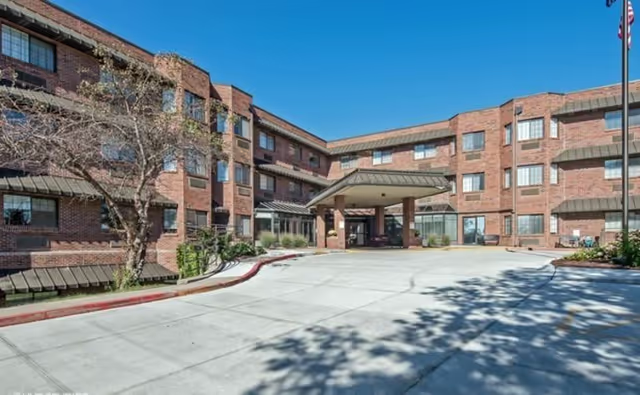
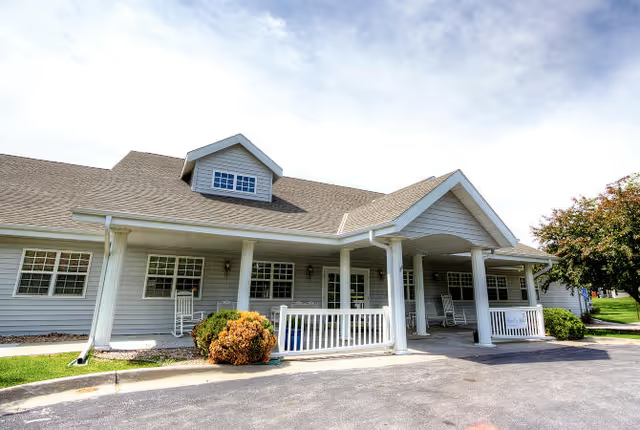
The reviews present a polarized picture of Hillcrest Health & Rehab: several accounts describe high-quality rehabilitation, attentive therapists, and a well-appointed facility with an on-site chef and attractive common spaces, while other accounts identify recurring operational shortcomings that affect daily care. Strengths cluster around therapy services (PT/OT), individual staff members who demonstrate compassion and skill, and portions of the campus that are modern, comfortable, and secure. Families who encountered these strengths reported good interdisciplinary teamwork, engaging memory-unit activities, and meals that felt personalized rather than mass-produced.
However, a consistent pattern across reviews points to staffing and operational reliability issues. Many descriptions indicate inconsistent staffing levels, long wait times for assistance, and slow responses to call bells. Those staffing gaps appear linked to several downstream problems: missed or delayed medication administration (including insulin and pain medications), limited assistance with bathing and repositioning, and delays in addressing continence-care needs. Reviewers also described lapses in documentation and the absence or poor communication of individualized care plans, which can complicate coordination between family members and clinical staff.
Dining and domestic services show a dichotomy: an on-site chef and praised meal options coexist with frequent complaints about cold or delayed meals, limited menu rotation, and shortages or substitutions without notification. Laundry and personal-item management emerged as another operational weakness—missing or misplaced belongings, slow turnaround, and concerns about how items are tracked and handled. Sanitation concerns in certain areas and inconsistent housekeeping were also reported alongside many accounts of clean, well-maintained rooms; this suggests variability in performance across shifts or units.
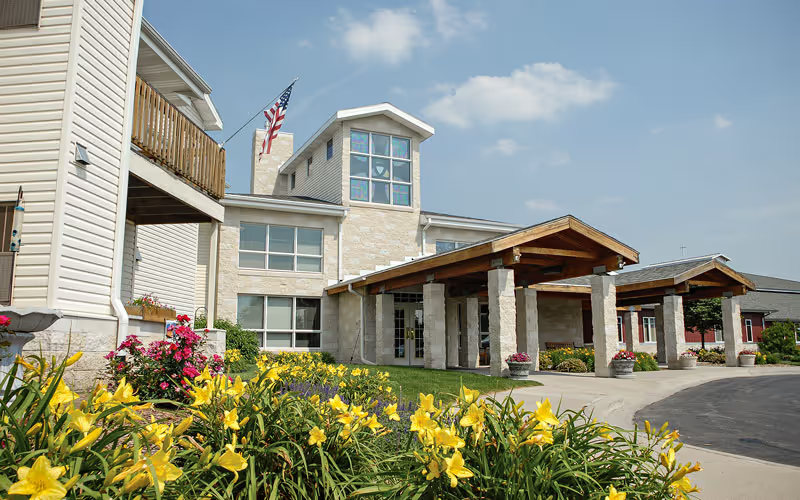
Facility and amenities are generally viewed positively where spaces are newer or recently updated: secure grounds, accessible layout, recreational rooms, and a hotel-like atmosphere in some wings. Conversely, reviewers noted parts of the building showing wear, small or dated rooms, and issues with accessibility thresholds. Transportation and offsite-appointment coordination were repeatedly identified as problem areas, including delayed or unprofessional transport services that affect timely hospital transfers or outpatient visits.
Management and communication are mixed themes. Positive experiences cited transparent admissions and helpful administrative coordination, while negative experiences pointed to defensive leadership, slow financial or refund processes, and unsatisfactory family communication about treatment plans and discharge timelines. Given this variability, notable patterns are (1) strong clinical rehabilitation capacity when staffing and scheduling align; (2) operational fragility tied to staffing levels that impact medication, hygiene, meal delivery, and laundry; and (3) inconsistent management responsiveness on billing and serious incident follow-up.
For prospective residents and families: an in-person visit that focuses on current staffing ratios, medication-administration protocols, laundry and belongings procedures, pressure-injury prevention and repositioning policies, therapy schedules, dining service routines, and transport arrangements will help assess whether the unit being considered reflects the facility's stronger or weaker patterns. Asking for copies of recent inspection results, staffing rosters for the unit, and examples of individualized care plans can also clarify how reliably the facility delivers on the strengths cited in some reviews.