Mira Vie at Brookfield presents a broadly mixed but distinct pattern: many families and residents describe a warm, community-oriented environment with strong programming and attentive frontline staff, while others report operational inconsistencies that have affected care continuity and family trust. The facility's strengths are consistently cited around social programming, therapy services, and the physical environment; however, several operational and clinical areas show variability across units and over time.
Care and staff: Numerous reviews praise frontline caregivers, nurses, and therapy teams as compassionate, communicative, and skilled. Therapy services (physical and occupational) and individualized attention from aides received specific commendation in many accounts. At the same time, there are recurring concerns about staffing stability and turnover, particularly following an ownership change; these issues are linked in some reviews to gaps in clinical follow-up, occasional delays in care tasks, and uneven medication-management processes. Families advising prospective residents should ask about current staffing ratios, recent turnover, and clinical oversight practices.
Dining: The dining experience was described inconsistently. Some families appreciated a neat dining room and a varied menu, while others characterized the kitchen output as cafeteria-style, frozen-prepared, or of inconsistent quality and temperature. Reports of missed meals or less-than-appetizing preparations appear alongside positive impressions of the dining environment; prospective families may want to sample meals and review kitchen procedures during a visit.
Activities and engagement: Activity programming is a clear strength for many residents — live music, arts and crafts, outings, therapy pets, and an active calendar were frequently praised. The community appears to offer robust social opportunities and transportation for excursions. However, a subset of reviewers noted limited engagement for specific residents (notably in memory-care settings), and concerns were raised about daytime inactivity or lack of outdoor time for some wheelchair-bound residents. Confirming activity-adaptation for individual cognitive and mobility needs is advisable.
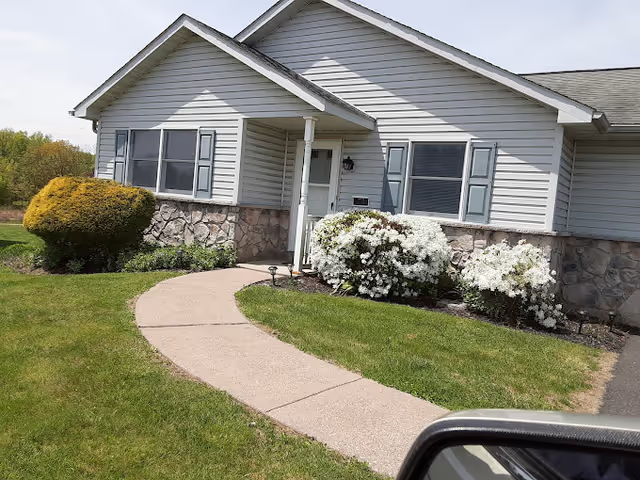
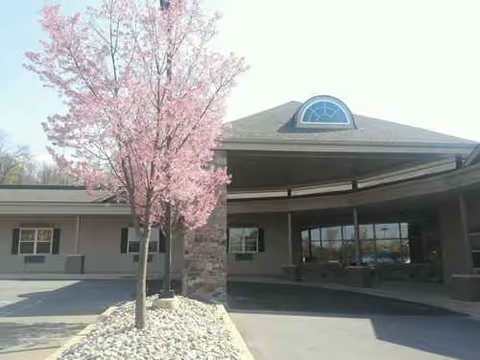
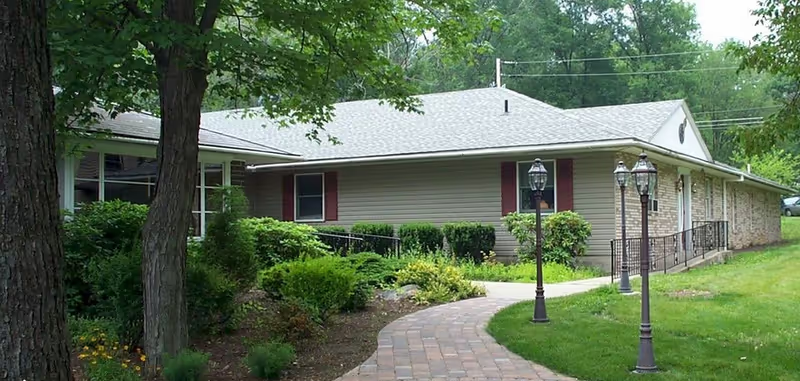
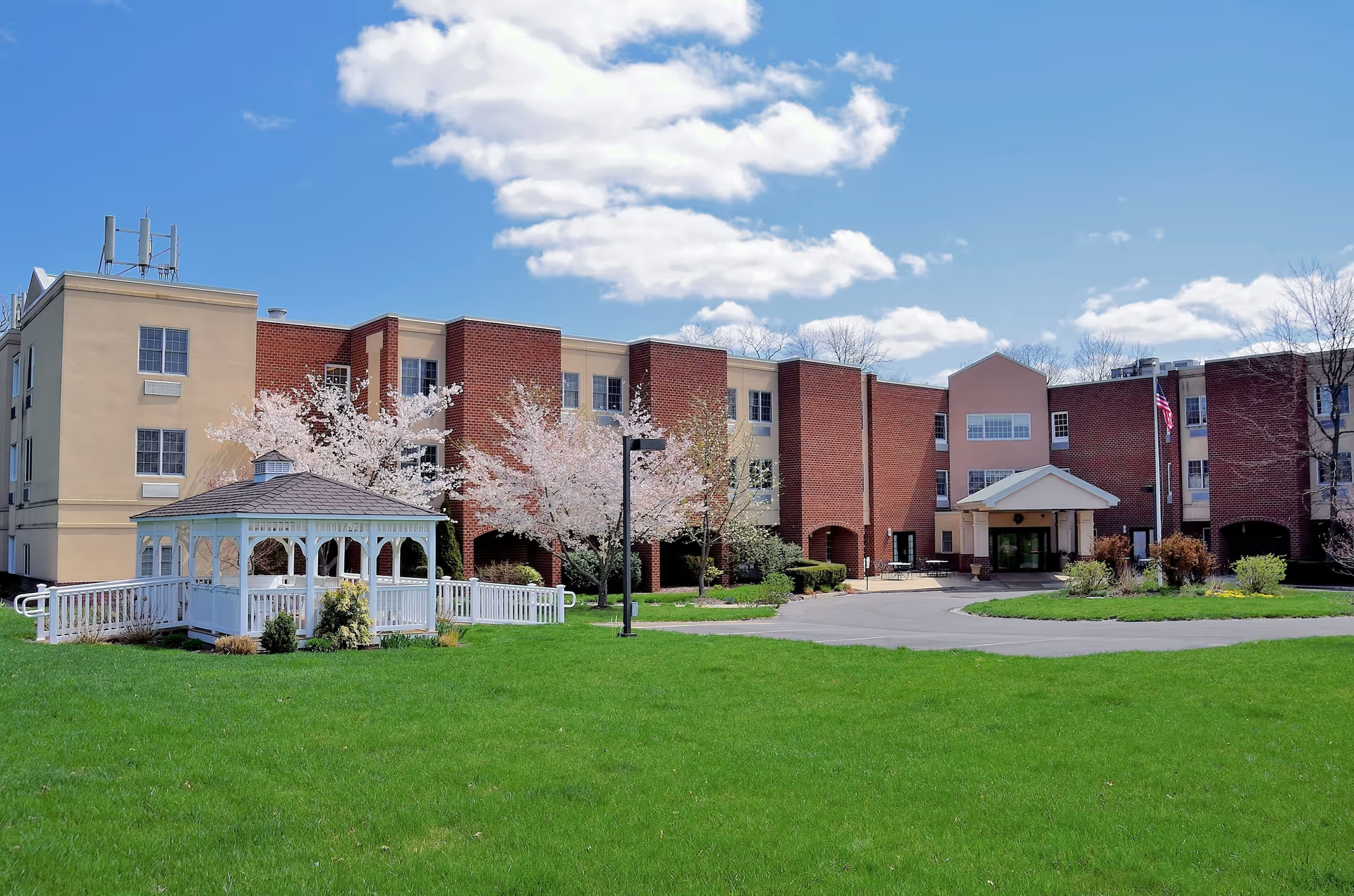
Facilities and amenities: The physical plant is often described as clean, resort-like, and well maintained, with amenities such as an outdoor patio, fenced walking area, theater, and accessible apartment features. The community is dog-friendly and supports therapy-animal visits. There were isolated sanitation and odor concerns reported in certain cottage areas, suggesting localized maintenance issues rather than a facility-wide condition. A thorough tour that includes different wings and outside spaces can clarify current conditions.
Management and administration: Admissions staff and specific community-relations leaders received strong praise for empathy, clear communication, and individualized move-in support. Conversely, several families documented declines in administrative responsiveness and confusing or changing billing practices following a change in ownership. Other administrative weaknesses flagged include privacy and consent-process gaps around unannounced room entries and questions about how aging-in-place and placement decisions are handled. Ask for written explanations of billing policies, privacy protocols, and the facility's approach to transitions and dementia-care suitability.
Notable patterns and guidance: The overall picture is one of a community with many operational and cultural strengths — particularly in programming, therapy, and person-to-person interactions — but also with variability that appears to have increased for some families after ownership changes. Prospective residents and their families should conduct an in-person visit, meet clinical leadership, review recent staffing and quality measures, sample the dining program, and request clear written policies on medication management, privacy/consent, billing, and dementia-care placement. Doing so will help determine whether the community's strengths align with the prospective resident's clinical needs and financial expectations.