Reviews of Abbyshire Place reflect a polarized picture: several families and former patients describe strong clinical and rehabilitative care, while others raise serious operational concerns that appear to stem from staffing and management inconsistencies. On the positive side, many accounts praise the therapy and rehab department for achieving measurable mobility improvements and successful short-term outcomes. Multiple comments highlight individual caregivers who provide compassionate, attentive support and who contribute positively to residents’ daily experience. The facility layout and private-suite options are noted as favorable, and some families reported a smooth admissions process and effective infection-control practices during the COVID period.
Care quality descriptions are mixed. Positive reports emphasize attentive nursing and effective rehabilitation leading to improved independence. However, recurrent themes on the opposite end include inadequate staffing levels, long waits for assistance, and delays in responding to call lights and care requests. These operational gaps are associated with concerns about incontinence-care timeliness and skin integrity issues. Several families also noted instances they interpreted as failures in clinical escalation and emergency response, which contributed to diminished trust in the facility’s ability to manage higher-acuity needs.
Staffing and culture show variability. Reviewers repeatedly identify individual staff members who go above and beyond, describing them as compassionate and resident-focused; these employees are cited as important assets. At the same time, some reviews point to inconsistent staff conduct, concerns about retaliatory behavior, and weak management follow-through. Communication with families is uneven: some families praise prompt, clear updates, while others describe difficulty reaching staff, limited phone access for residents, and slow callback times.
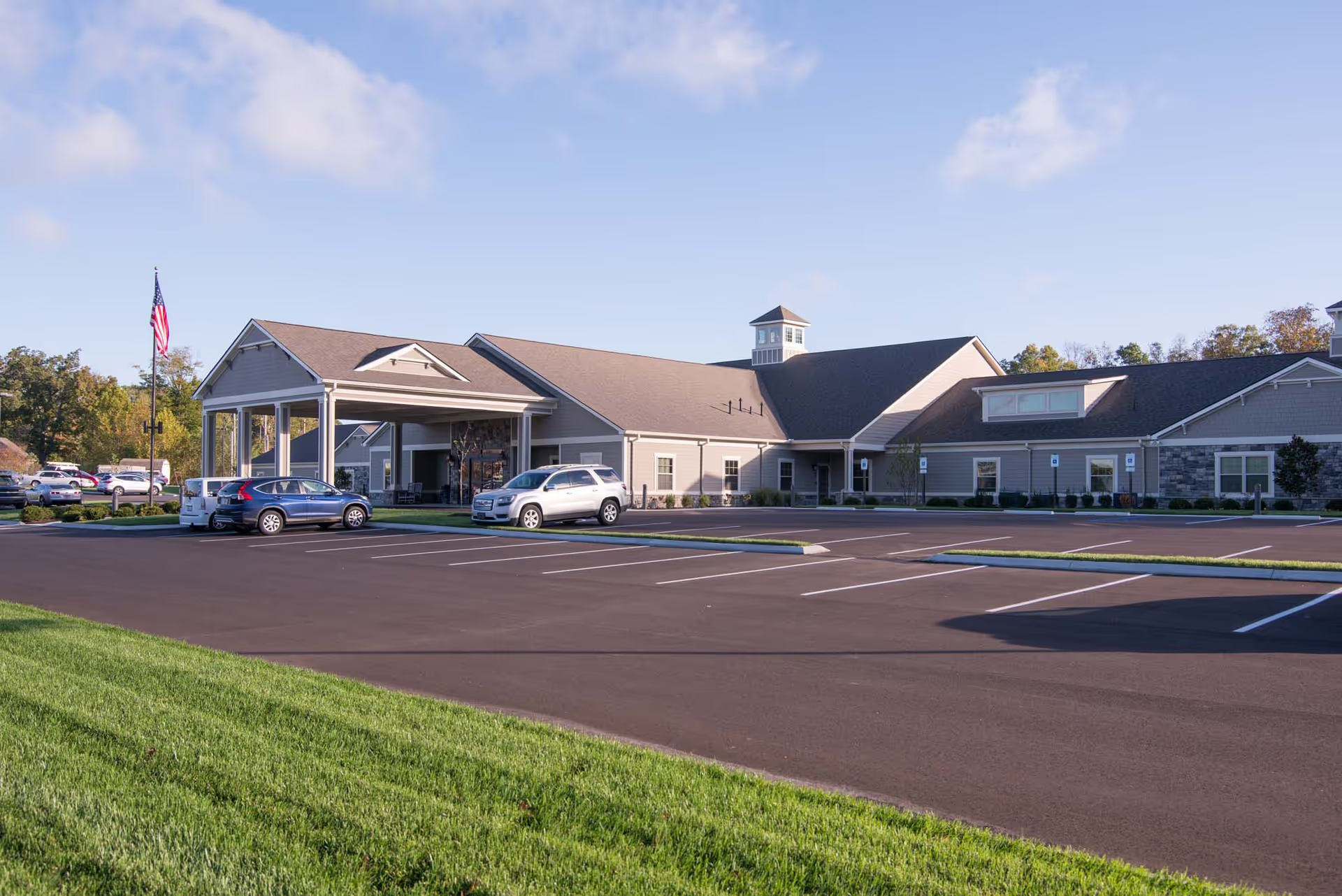
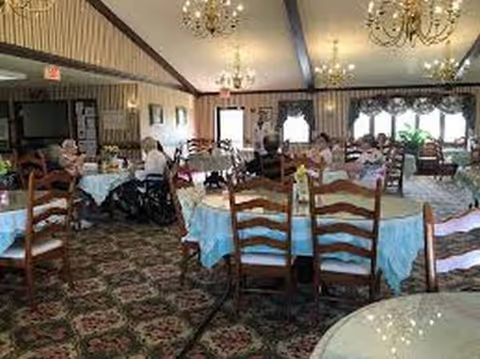
Food and activities receive mixed comments. Several families and residents appreciate outings, activity engagement, and interaction with memory-care programs, while others describe inconsistent dining quality. The environment and facility upkeep are similarly mixed: many reviewers find the building clean and well-maintained with private rooms available, but others raise sanitation and odor concerns in specific areas.
Management and governance perceptions vary. Positive notes include seamless admissions and improvements under new ownership cited by some reviewers. Negative themes center on perceived financial prioritization, inconsistent supervision, and allegations related to missing or mishandled personal belongings. There are also concerns about medication management practices, including reports of residents being difficult to arouse, which families connected to medication effects.
Overall, prospective residents and families should weigh the facility’s demonstrated strengths in rehabilitation and the presence of highly committed individual staff against recurring operational weaknesses: staffing consistency, timeliness of routine care, family communication, and select sanitation and safety concerns. A recommended approach is an in-person visit focused on staffing ratios for the intended unit, clarification of clinical escalation protocols, review of medication-management policies, and discussions with admission or nursing leadership about recent changes and oversight practices.