Senior Estates Golf and Country Club presents a mixed profile: it is an active 55+ community with a strong social culture, an array of recreational options, and a well-kept golf course and grounds, but it also exhibits operational and governance weaknesses that prospective residents should evaluate closely.
Care and daily living: The community functions primarily as independent-living retirement housing rather than a medical care facility. Residents consistently describe a quiet, safe, and low-stress environment and highlight ease of living and single-story homes suited to older adults. There is little detailed commentary about clinical care services, so families seeking onsite skilled-nursing or assisted-care capabilities should verify available clinical supports and response procedures directly with management.
Staff and responsiveness: Dining and front-line staff receive frequent praise for friendliness, helpfulness, and prompt service. By contrast, several accounts describe slow or inconsistent responsiveness from property management and administrative staff; examples include delayed email responses and difficulty obtaining timely answers to operational questions. There are also concerns about the tone and conduct of board-level enforcement, which some residents characterize as heavy-handed — this suggests variability in resident–board interactions and discipline practices.
Dining and food service: The on-site restaurant is a prominent community amenity and is widely appreciated for home-style cooking, generous portions, and regular specials. Reviewers cite standout dishes (prime rib, clam chowder, breakfast items) and a generally positive dining experience. That said, dining quality appears inconsistent: occasional cold plates, out-of-stock menu items, and service lapses are noted. Prospective residents should clarify menu stability, hours of operation, and supply practices.
Activities and social life: Activity programming is a clear strength. Offerings include exercise classes, choir, bingo, woodworking, puzzles, game rooms, and social events. Residents commonly describe an engaged, friendly atmosphere with many opportunities for participation. The size and local character of the community support frequent neighbor-to-neighbor interaction and clubs tailored to common interests.
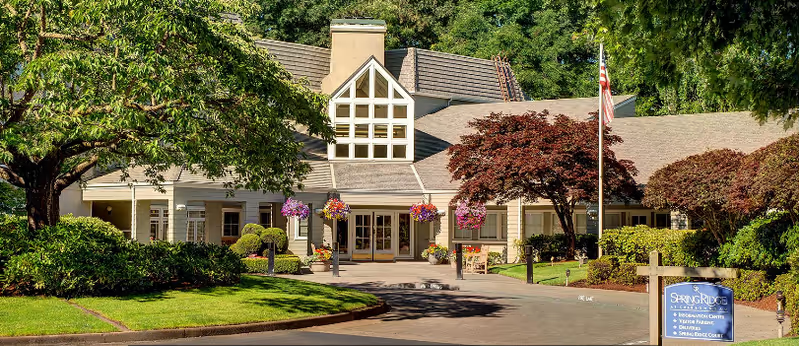
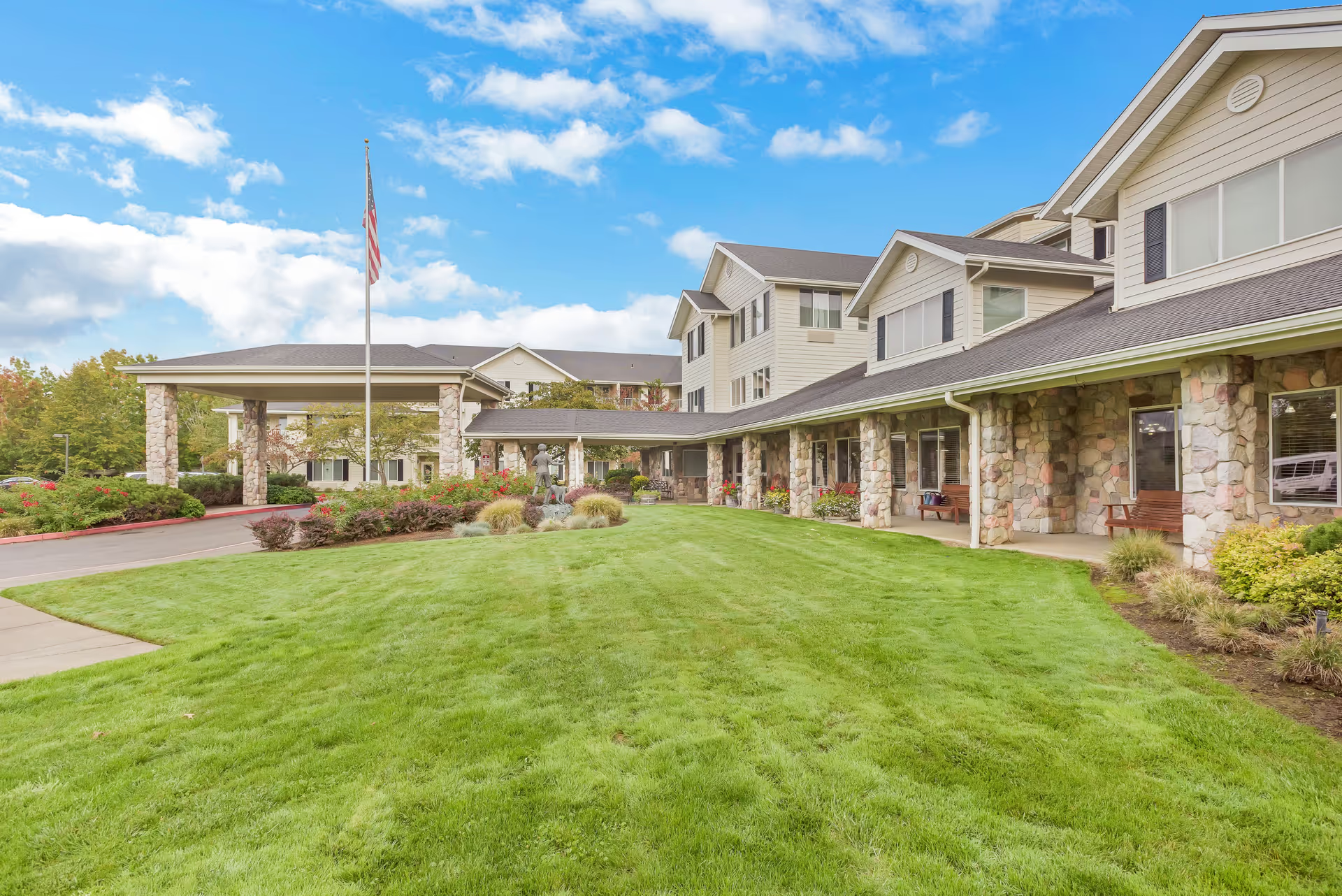
Facilities and amenities: The property benefits from well-maintained landscaping and a strong golf offering with appealing fairway views. Interior amenities referenced include a restaurant, library, woodworking room, game areas, an indoor pool and hot tub, and a fitness center. However, several of those amenities are intermittently unavailable; reviewers point to prolonged pool/spa closures, lack of a functioning spa for extended periods, donated/older gym equipment, and no dedicated trainers. These patterns indicate deferred capital maintenance and uneven amenity reliability.
Management, finances, and governance: Financial and governance concerns are prominent. Reviewers note steep HOA increases, an ongoing pattern of fee adjustments, nonrefundable initiation charges, and special assessments (including assessments tied to past loan activity). There are stated issues with limited transparency around financial records and governance decisions, and there are allegations of financial mismanagement and fund discrepancies. Additionally, legal and labor disputes have been raised. Together, these items suggest governance risk and a need for prospective residents to obtain clear, current financial documentation and to ask about reserve studies, recent audits, and the status of any outstanding legal matters.
Notable patterns and guidance for prospective residents: Reviews are strongly polarized — many long-term residents express clear satisfaction with the social environment, dining, and golf amenities, while other residents raise substantive concerns about governance, amenity reliability, and administrative responsiveness. Before moving in, prospective residents or their families should request (a) up-to-date financial statements, reserve studies, and minutes from board meetings; (b) a written schedule for amenity availability and planned capital projects; (c) staffing levels and response-time expectations for property management; and (d) clarification of HOA fee history, initiation fees, and any pending assessments or litigation. Those steps will help balance the community’s clear lifestyle strengths against the operational and governance risks referenced in resident commentary.