Reviewer feedback for Green Meadows Nursing & Rehabilitation Center is polarized, with a clear split between positive experiences highlighting strong clinical and therapy support and negative accounts describing operational weaknesses. Positive feedback emphasizes compassionate direct-care staff, a capable nursing and medical team, and effective rehabilitation services; several families specifically noted helpful therapists and attentive aides who supported recovery. Conversely, negative feedback centers on persistent operational issues that affect daily care and safety.
Care quality appears inconsistent. On the positive side, some residents experienced coordinated medical oversight, timely therapies, and recovery-focused care. However, other reports indicate inadequate assistance with activities of daily living, including feeding and hydration support, and concerns about pressure-injury management and weight decline. Reviewers also described falls and delays in monitoring, suggesting gaps in fall-prevention practices and resident observation protocols.
Staffing and staff conduct are a recurrent theme. Many comments commend individual caregivers for being friendly and compassionate, but there are simultaneous reports of inconsistent staffing levels and variable skill or attentiveness across shifts—notably on weekends. These staffing inconsistencies correlate with reports of delayed assistance, reduced supervision, and uneven care quality between units and shifts. There are also specific concerns about hand-hygiene and personal-protective-equipment use that point to uneven infection-control adherence.
Dining and rehabilitation services show mixed signals. Several families praised the food quality and the rehabilitation team for effective therapy and measurable progress. At the same time, insufficient mealtime assistance and incomplete feeding support were raised as reasons for inadequate intake and weight concerns for some residents. There is limited commentary on recreational programming and activities beyond therapy; this area received little consistent attention in the available summaries.
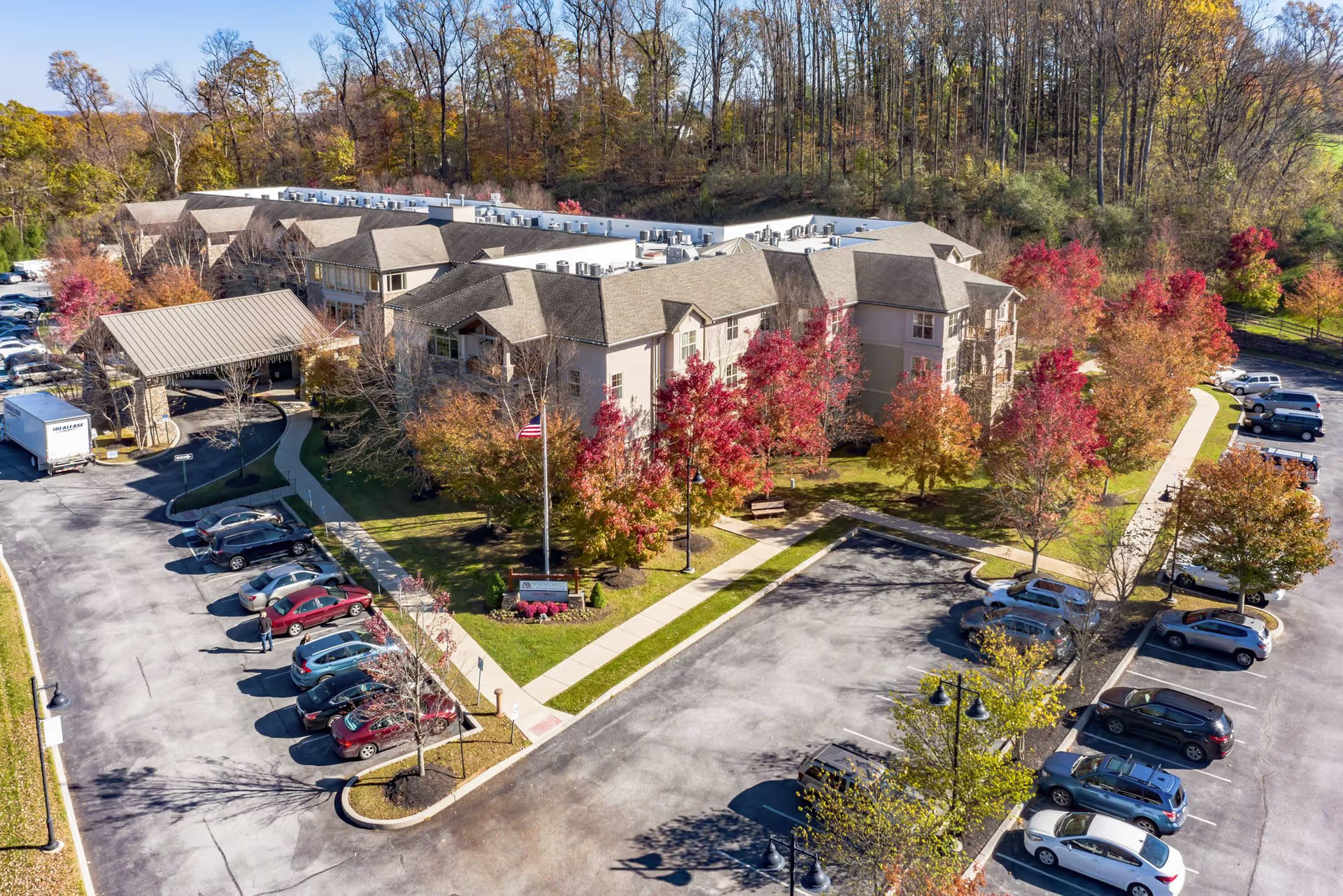
Facility condition and management practices present a contrast. Some reviewers described clean, comfortable rooms and communal areas, while others raised sanitation and odor concerns in specific units. Reports also noted missing personal items and loose controls around resident belongings, indicating a need for stronger personal-property safeguards. Administrative communication and responsiveness were frequently criticized: reviewers described scripted or dismissive responses from management, delayed family engagement, and discrepancies between online marketing and on-site conditions. A small number of comments referenced concerns following a resident's death; these should prompt families to inquire directly about end-of-life protocols and incident response.
Taken together, the pattern suggests that Green Meadows can deliver high-quality nursing and rehabilitation care for some residents, particularly when staffing levels and unit leadership are stable. At the same time, recurring operational weaknesses—staffing variability, cleanliness and infection-control inconsistencies, gaps in feeding and fall-prevention practices, and weak administrative communication—are significant and have a direct impact on resident experience. Prospective families should consider multiple visits at different times (including weekends and evenings), observe mealtime and hygiene routines, ask about staffing ratios and infection-control policies, review wound- and nutrition-management protocols, and speak with current families to assess consistency across units and shifts.