Overall impression: The facility elicits highly polarized feedback. Many families and residents praise the caregiving staff—describing them as compassionate, professional, and attentive—with particular strength noted in rehabilitation/physical-therapy services and in end-of-life care. Several accounts highlight smooth admissions, individualized attention, and instances where leadership was accessible and responsive. Under certain management periods the building and units are described as clean and comfortable, and some families report a stable, long-term residence experience.
Care quality and clinical oversight: Clinical experiences vary considerably. Positive accounts describe respectful, dignified care and effective therapy programs that support recovery and independence. Contrasting reports identify operational weaknesses: inconsistent staffing levels that affect coverage and responsiveness; delays or irregularities in medication administration and clinical monitoring (including weight checks and timely physician involvement); and at least one report of a serious adverse event that raised concerns about clinical oversight. Physician availability and continuity of medical oversight are frequently cited as areas needing improvement.
Staff and communication: Frontline caregivers frequently receive praise for warmth and hands-on attention, and several staff members are named positively by families. At the same time, reviewers report variability in staff conduct and tone, with complaints about unfriendliness, poor listening, and failures to follow POA instructions or consent documentation. Communication with families is an area of concern—telephone calls and messages are sometimes unanswered or returned late, and family members describe inconsistent updates about care and appointments.
Dining and activities: Feedback on dining is mixed. Some describe home-style meals and pleasant dining experiences; others note inconsistent meal service times, limited menu variety, and variable nutritional content. Rehabilitation and therapy are often highlighted as strengths, though scheduling and coordination of therapy sessions are reported as inconsistent in some cases.
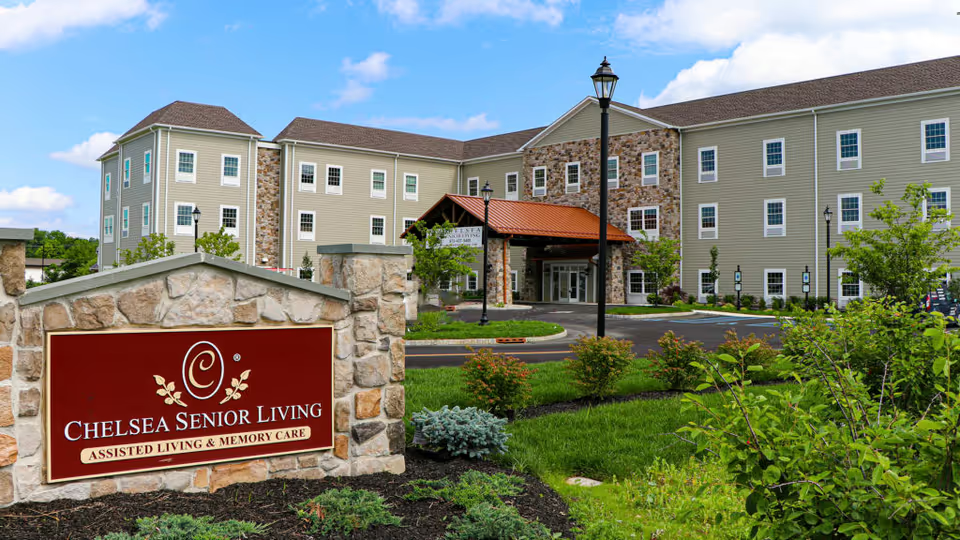
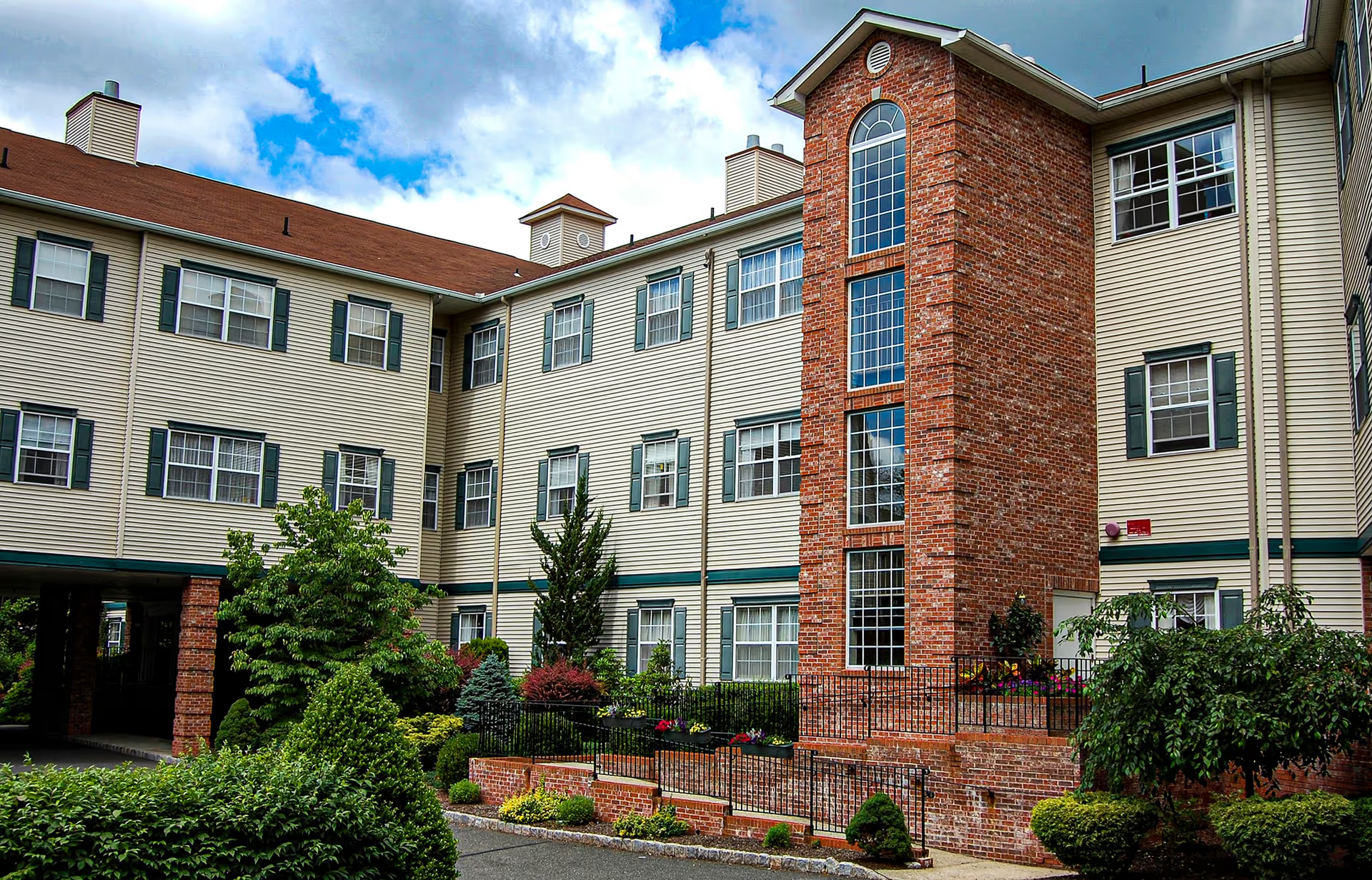
Facilities and housekeeping: Cleanliness and environmental upkeep appear inconsistent. Several reviewers describe well-kept, odor-free areas and clean rooms under certain leadership, while others describe sanitation lapses, odor concerns in specific areas, sticky or poorly maintained surfaces, and housekeeping oversights. These contrasts point to variability in housekeeping practices and unit-level maintenance.
Management, billing, and governance: Administrative experiences are mixed and a prominent source of concern. Some families report accessible and helpful management that improves care; others describe unresponsive or defensive administrative behavior, delayed responses to financial inquiries, confusing or delayed billing after insurance changes, and serious financial concerns including allegations of theft and billing irregularities. A few reviewers mention new management having made improvements, suggesting that leadership changes correlate with changes in operational quality.
Notable patterns and decision guidance: The reviews indicate a pattern of strong individual caregivers and therapy staff working within a system that exhibits inconsistent operational practices—particularly in staffing, communication, medication oversight, sanitation, and billing. Prospective residents and families should consider visiting multiple times, asking for current staffing ratios, written protocols for medication monitoring and POA handling, examples of recent state inspection outcomes, clarification on billing procedures and property-security practices, and details about dementia-specific training. Where possible, speak directly with therapy staff and the current administrative leadership to assess whether recent management changes have addressed earlier concerns.