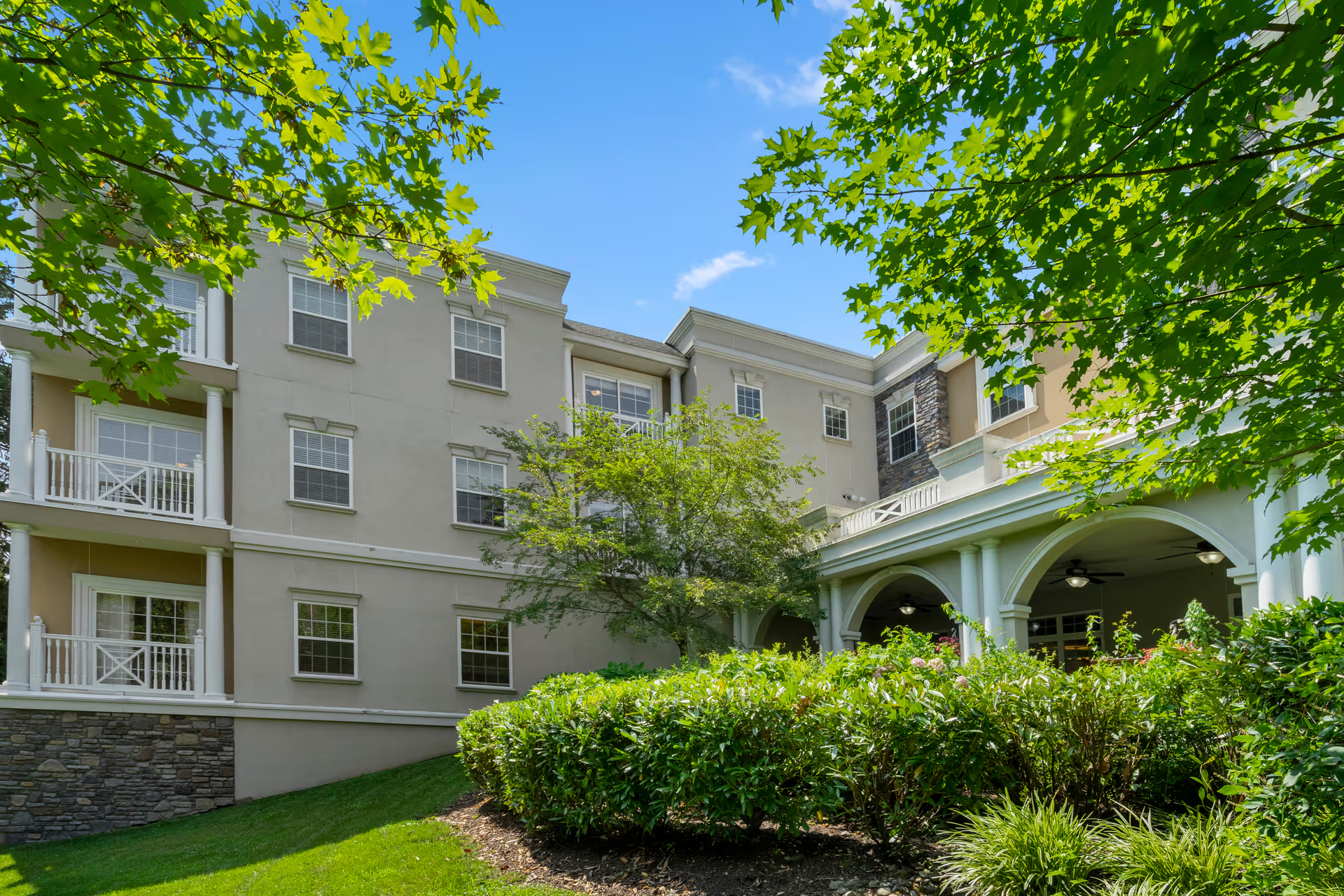
Fountain View at Logan Square presents a mixture of clear strengths and recurring operational weaknesses. The community’s location and physical assets are consistently highlighted: centrally located near museums, parks, grocery options and cultural venues, with renovated common areas, modern apartment finishes, in-unit washers/dryers, separate HVAC controls, and attractive city views. The campus also maintains on-site clinical resources — physicians, dental services and diagnostic testing — alongside strong outpatient therapy and rehabilitation offerings that many families and residents find valuable.
Life-enrichment is a pronounced strength. The program offers an extensive calendar of classes, musical performances, social hours, and regular outings into the city. Residents describe a lively, social atmosphere with frequent events and opportunities to engage. Dining is often praised for its variety, chef tastings, and restaurant-style service; that said, food quality appears to be variable across experiences. Transportation is available for trips and shows, but there are documented inconsistencies in reliability and contingency handling when vans or drivers are unavailable.
Care and staffing present a mixed picture. Many staff members — including therapy teams, dining servers, admissions and concierge personnel — receive strong praise for responsiveness, warmth, and individualized attention. Concurrently, there are recurring concerns about uneven staff performance, limited coverage after hours, long call-bell response times, and variability in CNA conduct. Medication-administration processes and pharmacy coordination are another area of concern, with reports of delays and inconsistent handling that warrant direct inquiry during a tour.
Facility operations and maintenance exhibit both positive and problematic elements. Renovations have improved aesthetics and many units, but construction-related disruptions, unfinished cabinetry or trim work, and isolated maintenance failures (plumbing noise, nonfunctional outlets or fixtures) are noted. Pest-control and sanitation concerns have been raised for some resident areas and dining zones. Additionally, common-area climate control has been reported as inadequate during periods of extreme heat, which management appeared slow to remediate in certain instances.
Administrative and management issues are a significant theme. Families describe inconsistent communication during move-in, occasional lack of clear documentation or orientation materials, frequent leadership turnover, and irregularities in billing and insurance explanations. These operational weaknesses contribute to polarized resident experiences: many long-term residents and families express high satisfaction, while others cite unresolved issues that materially affect daily comfort and care.
For prospective residents and families: the community offers strong location advantages, robust programming, and on-site clinical resources, but it is important to validate operational performance during your evaluation. Suggested due diligence includes observing meal service, testing call-bell response, asking for recent state inspection results, reviewing sample billing/insurance scenarios, examining a move-in checklist and contract, and clarifying pest‑control and maintenance protocols. Doing so will help determine whether the community’s strengths align with individual care and lifestyle priorities and whether identified operational gaps have been addressed.